By George & Josh Bate
Last year, the second and final season of Andor was released, arguably marking the greatest Star Wars story to ever be told since the original trilogy. Tony GIlroy’s sophisticated, emotional, intriguing, and disturbingly relevant series tapped into matters of politics with far greater depth and nuance than most Star Wars stories, in a manner that likely made George Lucas proud.
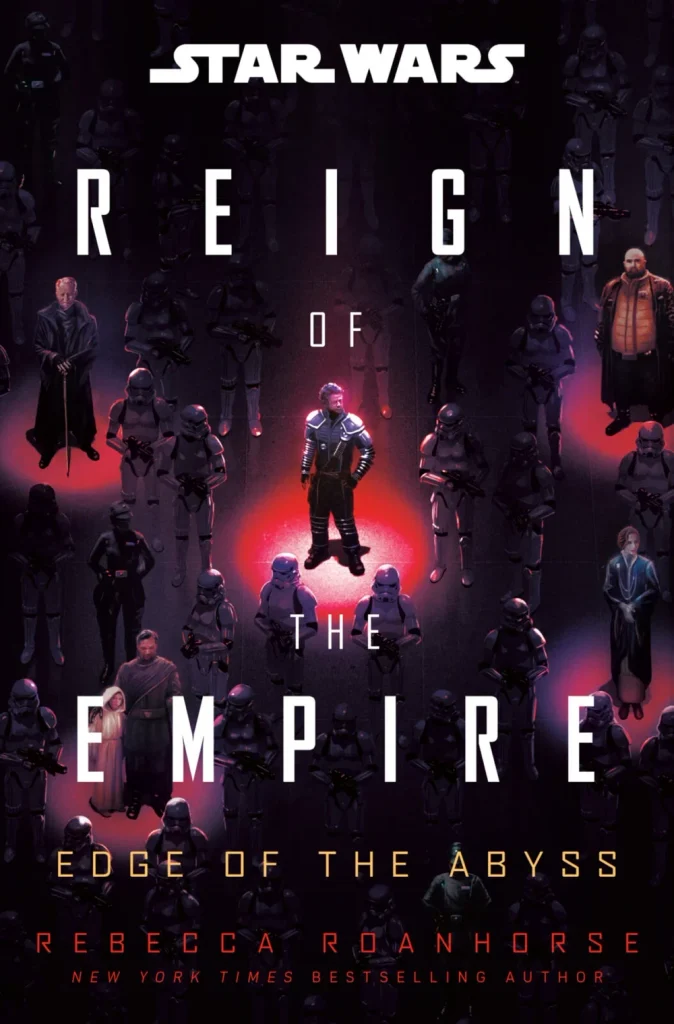
But Andor was not the only grounded political thriller of a Star Wars story to be released last year. Alexander Freed penned The Mask of Fear (Reign of the Empire), the first in a trilogy of books that, due both to its shared characters and maturity, lives and breathes as a prequel to Andor. A Season 0, if you will. Now, author Rebecca Roanhorse follows Freed’s work and continues the Reign of the Empire trilogy with a similarly gripping and thoughtful espionage tale very much in conversation with both Andor and our real world.
Taking place one year before the events of Andor Season 1 and 13 years after the events of The Mask of Fear (Reign of the Empire), Edge of the Abyss once again follows Mon Mothma, Bail Organa, and Saw Gerrera as their conflicting philosophies lead them to search for decidedly different ways to loosen the Empire’s ironclad grip on the galaxy. When one of Gerrera’s partisans is captured by the Empire after a mission gone wrong, panic ensues about what to do with a prisoner whose knowledge of resistance efforts could spell an end to rebellion before it’s even truly begun. Meanwhile, Mon grapples with a horrifying discovery that the Empire has turned its sights toward indoctrinating the youth of the galaxy to further cement Imperial control in the galaxy.
Like its predecessor, Edge of the Abyss trades overt action for suspense through cutting dialogue and political maneuvers. Roanhorse’s novel speaks the same language of Star Wars that Andor does. This means everyone, even those who appear to be on the same side of the conflict as one another, has individual motives and secrets are as commonplace as droids, hyperspace travel, and sand in a galaxy far, far away.
The narrative encompassing these secrets proves to be as enthralling as some of the best in Star Wars in literature. Roanhorse fluctuates between various characters’ perspectives using a third-person limited orientation. Such writing allows each chapter to be grounded in an individual character’s perspective, in turn fostering a strong understanding of their worldview, motivations, and vulnerabilities.
In addition to Mon Mothma, Bail Organa, and Saw Gerrera, Roanhorse dedicates chapters to the perspectives of three other primary characters. Chemish Runazha is an undercover ISB operative tasked with infiltrating a growing student movement on Ghorman. Yulien Honor is a barrister who is unexpectedly brought in to defend the imprisoned partisan. And, last but certainly not least, Anto Kreegyr (a name Andor fans will recognize) is desperate to make a name for himself as a rebel.
Roanhorse’s accessible, yet refined writing allows the reader to closely follow all six characters as their storylines intersect and interweave throughout. Common to all the characters is a pull between two opposing, mutually exclusive choices. For Mon, this conflict takes the form of a seemingly never-ending battle balancing her duties as a senator (and secret rebel) with her responsibilities as a mother and daughter. Mon’s relationship with the latter proves particularly fascinating as Roanhorse interestingly toys with uncomfortable questions many parents may face. What do you do when your child doesn’t espouse the same values you live your life by? What happens when your child, who you love more than life itself, is more like your partner, who you detest, than you? Roanhorse lets Mon grapple back and forth with this concept, which nicely leads into her arcs in both seasons of Andor. And this is helped by the fact that Roanhorse so beautifully captures Genevieve O’Reilly’s voice as Mon Mothma. Reading Mon’s lines in the novel will almost certainly feel as if one is hearing O’Reilly speak them.
Mon’s journey and relationship with her daughter Leida in Edge of the Abyss parallels Bail Organa’s trajectory in the story. Whereas Mon quietly laments her daughter’s disregard for politics and apparent immaturity, Bail looks upon his daughter Leia with pride as she, at just the age of 13, is already showing signs of the rebel leader that she will one day become. It’s no coincidence then that both Mon and Bail are troubled by intel that the Ministry of Enlightenment, the Empire’s manipulative propaganda arm, has turned its sights to the youth of the galaxy, choosing a popular singer’s music as a way to subtly disseminate Imperial ideology.
A contrast to the prior novel, the inner-workings of Saw Gerrera are afforded ample attention this time around. More than ever before, readers catch a glimpse of Saw’s more sensitive underbelly, largely informed by the passing of his sister Steela in The Clone Wars. As it is Saw’s misstep that serves as the instigating incident of the story, Roanhorse intelligently offers a look inside the rebel leader’s troubled mind, including his thoughts on Jyn Erso and the use of violence as a necessary means to an end.
The most interesting new character comes in the form of Chemish, who, arguably other than Mon and Bail, plays the most significant and sizable role in the novel. Whereas Mon’s primary conflict revolves around balancing senatorial duties with familial duties, Chemish wrestles with his conscience as he develops romantic feelings for one of the people he is tasked with spying on. Although at first it appears Chemish’s arc will unfold too similarly to Syril Karn’s from Andor, Roanhorse quickly ensures that Chemish is a unique character, exploring the toll of living a double life and drawing influence from the likes of The Spy Who Came in from the Cold by John le Carré. Unfortunately, Chemish’s journey wraps up too neatly and succinctly, although there is hope that it will be expanded given the Reign of the Empire still has another installment to come.
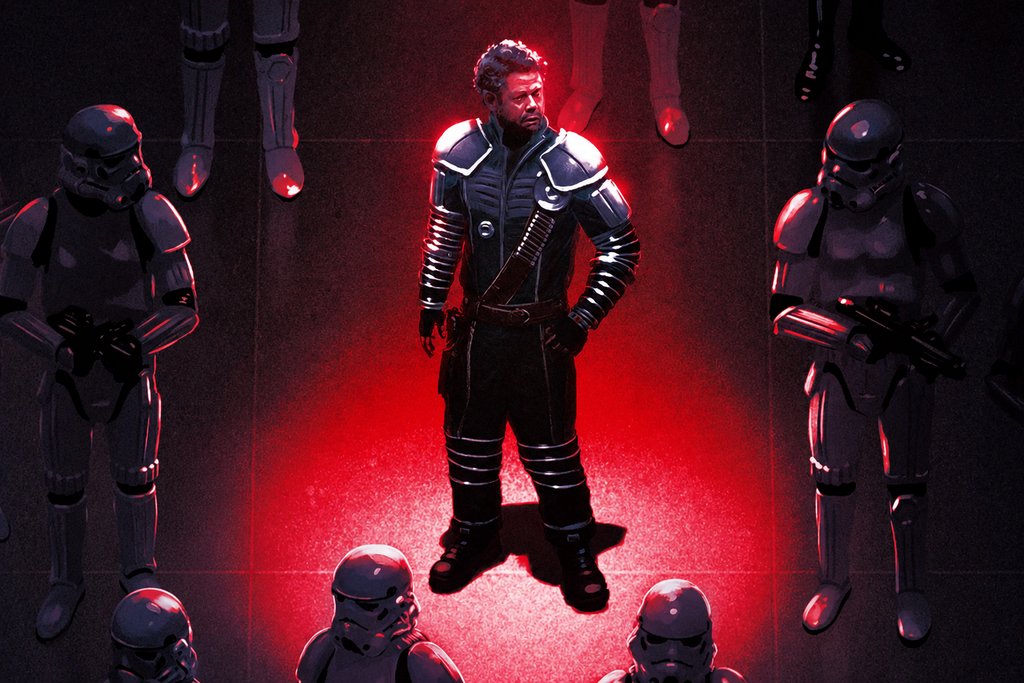
After only appearing in a still hologram in Andor, Anto Kreegyr finally takes centerstage in a Star Wars story. Edge of the Abyss provides an extensive backstory for Kreegyr, whose origins are certainly not one would suspect from a character who serves as such a focal point for the darkest themes in Andor. Kreegyr’s awakening as a rebel feels decidedly different from other characters and makes him a compelling player to follow, one who can easily get himself over his head.
As Roanhorse sprinkles tons of connections, characters, and concepts from Andor into her novel, she also draws inspiration from Tony Gilroy’s acclaimed series by holding a mirror up to our current political landscape. Misinformation, the ludicrousness of conspiracy theories, governmental overreach, cover-ups, agent provocateurs, and the ethical use of violence are just some of the heavy themes relevant to our real world that Roanhorse explores with both delicacy and fearlessness. The latter theme proves particularly interesting: What happens when everything you do to achieve a goal could possibly set you back enormously from achieving this goal? Does this mean it’s not worth trying in the first place?
VERDICT:
Edge of the Abyss continues the Reign of the Empire trilogy of novels in fine form by mirroring the themes, tone, and sophistication of Andor. Rebecca Roanhorse brilliantly follows up Alexander Freed’s excellent predecessor with a novel that trades overt action for suspense through cutting dialogue and cunning political maneuvers. A third-person limited writing orientation allows Roanhorse to get inside the minds of various characters and intimately explore their worldview, motivations, and vulnerabilities. Mon Mothma’s journey in the novel is particularly interesting as she grapples with the choice between doing right by her daughter and doing right by the broader galaxy. In addition to giving the troubled inner-workings of Saw Gerrera the attention they deserve, Roanhorse also compels with her reading of Chemish, an ISB undercover operative whose story resembles The Spy Who Came in from the Cold by John le Carré.
Fans of Andor will be delighted by the wealth of connections, characters, and concepts from the series that make their way into Roanhorse’s novel, the greatest of which comes in the form of Anto Kreegyr, who is given an unexpected backstory that elevates him far beyond the Space John Candy meme.
In sum, Roanhorse proves that Star Wars can enthrall in the absence of lightsabers and the Force. Since 1977, George Lucas’ franchise has been unafraid to get political and, one year after the release of the critically acclaimed Andor, proves that some of its greatest stories come about when politics are positioned centrally, both thematically and narratively. If the third installment of the Reign of the Empire even somewhat resembles the quality of its two predecessors, fans need to start having a conversation about a new contender for the best Star Wars book trilogy of all time.
Edge of the Abyss (Reign of the Empire) is on sale September 15, 2026, courtesy of Random House Worlds