
By George & Josh Bate
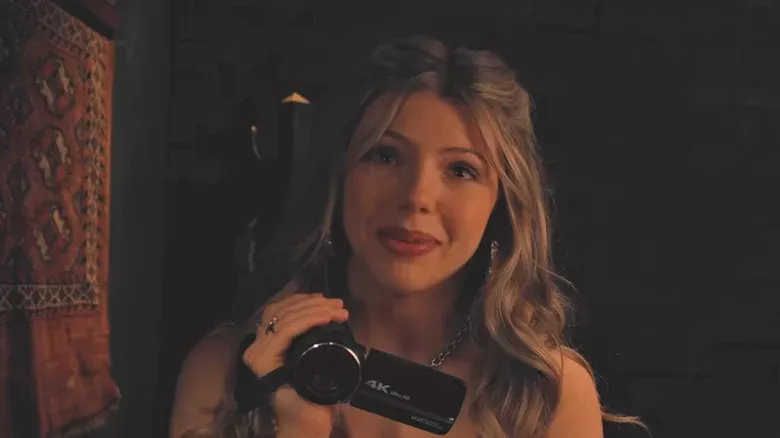
The long-running V/H/S franchise reaches a low point with its ninth installment, a misguided, unpleasant collection of found footage short films united loosely by a strange and underdeveloped theme.
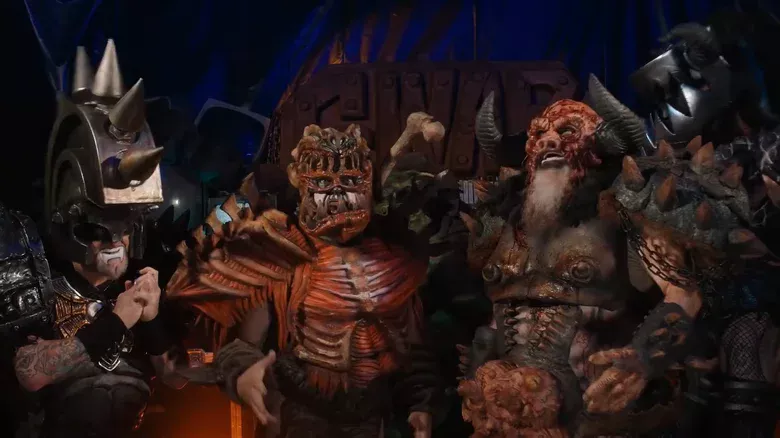
Further going beyond the franchise’s roots than ever before, V/H/S/Mixtape features multiple found footage segments centered around music and sound as the source of terror. Filmmakers Ernest Dickerson, RZA, David Moreau, and Renee Zhan contribute four original shorts spanning cosmic horror, practical gorefests, and psychological thriller, while heavy metal band GWAR host a wrap-around segment featuring music videos directed by Flying Lotus and Tobias Forge.
Almost all horror anthologies, including every installment of the V/H/S franchise to date, are composed of segments that vary quite considerably in terms of quality. Last year’s V/H/S/Halloween, for instance, had Casper Kelly’s excellent, surreal, hyper-gory “Fun Size” and Anna Zlokovic’s atmospheric and deeply unsettling “Coochie Coochie Coo,” but also the overly bleak “Kidprint” and the ill-fitting “Ut Supra Sic Infra.” Horror anthologies find success, not in their ratio of hits to misses (as misses are inevitable), but in the lingering impact of their best segments.
Interestingly, V/H/S/Mixtape diverges from most horror anthologies in being surprisingly consistent in quality across its segments, albeit not in a good way. Despite the acclaimed filmmakers orchestrating the segments, there is not a single one in the latest V/H/S film that can be described as anything other than unpleasant and uninspired. GWAR’s MTV-style show from hell that divides each of the segments punishes the audience with crude humor, obnoxious sounds, and inane characters, while the music videos from Flying Lotus and Tobias Forge have bursts of creativity, while ultimately not amounting to much.
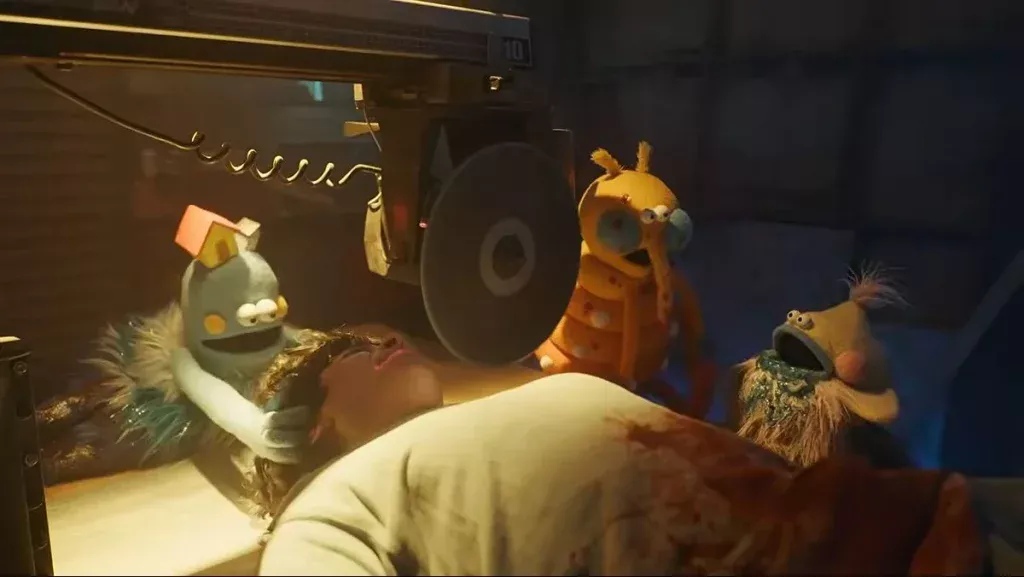
The full segments themselves, meanwhile, make for grating watches. Renee Zhan’s “Dance, Dance, Dance, Dance” is the first of the bunch and operates like a cross between Buddy and a twisted remix of Toy Story. The segment follows a studio executive and her colleagues who visit a warehouse of old props and puppets so that they can scan puppets from a long-cancelled show and reboot the series. Although the puppets are impressively realized due to the work from Jim Jenson’s Creature Shop, the story surrounding them lacks any semblance of novelty and relies exclusively on gruesome kills, rather than suspense and dread, to provoke fear.
The next full segment, “Heartbeat,” comes from French filmmaker David Moreau, who is known for his work on the home-invasion horror film Them and 2024’s MadS, a critically acclaimed outbreak-thriller filmed in a continuous, uninterrupted single take. Moreau’s segment, which follows a couple of influencers who make the poor decision to film a video in a decommissioned Cold War military bunker in Bulgaria, is certainly the most technically impressive of the bunch, yet it too lacks a compelling narrative and style. The situation the influencers find themselves in is admittedly and existentially terrifying, with some imagery in particular enough to make even a hardened horror fan squeam, but there is so desperately little meat to its bones and even less to make it anything more than an off-putting, bleak viewing experience.
Up next is “The Music of Mr. Sze,” a segment from Ernest Dickerson, director of the Tupac Shakur crime drama Juice and cinematographer on a number of iconic Spike Lee films. Dickerson is certainly an interesting choice to help a V/H/S segment, but even his installment falls short of expectations. His segment follows a college film student who moves into an odd residence as he starts to shoot a documentary project for his class. Upon hearing strange violin melodies from the floor above him, the student begins to inquire into the reclusive life of a tormented musician, whose work serves as a portal to something unimaginable. The saving grace of Dickerson’s segment is a handful of cosmic, Lovecraftian visuals in its final few moments. Otherwise, however, the segment feels oddly amateur-ish, both with its acting and directing.
The final full segment comes from Wu-Tang Clan legend RZA. “Death Tone” follows a young sound engineer named Lydia who follows her late father’s instructions to create the ultimate music composition using arrangements no one has ever heard before. More than any other segment, RZA’s fully embraces the overarching theme of V/H/S/Mixtape by telling a story that finds horror through music. Consistent with the more grotesque nature of the entire film, “Death Tone” packs some grisly visuals, yet, like Dickerson’s work, is hindered by stilted performances. Inherent to the story it tells, the segment also quickly becomes repetitive, which is quite the feat given how difficult it would seem to craft a short film that so quickly becomes monotonous.
More generally speaking, the producers behind V/H/S/Mixtape deserve plaudits for attempting something different with the latest V/H/S film in centering it around music and sound as forces that haunt, possess, and destroy. Unfortunately, the creative gamble doesn’t pay off as the thematic thread that binds the segments together is so loosely defined that there is little unity between the different stories. As the film concludes, one is left with the impression that exploring the relationship between sound and fear, while on paper makes sense given how integral of a role sound plays in the history of the horror genre, is an ultimately ill-conceived decision, made all the worse by poor execution that fails to mine this unique premise for all its potential.
VERDICT: 1/10
The long-running V/H/S franchise reaches a low point with its ninth installment, V/H/S/Mixtape, a misguided, unpleasant collection of found footage short films centered around music and sound as the source of terror. While the film deserves plaudits for attempting something different with the franchise, the creative gamble doesn’t pay off, as the thematic thread is so loosely defined that there is little unity between the different stories. Despite acclaimed filmmakers contributing segments spanning cosmic horror, practical gorefests, and psychological thriller, not a single one can be described as anything other than unpleasant and uninspired. The segments make for grating watches, relying heavily on gruesome kills, grisly visuals, and off-putting imagery rather than suspense and dread, while stilted performances, repetitive storytelling, and a lack of compelling narrative or style hinder even the more technically impressive entries. GWAR’s wrap-around segment further punishes the audience with crude humor, obnoxious sounds, and inane characters. Ultimately, V/H/S/Mixtape leaves the impression that exploring the relationship between sound and fear is an ill-conceived decision, made all the worse by poor execution that fails to mine this unique premise for all its rich potential.
V/H/S/Mixtape premieres on Shudder on October 9.