
By George & Josh Bate

Few cinematic franchises have inspired as much discussion, debate, and passionate disagreement as Star Wars. Since George Lucas first brought audiences to a galaxy far, far away in 1977, generations of fans have argued over practically every aspect of the saga. However, one question continues to divide the fandom more than most: What is the correct order in which to watch Star Wars?
On the surface, it sounds like a relatively straightforward question. After all, there are numbered episodes, an established timeline, and a release history that would seemingly make the decision fairly simple. But with three separate trilogies, standalone movies, animated adventures, and an ever-expanding collection of live-action television series, deciding where to begin has become a considerably more complicated undertaking than one might expect.
Of course, there is no universally agreed-upon answer. Some fans believe the original trilogy should always come first, while others argue that the story is best experienced in the order its events actually unfold. Then there are those who have developed increasingly inventive approaches, rearranging films and television episodes to preserve certain revelations, strengthen character arcs, or provide an entirely different perspective on familiar events.
With so many possibilities, we are ranking six of the most interesting Star Wars viewing orders, from the least satisfying to the most rewarding.
6. Original Trilogy Purist Order
What is this viewing order?
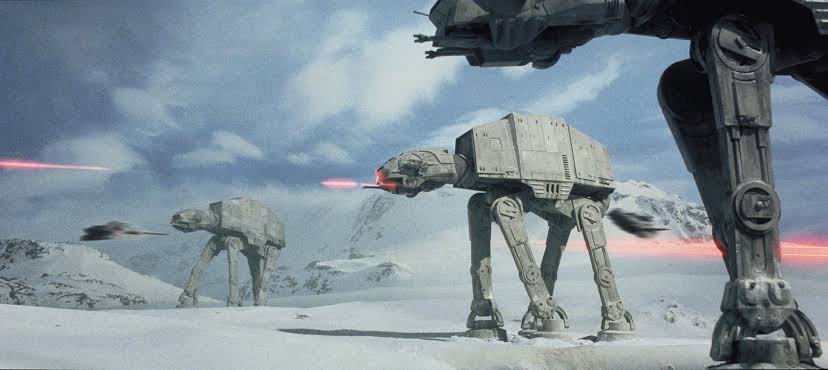
For some Star Wars fans, the story begins and ends with the original trilogy. The Original Trilogy Purist Order is exactly what it sounds like: watch Star Wars: Episode IV – A New Hope, Episode V – The Empire Strikes Back, and Episode VI – Return of the Jedi, and leave everything else out of the equation.
This approach deliberately avoids the prequel and sequel trilogies, as well as the standalone movies and television series. Rather than attempting to experience every corner of the galaxy far, far away, it focuses exclusively on the three films that introduced audiences to the franchise and established its enduring legacy.
Why is it good?
There is something undeniably appealing about keeping things simple. The original trilogy tells a complete, emotionally satisfying story, following Luke Skywalker’s transformation from an inexperienced farm boy into one of the most important heroes in the galaxy. Along the way, audiences are introduced to unforgettable characters, iconic villains, and some of the most memorable moments in cinematic history.
Perhaps more importantly, watching these three films together preserves the original storytelling experience without any additional material influencing how audiences perceive the characters or events. The revelations surrounding Darth Vader, Luke’s family, and the Emperor unfold naturally, exactly as they did for audiences who first discovered the franchise decades ago.
It also means avoiding the increasingly complicated continuity that comes with trying to incorporate every subsequent movie and television series.
Why is it bad?
The biggest problem, and why this is the worse of the viewing orders on this list, is that this approach leaves an enormous amount of incredible Star Wars storytelling on the table. The prequel trilogy provides important context for Anakin Skywalker’s transformation into Darth Vader, while the sequel trilogy explores the legacy of the original characters and introduces an entirely new generation of heroes and villains.
There is also a tremendous amount of character development and world-building throughout the television shows, particularly The Clone Wars, Rebels, and Andor. Ignoring all of that means missing some of the franchise’s strongest storytelling.
Ultimately, while the original trilogy works beautifully as a self-contained experience, Star Wars has grown far beyond those three movies. Restricting yourself to them feels increasingly limiting when there is so much more worth discovering.
5. Machete Order
What is this viewing order?
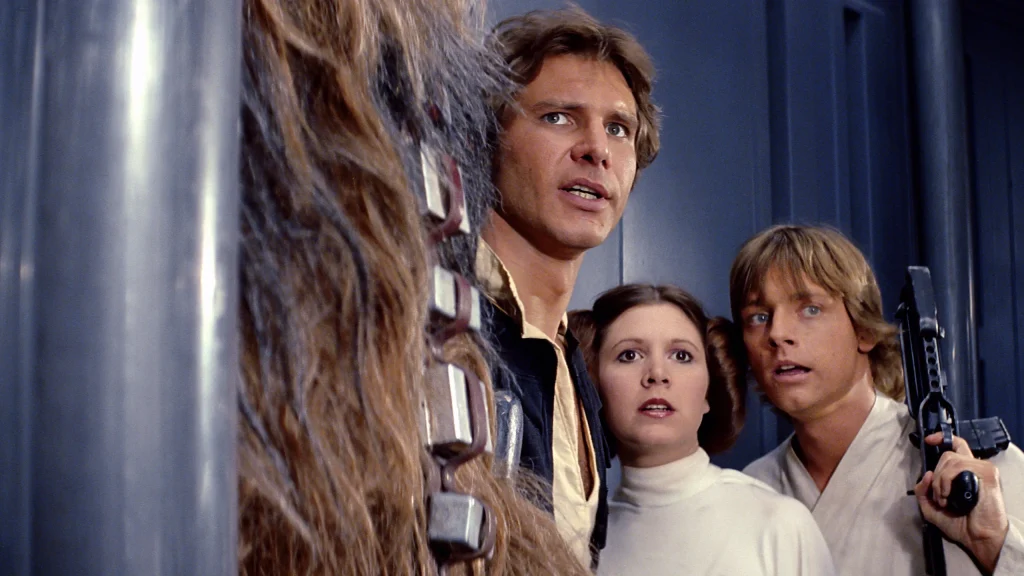
First proposed by Star Wars fan Rod Hilton in 2011, the Machete Order is one of the most widely discussed alternative ways to experience the Skywalker Saga. Rather than following either the theatrical release dates or the chronological timeline, this approach rearranges the movies to preserve one of cinema’s most famous plot twists while giving Anakin Skywalker’s story greater context.
The original Machete Order follows this sequence:
- Episode IV – A New Hope
- Episode V – The Empire Strikes Back
- Episode II – Attack of the Clones
- Episode III – Revenge of the Sith
- Episode VI – Return of the Jedi
Noticeably absent is The Phantom Menace. Hilton’s reasoning was that the film could be removed without significantly affecting the central story of Luke and Anakin, allowing viewers to move directly into the events that lead to Anakin’s eventual transformation.
Why is it good?
The greatest strength of the Machete Order is how cleverly it uses the prequel trilogy as an extended flashback. Rather than revealing Darth Vader’s identity and history before audiences have experienced the original trilogy, it allows the revelation in The Empire Strikes Back to land with its full impact.
Once that moment has happened, viewers travel back in time to discover how Anakin Skywalker became the fearsome Sith Lord. This gives the prequels a completely different narrative purpose, transforming them into an exploration of the man behind the mask rather than simply the beginning of a chronological story.
It also creates an interesting parallel between Luke and Anakin. Having witnessed Luke’s journey first, audiences can appreciate the similarities between father and son while understanding the very different choices that ultimately define them.
There is also a certain efficiency to this approach. By removing The Phantom Menace, the story gets straight to the central conflict involving Anakin’s fall to the dark side and his over-attachment to Padme.
Why is it bad?
The most obvious drawback is the exclusion of The Phantom Menace. While the film might not be essential to understanding the central conflict between Luke and Vader, it introduces important characters, establishes the political circumstances surrounding the Republic, and provides the beginning of Anakin’s journey. It’s also a film that, despite its flaws, is near and dear to our heart. Qui-Gon Jinn, Darth Maul, and the relationship between Obi-Wan and his former master are all important parts of the wider mythology. Removing the film also means losing the foundation for several storylines explored in later television projects.
There is another issue with watching the prequels between The Empire Strikes Back and Return of the Jedi. While the flashback structure is interesting, it interrupts the momentum of the original trilogy at a particularly dramatic point. Having just experienced one of the biggest revelations in cinema history, audiences must suddenly leave Luke’s story behind for three films before returning to it.
The Machete Order is undoubtedly clever, but its decision to sacrifice an entire movie and interrupt the original trilogy makes it a slightly less satisfying experience than some of the alternatives.
4. Witwer Order

What is this viewing order?
Proposed by actor and Star Wars voice artist Sam Witwer, this is arguably the most unconventional viewing order on the list. Rather than beginning with one of the theatrical movies, Witwer believes audiences, particularly younger viewers, should first become acquainted with Anakin Skywalker through Star Wars: The Clone Wars.
His reasoning revolves around establishing an emotional connection with Anakin before revealing his eventual fate as Darth Vader. The suggested approach begins with a substantial selection of episodes from the animated series, although Witwer makes clear that watching every episode isn’t necessary.
From there, viewers move into the original trilogy, beginning with A New Hope and continuing into The Empire Strikes Back. Only after experiencing the shocking revelation about Vader’s identity does Witwer suggest going back to the prequel trilogy.
The resulting sequence is:
- Selected episodes of Star Wars: The Clone Wars
- Episode IV – A New Hope
- Episode V – The Empire Strikes Back
- Episode I – The Phantom Menace
- Episode II – Attack of the Clones
- Episode III – Revenge of the Sith
Witwer’s proposal focuses primarily on introducing the franchise to younger audiences, and he doesn’t establish a definitive placement for Return of the Jedi, the sequel trilogy, or the standalone movies.
Why is it good?
The most interesting aspect of Witwer’s approach is that it completely changes how audiences perceive Anakin Skywalker. Instead of first meeting him as a child in The Phantom Menace, viewers become familiar with the more mature, charismatic Jedi Knight portrayed throughout the more child-friendly series The Clone Wars.
This is particularly significant because the animated series does an exceptional job of developing Anakin’s personality, relationships, and motivations. His friendship with Obi-Wan, his bond with Ahsoka Tano, and his experiences during the Clone Wars make him a considerably more fleshed-out character than the theatrical prequel trilogy alone can provide.
Witwer’s reasoning is especially interesting when considering how younger viewers might react to the original trilogy. Having already grown attached to Anakin, they are encouraged to see Darth Vader as the villain responsible for the death of someone they genuinely care about.
Then comes the revelation in The Empire Strikes Back. Rather than simply discovering that Darth Vader is Luke’s father, viewers realize that the character they have spent so much time getting to know is the very same person they have been rooting against.
As Witwer explains, this could make the revelation even more devastating for younger audiences as they have already experienced Anakin’s journey and mourned the loss of the person he once was.
Why is it bad?
As interesting as the concept is, there are some considerable problems with this approach. The most obvious is that beginning with The Clone Wars assumes viewers will be comfortable diving into an animated series before experiencing any of the theatrical movies.
Although the show is hugely popular among established fans, it might not be the most accessible introduction for newcomers. Its animation, episodic storytelling, and enormous episode count could prove overwhelming for someone who simply wants to discover what Star Wars is all about.
There is also the question of which episodes to watch. Witwer suggests viewing a substantial portion of the series rather than every instalment, but that leaves newcomers needing to work out which episodes are essential to understanding Anakin’s character.
Furthermore, the approach is specifically designed around the Vader revelation, meaning it doesn’t necessarily provide a satisfying framework for watching the entire franchise.
Nevertheless, Witwer deserves credit for thinking outside the box. His suggestion demonstrates just how much The Clone Wars has contributed to the emotional depth of the franchise.
3. Ernst Riser Order

What is this viewing order?
Named after the fan who originally proposed it on an online Star Wars forum, the Ernst Riser Order is a variation of the Machete Order that attempts to find a middle ground between release order and chronological order.
Like the Machete Order, it begins with the original trilogy’s first two instalments, preserving the famous revelation in The Empire Strikes Back. However, rather than skipping The Phantom Menace, it incorporates the entire prequel trilogy as a flashback before returning to Luke Skywalker’s story.
The viewing sequence is as follows:
- Episode IV – A New Hope
- Episode V – The Empire Strikes Back
- Episode I – The Phantom Menace
- Episode II – Attack of the Clones
- Episode III – Revenge of the Sith
- Episode VI – Return of the Jedi
- Episode VII – The Force Awakens
- Episode VIII – The Last Jedi
- Episode IX – The Rise of Skywalker
Why is it good?
The Ernst Riser Order arguably offers one of the most interesting ways to experience the central Skywalker storyline. Its greatest strength is that it preserves the original trilogy’s biggest revelation while allowing audiences to explore the complete history behind it before reaching the conclusion of Luke’s journey.
The transition from The Empire Strikes Back into The Phantom Menace is particularly interesting. Having just discovered the truth about Darth Vader, audiences are taken back to the beginning of Anakin Skywalker’s life and gradually witness the events that lead him down the path to the dark side.
This gives the prequel trilogy a greater sense of purpose. Rather than simply being three films that explain what happened before the original trilogy, they become an extended flashback that provides emotional context for the conflict between Luke and his father.
Including The Phantom Menace is another significant advantage over the Machete Order. While some viewers might consider it less essential than the other prequels, it introduces important characters and establishes the foundations of Anakin’s story. It also emphasizes how tragic Anakin’s fall to the dark side is by depicting the eventually fearsome Sith Lord as an innocent, troubled child.
By the time viewers return to Return of the Jedi, they have a much greater understanding of the character beneath Vader’s armor, making his eventual redemption even more meaningful.
Why is it bad?
Despite its strengths, the Ernst Riser Order isn’t without its problems. Much like the Machete Order, it requires viewers to interrupt the original trilogy at a particularly dramatic moment and spend three entire movies exploring the past before returning to the present.
Although this works reasonably well as a storytelling device, it can make the viewing experience feel somewhat disjointed. The emotional momentum established by The Empire Strikes Back is put on hold, and viewers must wait until the end of Revenge of the Sith before continuing Luke’s story.
Nonetheless, the Ernst Riser Order is an excellent alternative for anyone who wants to preserve the original trilogy’s biggest surprises without sacrificing the character development and world-building offered by the prequels.
2. Chronological Order

What is this viewing order?
For anyone who prefers their storytelling to follow a straightforward timeline, chronological order is perhaps the most obvious approach. Rather than watching the movies in the order they were released, this method follows the events of the Star Wars universe from the earliest point in its history to the latest.
It begins with Episode I – The Phantom Menace and progresses through the prequel trilogy, original trilogy, and sequel trilogy. The standalone movies and television series can also be incorporated into their appropriate positions within the timeline.
For a movies-only experience, the sequence is:
- Episode I – The Phantom Menace
- Episode II – Attack of the Clones
- The Clone Wars (the animated movie)
- Episode III – Revenge of the Sith
- Solo: A Star Wars Story
- Rogue One: A Star Wars Story
- Episode IV – A New Hope
- Episode V – The Empire Strikes Back
- Episode VI – Return of the Jedi
- Episode VII – The Force Awakens
- Episode VIII – The Last Jedi
- Episode IX – The Rise of Skywalker
Alternatively, viewers can include the television shows, making this a considerably more extensive undertaking. The broader timeline incorporates The Clone Wars series between Episodes II and III, The Bad Batch after Episode III, Obi-Wan Kenobi during the Imperial era, and Rebels and Andor in the years leading up to Rogue One. The Mandalorian-era shows then follow the original trilogy before the story eventually reaches the sequel films.
Why is it good?
The biggest advantage of chronological order is that it allows viewers to experience the history of the galaxy exactly as it unfolds within the fictional universe. Instead of jumping backwards and forwards between different periods, everything progresses naturally from one era to the next.
This is particularly rewarding when following Anakin Skywalker’s journey. Beginning with The Phantom Menace, audiences witness his introduction as a young boy, his training as a Jedi, his involvement in the Clone Wars, and ultimately his transformation into Darth Vader. His story becomes the foundation upon which the rest of the saga is built.
This order also makes the wider mythology considerably easier to follow. The political circumstances surrounding the fall of the Republic, the rise of the Empire, and the eventual formation of the Rebellion all unfold in a logical sequence. Characters introduced in earlier stories can be followed as they develop, while important events have a natural progression rather than being explained retrospectively.
For established fans, chronological order can also make a rewatch especially rewarding. There is something satisfying about seeing the entire history of the galaxy unfold from beginning to end, particularly when so many seemingly disconnected stories eventually intersect.
Why is it bad?
Unfortunately, chronological order comes with one enormous disadvantage: it completely spoils the revelation that Darth Vader is Luke Skywalker’s father.
For anyone experiencing Star Wars for the first time, discovering Anakin’s identity and eventual fate before watching the original trilogy removes much of the impact from one of cinema’s most iconic moments and, in our eyes, the greatest plot twist of all time. Instead of experiencing the revelation alongside Luke, audiences already know the truth long before the characters do.
There is also the question of how the prequel trilogy works as an introduction to the franchise. While The Phantom Menace establishes important foundations, it doesn’t necessarily offer the strongest starting point for newcomers. The original trilogy was designed to introduce audiences to this universe gradually, and some of its most effective storytelling relies on viewers not knowing everything about the Jedi, the Sith, and the history of the galaxy.
Ultimately, chronological order is an excellent way to explore the Star Wars universe once you’re already familiar with its major revelations. For first-time viewers, however, it sacrifices too much of the original storytelling experience.
1. Release Date Order

What is this viewing order?
Sometimes the simplest answer really is the best one. Release date order follows the franchise exactly as audiences originally experienced it, beginning with the first movie released in cinemas and progressing through every subsequent theatrical instalment.
It’s the approach that generations of Star Wars fans grew up with, and it remains one of the most straightforward ways to experience the saga without disrupting the storytelling decisions made by George Lucas and the filmmakers who followed him.
For the main theatrical movies, the sequence is:
- Episode IV – A New Hope (1977)
- Episode V – The Empire Strikes Back (1980)
- Episode VI – Return of the Jedi (1983)
- Episode I – The Phantom Menace (1999)
- Episode II – Attack of the Clones (2002)
- Episode III – Revenge of the Sith (2005)
- Episode VII – The Force Awakens (2015)
- Rogue One: A Star Wars Story (2016)
- Episode VIII – The Last Jedi (2017)
- Solo: A Star Wars Story (2018)
- Episode IX – The Rise of Skywalker (2019)
The television shows can also be incorporated into this approach, watching them according to their original release dates alongside the movies. Alternatively, viewers can simply stick to the theatrical films, which makes for a much more manageable experience.
Why is it good?
There is a very good reason why release date order remains such a popular recommendation for introducing newcomers to Star Wars. It allows the franchise’s biggest revelations, character introductions, and storytelling developments to unfold exactly as they were originally intended for audiences.
Beginning with A New Hope is particularly important as viewers are introduced to Luke Skywalker, Princess Leia, Han Solo, Obi-Wan Kenobi, and Darth Vader without needing any prior knowledge of the galaxy or its history. The world-building happens naturally, with the mysteries surrounding the Jedi, the Force, and the Empire gradually becoming clearer as the story progresses.
Most importantly, this order preserves the legendary revelation in The Empire Strikes Back. This is arguably the single biggest reason to recommend release date order to anyone who has never experienced the franchise. Rather than knowing the truth about Anakin Skywalker beforehand, audiences discover it at precisely the same moment as Luke.
Watching the original trilogy before moving into the prequels also creates an interesting change in perspective. Once viewers know what ultimately becomes of Anakin, going back to The Phantom Menace allows them to witness the beginnings of a tragedy that they already know the outcome of. The gradual transformation of the Republic into the Empire, and Anakin’s eventual fall to the dark side, become considerably more compelling when viewed through that lens.
Another advantage is that release date order allows audiences to appreciate how the franchise evolved over several decades. The differences in filmmaking techniques, visual effects, production design, and storytelling approaches are fascinating to observe. From the practical effects and groundbreaking innovations of the original trilogy to the digital environments of the prequels and the modern filmmaking of the sequel trilogy, the progression is part of the experience.
Why is it bad?
As close to the ideal as release date order might be, it isn’t without its shortcomings. The biggest issue is that the timeline jumps around considerably, particularly once the standalone movies and television shows are introduced.
For example, Rogue One was released after The Force Awakens, despite taking place immediately before A New Hope. Similarly, Solo was released after The Last Jedi, even though its story takes place years before the original trilogy. This can make the overall narrative feel somewhat disjointed for anyone who prefers a continuous chronological experience.
The television shows add another layer of complexity. Some of the most important character developments happen in animated projects that were released years after the theatrical films they expand upon. Watching everything strictly by release date can mean waiting a long time before certain characters and storylines receive their full context.
There is also the matter of the original trilogy itself. The films have undergone various changes and special-edition revisions over the years, meaning that modern audiences aren’t necessarily watching exactly the same versions that cinema-goers experienced in the late 1970s and early 1980s.
Still, these are relatively minor complaints when considering everything that release date order gets right. It preserves the most important surprises, introduces the universe in the most natural way, and allows the story to develop as audiences originally experienced it.