By George & Josh Bate

Daisy Ridley trades slashing stormtroopers for chopping down zombies in We Bury the Dead, an intimate and chilling thriller with thematic and narrative parallels to the 28 Days Later franchise.
From writer/director Zak Hilditch, We Bury the Dead takes place in the aftermath of a catastrophic military experiment. After the U.S. accidentally denotes an experimental weapon on the coast of Australia, over 500,000 are killed, some of whom begin to reawaken as zombie-like creatures. Ava (Daisy Ridley) joins a body retrieval unit to find her husband Mitch (Matt Whelan), who was in Australia during the time of the disaster. Ava teams up with local Clay (Brenton Thwaites) and soon learns that reanimated corpses aren’t the only obstacles to finding her husband.
We Bury the Dead wastes no time plummeting its viewers into a harrowing, dystopian situation – hundreds of thousands of people are dead and there are rumblings that some of them are coming back to life. Sharp expositional writing in the first few minutes allows Hilditch to quickly construct this fictional, near-future scenario, which ensures that one does not get lost in the logistics of the premise and, instead, swiftly joins Daisy Ridley’s side for a more intimate character study.
Once its premise is established, Hilditch’s film progresses slowly and methodically. The pacing is far more similar to some of the earlier, slower episodes of The Walking Dead than it is the frenetic speed and energy which propelled 28 Years Later forward. However, unlike some of those more compelling early episodes of The Walking Dead, We Bury the Dead often fails to justify laborious pacing and drags quite a bit, despite its slim 94 minute runtime. This is particularly true in a first act that primarily functions as a means to capture the film’s isolated setting and our lead character’s troubled mental state, rather than moving the story forward in any substantive manner.

Slowing the pacing down considerably is Hilditch’s unconventional approach to zombies. As opposed to the dangerous living dead that populate George A. Romero’s film and have since featured in countless movies and shows, We Bury the Dead’s zombies are unexpectedly benign. Daisy Ridley’s Ava and other members of the body retrieval units visit home after home and overwhelmingly uncover dead bodies. On occasion, they encounter reanimated corpses that, unlike most zombie stories, merely stand still, stare absent-mindedly, and look creepy. This isn’t to say the zombies aren’t threats, as the film establishes that the zombies become more active and aggressive the longer they are back online, but, largely, they serve as a more menacing presence than an outright threat in the film.
Despite their mostly benign nature, the zombies are still unsettling. Opaque eyes and discolored skin make the undead appear offputting, but it’s the loud clenching and clattering of their teeth, brought to life by tremendous sound design work, that proves particularly chilling. In a film largely devoid of the novelty necessary to make it stand out from other zombie movies, We Bury the Dead’s unconventional decision to dampen the threat of the undead, while retaining their propensity to crawl under your skin through disquieting make-up and sound design forges a rare point of uniqueness for Hilditch’s film.
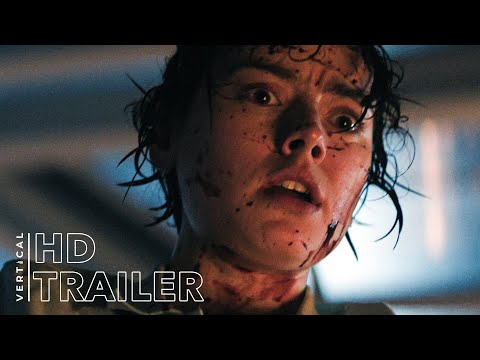
While those seeking fast-paced zombie thrills akin to Danny Boyle’s 28 Days Later movies may come away disappointed, We Bury the Dead excels as an intimate character study. Featuring in every moment of the film, Daisy Ridley stuns with one of her best performances to date. Playing a character who internalizes her pain, Ridley wears mental agony on her face so authentically and beautifully in the film. She conveys an extraordinary depth of emotion through her eyes and subtle alterations to her facial expression, allowing the audience to understand her suffering without needing to be told explicitly through dialogue about her suffering. We Bury the Dead simply wouldn’t strike a chord with the themes it touches on without a performer as immersive and nuanced as Ridley at the forefront.
Through Ridley’s strong performance, Hilditch takes full advantage of Ridley’s strong performance to explore grief and closure. From the beginning, it is clear that We Bury the Dead will culminate in a bleak resolution for our protagonist. The experimental weapon that discharged immediately wiped out over 500,000 people and every other living thing in its vicinity. Even rumblings of some of the dead coming back online don’t inspire much hope as our glimpses at the zombies reveal that, upon reawakening, they steadily lose their humanity and become more brutal as every moment passes by. As such, Ava, and the audience, know that the search for her husband will likely be unsatisfying, in one way or another. He’s almost certainly dead already and, if he has come back to life, he is or very soon will be a bloodthirsty zombie. It’s through the relative pre-determined definitiveness of this central story point that Hilditch intriguingly explores closure and the almost irrational, yet determined will to seek out this often elusive sentiment. In doing so, We Bury the Dead taps into themes relevant far beyond the zombie subgenre of horror that will likely resonate with anyone who has tried and failed to achieve closure following the unexpected loss of a loved one.

Concurrent with its examination of grief and closure is the theme of motherhood that encompasses the entire film. Brief flashbacks scattered throughout gradually reveal details of Ava and her husband Mitch’s relationship and their failed attempts to conceive a child. Later on, Ava encounters Riley (Mark Coles Smith), a man whose familial struggles and grief tap into Ava’s difficulties with infertility. Beyond grief and closure, motherhood ultimately and unexpectedly serves as the core and culminating theme of We Bury the Dead, delivering a narratively and emotionally satisfying ending, albeit one that greatly resembles key elements from 28 Years Later. This is an unfortunate coincidence, rather than intentional imitation, on behalf of Hilditch as We Bury the Dead wrapped production before 28 Years Later even began production. Nonetheless, the effectiveness of this concluding note dwindles somewhat as a result of this parallel and, more damningly, shines a glaring spotlight on the similarities between the 28 Days Later movies and the unfortunately less impactful We Bury the Dead.
VERDICT: 7/10
Daisy Ridley triumphs with a stunning performance in the intimate, chilling, and mostly routine zombie thriller We Bury the Dead. Director and writer Zak Hilditch’s film succinctly sets up a solid premise with strong expositional writing but is unfortunately hindered by slow pacing and a first act with little narrative movement. Largely disinterested in forging new territory for zombie movies, the film finds a point of novelty in its approach to the undead, portraying them as surprisingly benign and unthreatening, yet menacing nonetheless. With the horror one comes to expect from zombie movies dialed down, a more quiet and contemplative character study and exploration of grief, closure, and motherhood takes over, proving largely successful in provoking powerful emotions that will likely resonate with anyone who has struggled to find closure following the loss of a loved one. Carrying these heavy themes and wearing mental agony on her face so authentically and beautifully is star Daisy Ridley, who delivers one of the best and more immersive performances of her career here in a role that requires she convey an extraordinary depth of emotion through her eyes and subtle alterations to her facial expression alone. A conclusion that disappointingly (and unintentionally) parallels the recently released 28 Years Later means Hilditch’s film struggles to shake off the similarities to the myriad of other zombie movies that have come before it. However, We Bury the Dead largely overcomes its repeating of zombie movie beats with a compelling and emotional examination of closure and motherhood, driven by a commanding turn from Daisy Ridley.
We Bury the Dead is in theaters January 2, 2026