
By George & Josh Bate

The New York Times described Freida McFadden’s novel The Housemaid as a “monster hit.” In the two years after its publication, the book sold over 1.6 million print copies and amassed a large following on BookTok and Goodreads that has continued to expand with the publication of two sequels. Now, The Housemaid’s success continues with a feature film adaptation that perfectly mirrors its twisty, seductive, dark, and undeniably entertaining source material.
From director Paul Feig, The Housemaid stars Sydney Sweeney as Millie, a young woman desperate to escape a troubled past. After securing employment as a live-in housemaid for the wealthy Nina (Amanda Seyfried) and Andrew Winchester (Brandon Sklenar), Millie realizes that what she once thought was a dream job is actually something far more sinister.
Anyone who has read The Housemaid will know that Freida McFadden’s novel was tailor made for a feature film adaptation. There’s twists, turns, tension, seduction, opportunities for three great lead performances, and the potential for a throwback erotic thriller destined to provide counter-programming to the behemoth that is Avatar: Fire and Ash coming to theaters on the same day. Gratefully, director Paul Feig and screenwriter Rebecca Sonnenshine take full advantage of the source material at their disposal in crafting a faithful adaptation that recaptures the magic and sheer entertainment value of McFadden’s page-turner.
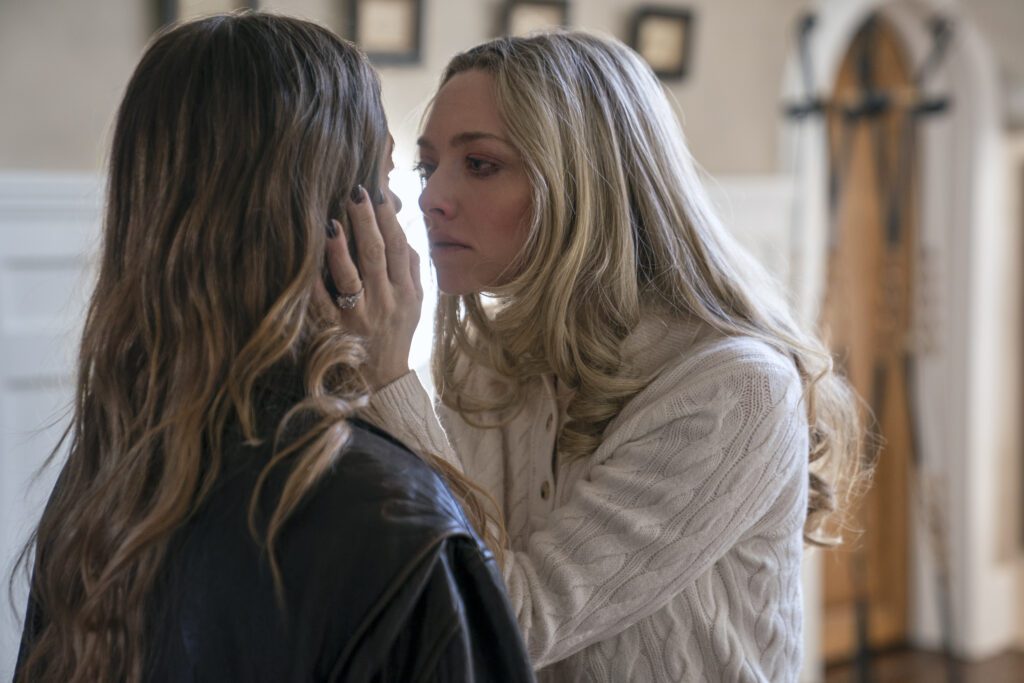
The film adheres closely to the narrative of the novel and, as such, features a great hook and a fairly rapid escalation of tension. Feig wastes no time setting the stage for the events that unfold, dropping audiences immediately into Sweeney’s Millie interviewing for a coveted housemaid position with Seyfried’s wealthy Nina. The duo hit it off quickly, but cracks in their relationship almost immediately appear after Millie’s employment begins as Nina’s passive-aggression and instability rise to the surface. Feig expertly crafts a sense of tension, while succinct expositional writing from Sonnenshine ensures that Millie’s decision to remain in such a tumultuous working and living situation remains realistic.
Largely unlike the book, however, Feig’s film possesses a pulpy, almost comedic quality that enhances an already entertaining series of events. In part, this quality comes about through the lead performance from Sydney Sweeney, whose limited intonation and staggered line delivery inject a (possibly) unintentional sense of humor into the film. The strangeness of the dilemmas Millie finds herself in the middle of hilariously juxtaposes Sweeney’s almost nonchalant and aloof performance, which wouldn’t be out of place in a Lifetime mystery movie.
Sweeney isn’t alone in turning McFadden’s taut psychological thriller designed for mass appeal into a film as thrilling as it is ridiculous and silly. Greatly contrasting her impressive turn in this year’s The Testament of Ann Lee, Seyfried is delightfully unhinged as Nina Winchester, crafting an unstable, unpredictable, and, at times, downright unusual character. Like Sweeney, Seyfried’s line delivery often feels mismatched to the more serious content of the story, although, surprisingly, it works astonishingly well. Sure, there are moments where the absurdity of Seyfried and Sweeney’s performances pull you out of the movie, but that’s part of the charm of Feig’s rendition of The Housemaid. The director, who is largely known for his comedic work but also managed to effectively balance thrills and laughs in A Simple Favor, exhibits a deft handling of tone here – the film’s silliness and suspense remain in perfect conversation with one another throughout, with neither one overstaying its welcome and dampening the potency of the other.

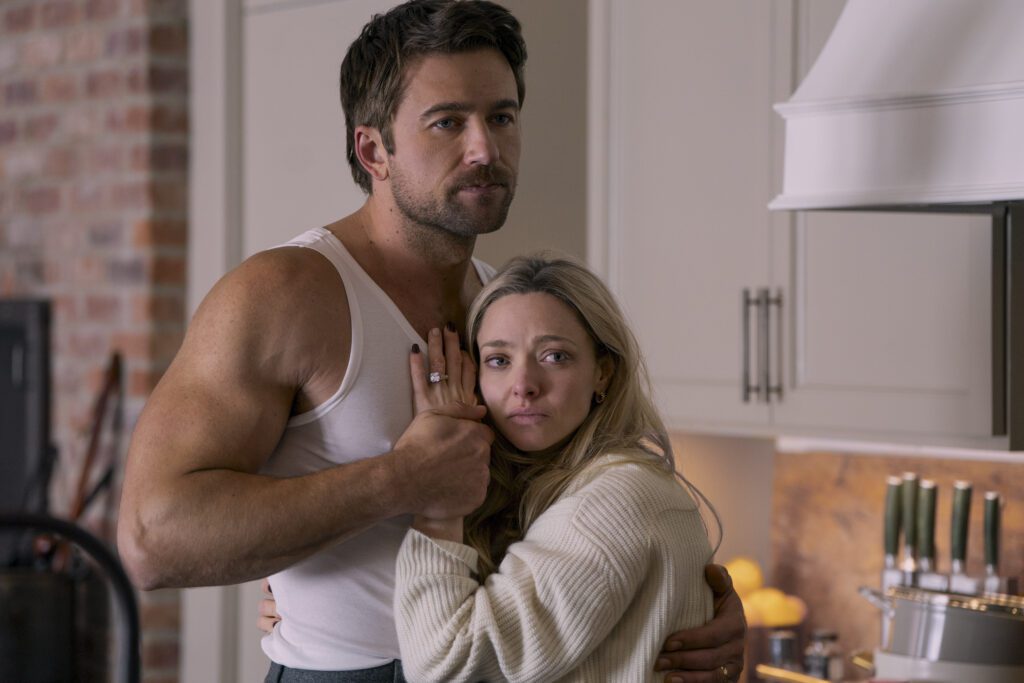
Brandon Sklenar, the film’s third lead, similarly operates within the tone Feig aims for. Even more than Sweeney and Seyfried, Sklenar is responsible for the film’s biggest laughs, especially in a third act that amps up the eccentricity of all involved. Collectively, the trio, under Feig’s stewardship, make The Housemaid, quite unexpectedly, one of 2025’s funniest movies, perhaps only rivaled by the reboot of The Naked Gun headlined by Liam Neeson. It’s the kind of film filled to the brim with laugh-out-loud moments that are made all the more engaging and funnier if enjoyed in a packed theater.
The crowd-pleasing nature of The Housemaid makes the issues with its narrative easier to stomach. Along with tension and suspense, Feig’s film inherits the unfortunate predictability of McFadden’s novel as well. With only three players (Sweeney, Seyfried, and Sklenar) in the mix, there’s only so many possible explanations of what’s truly going on for the audience to ponder over. As a result, one of the main reveals of the second half is extraordinarily easy to forecast, while a secondary reveal similarly does not come across as surprising as it should.
Following these reveals, The Housemaid intelligently diverges from the finale of its source material. While McFadden’s novel arrives upon a somewhat abrupt resolution to the events of its story, Feig’s film reworks the conclusion by drawing things out and adding much-needed action and intensity to the mix. The film still concludes on a rather convenient final note but otherwise greatly improves upon the final act of the book.
VERDICT: 7/10
Paul Feig’s feature film adaptation of the hit novel The Housemaid is wildly entertaining. Faithfully adapting Freida McFadden’s page-turner, the film retains all the enthralling tension, twists, and turns of its source material, while unexpectedly injecting a pulpy, comedic flair largely absent from the novel. What results is a film as thrilling as it is ridiculous, in part due to Sydney Sweeney’s limited intonation and staggered line delivery that bring a (possibly) unintentional sense of humor to the film. Amanda Seyfried, meanwhile, is delightfully unhinged and, like Sweeney, delivers a heightened performance that, at times, pulls you out of the movie but astonishingly works nonetheless due to Feig’s deft handling of tone. Brandon Sklenar operates seamlessly within this tone, delivering some of the film’s funniest moments in a bonkers third act. Along with the tension and suspense it inherits from its source material, The Housemaid also replicates the predictability of McFadden’s work, with two big reveals that are fairly easy to forecast. Screenwriter Rebecca Sonnenshine intelligently reworks and improves upon the book’s abrupt resolution with a more action-packed and suspenseful finale, which is still unfortunately capped off with a rather convenient concluding note. Crowd-pleasing, laugh-out-loud, and filled to the brim with tension, The Housemaid gives every other movie of 2025 a run for its money in terms of sheer entertainment value, although the intentionality of all of its humorous successes remains unclear.