
By George & Josh Bate

The following is a NON-SPOILER review of all four episodes of Malcolm in the Middle: Life’s Still Unfair
If you grew up in the early 2000s, Malcolm in the Middle was likely a fixture of your childhood. The Fox sitcom, which ran from 2000 to 2006 and consisted of 151 episodes, garnered a huge fan base of viewers who appreciated the show’s chaotic and wholesome depiction of a dysfunctional middle-class family everyone could, in some way, relate to. Twenty years after the series finale aired, Malcolm, Hal, Lois, Francis, Reese, and Dewey return for a legacy sequel revival series that largely captures the charm of the original show, even if its trademark brand of humor doesn’t entirely translate to modern television.
Malcolm in the Middle: Life’s Still Unfair picks up decades after the original show concluded. Malcolm (Frankie Muniz) has methodically avoided his family for years to shield both him and his daughter Leah (Keeley Karsten) from the dysfunction he grew up surrounded by. That changes as his parents Hal (Bryan Cranston) and Lois (Jane Kaczmarek) demand his presence at their 40th anniversary party, forcing Malcolm to navigate re-entering the lives of his parents and siblings Francis (Chris Kennedy Masterson), Reese (Justin Berfield), and Kelly (Vaughan Murrae).
Two decades since the show’s original conclusion, it’s easy to overlook just how groundbreaking and novel Malcolm in the Middle was. The series was one of the first single-camera comedy shows to not use a live studio audience or laugh track, subsequently influencing the likes of The Office and Arrested Development. It regularly broke the fourth wall and was unafraid to get weird with its humor. And, perhaps most notably for many, it was a television series geared toward children that embraced the imperfections and rough edges of families, showing that being a member of a family can sometimes feel like being caught up in the wildest of storms. In replicating these essential elements of the original show, Malcolm in the Middle: Life’s Still Unfair makes for a successful legacy sequel.
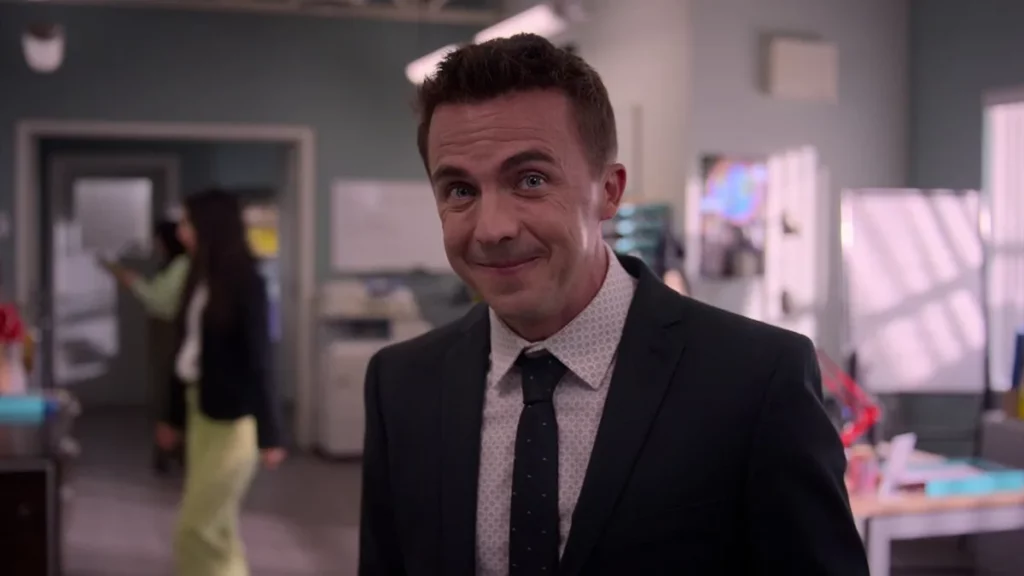
The greatest compliment that can be paid to the new series is that it feels like an organic continuation of the original show, in every sense. The first episode begins immediately with Frankie Muniz deftly stepping into the role of Malcolm again as if twenty years didn’t go by. Muniz has the same anxious energy that defined young Malcolm and wastes no time sharing his worries with dialogue directed toward the audience. Playing the titular character, Muniz is once again the centerpiece of the show and chews up the scenery with incredible comedic timing, brilliantly over-the-top facial expressions, and a performance that perfectly captures the character he played so long ago.
Muniz’s performance isn’t the only element that makes the new series feel like such a natural successor to the beloved original. Painstaking effort has seemingly gone into recapturing the tone and charm of the original show, down to the use of similar scene transitions, musical cues, and humor. While many of the jokes may not land and even feel a tad dated at times, it’s admirable just how fully the show replicates the atmosphere and viewing experience of its predecessor.
Stumbles with some of its humor doesn’t mean the revival series is entirely devoid of laughs, however. Malcolm using his intellect to meticulously and strategically map out ways to avoid his family is a running joke that consistently delivers (and may prove all too relatable for many viewers). Malcolm compares being around his family to being a werewolf on a full moon, an analogy that encapsulates his frenzied panic as he tries to distance his new life with his daughter and girlfriend from his dysfunctional family.

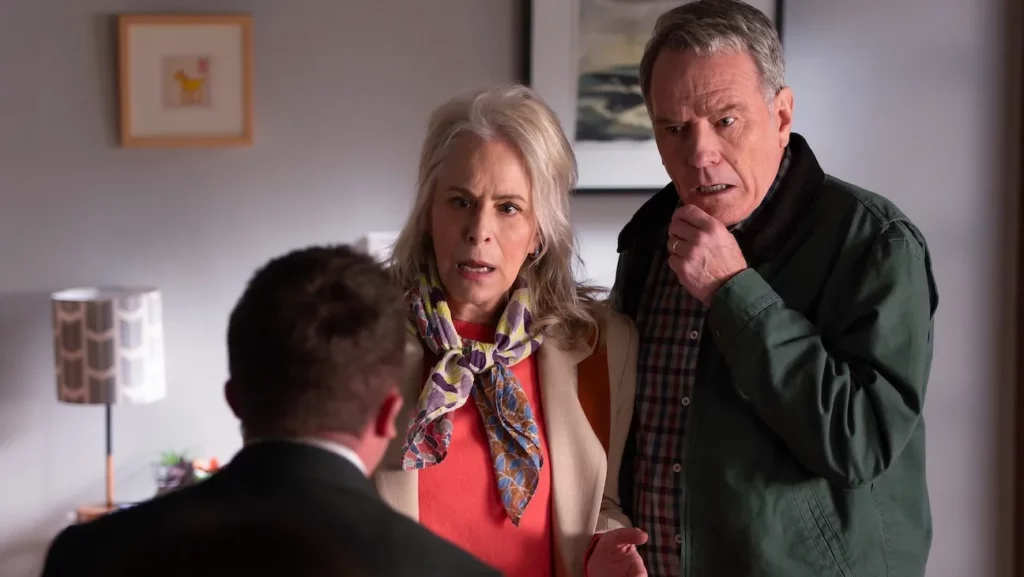
The dysfunctional family in question (which still does not have an official last name after all these years!) similarly returns in full form. From big musical numbers to rolling around the floor naked to hitting himself in the face with floor tiles, Bryan Cranston really swings for the fences with his return as Hal and shows that the actor who, in the years since the original show, took the world by storm as Walter White has not lost his comedic roots. Jane Kaczmarek similarly brings Lois back with the same anxiety, anger, lack of logic, and love that made the character so iconic back in the day. Cranston and Kaczmarek share beautiful chemistry in the series, especially as the narrative focuses on their big 40th wedding anniversary celebration. Malcolm in the Middle always portrayed the love between Hal and Lois so endearingly and wholesomely, and it’s nice to see that Life’s Still Unfair hasn’t left behind this element of the series.
Also returning are Justin Berfield and Chris Kennedy Masterson as Malcolm’s brothers Reese and Francis respectively. At first, it seems as if the series may have mishandled its characterization of Reese, but wait until the second episode and you’ll see that this is the same devious and dopey rascal that used to terrorize his siblings and parents years ago. Francis, meanwhile, is once again joined by his wife Piama (played by Emy Coligado) and hilariously navigates a conflict with his mother about her skewed priorities in the new episodes. Berfield and Masterson are simply superb as the returning brothers, each deftly recapturing their characters’ distinct brands of stupidity. Both from an acting standpoint and writing standpoint, Malcolm in the Middle: Life’s Still Unfair exhibits a thorough understanding of the core characters played by Cranston, Muniz, Kaczmarek, Masterson, and Berfield.
Conversely, the series strangely approaches the character of Dewey. Erik Per Sullivan does not reprise his role as Dewey after retiring from acting and pursuing his education. In his place is Caleb Ellsworth-Clark, who bears a striking resemblance to Sullivan and does what he can after being tasked with an awkward role. The series makes the decision to recast Dewey but awkwardly neither positions him as a main character nor brief cameo appearance. Instead, Dewey pops up via Zoom throughout the four episodes as he is journeying around the world. It’s as if the show wants us to not forget Dewey, and yet is reluctant to give an actor other than Sullivan room to play the character. This results in the series’ most awkward and unfunny scenes, in particular one in the last episode in which another character bafflingly carries a laptop around so Dewey, again via Zoom, can watch what’s happening.
While similarly dropping the ball in the portrayal of another of Malcolm’s siblings Jamie, the series introduces a duo of fresh faces that operate nicely within the more heightened tone of this world. Keeley Karsten plays Malcolm’s daughter Leah and, like her father, possesses an anxious energy and regularly speaks to the audience by breaking the fourth wall. Karsten does well to deliver a performance that feels like she’s very much the child of the intellectual yet anxiety-ridden Malcolm. Intelligently, the series never has Leah usurp Malcolm as the lead character, instead giving her a key role to play that never overshadows the legacy characters we’ve come to see.
The same can be said for Kelly, Malcolm’s youngest sibling played by Vaughn Murrae. Kelly’s existence was alluded to in the original series finale, so it’s nice to see that the revival show didn’t forget that Hal and Jane last left things off with another kid on the way. Murrae grows into the role of Kelly as the episodes progresses and excels best when trading blows with their older brother Reese. As Kelly identifies as non-binary, the show demonstrates a willingness to be inclusive and culminates in one of the series’ most touching moments in the final episode, beautifully portrayed by Murrae.
For as chaotic and dysfunctional as Malcolm in the Middle: Life’s Still Unfair is, an undercurrent of wholesomeness pops up throughout. This was the case in the original run, which always made sure to surround the insanity with pointed moments of tenderness. While the tenderness here may not be the kind of tear-inducing emotional response one may hope from a follow-up twenty years later, it nonetheless tugs on the heartstrings and shows that Malcolm in the Middle is more than just a crazy comedy – it’s a relatable, even heartwarming family drama as well.

VERDICT: 7/10
Malcolm in the Middle returns after twenty years with a revival series that expertly recaptures the charm, humor, and characters of the original show. In every sense, Life’s Still Unfair feels like an organic continuation of its predecessor, with a tone, side characters, comedy, and even scene transitions that made the original show so distinct. While the humor doesn’t always land and even feels a tad outdated at times, there’s still plenty of laughs to be had here, namely through Frankie Muniz deftly and perfectly picking up where he left off in portraying the anxiety-ridden Malcolm. Bryan Cranston, Jane Kaczmarek, Justin Berfield, and Chris Kennedy Masterson also all reprise their fan-favorite roles with remarkable success and the same kind of bonkers personality quirks that made their characters so memorable in the first place. The series misfires in its handling of Dewey but manages to introduce two new characters that fit nicely into the tone and plot without overshadowing the legacy characters we’ve all come to see. The chaos and dysfunction of the family is coupled with numerous moments of tenderness, which, while not necessarily yielding the tear-inducing emotional response one would hope, nonetheless tug on the heartstrings. In feeling like the original series in every way, Malcolm in the Middle: Life’s Still Unfair serves as an insane, wholesome, and endlessly entertaining love letter to a show that defined so many of our childhoods.
Malcolm in the Middle: Life’s Still Unfair premieres April 10 on Hulu on Disney+
