
By George & Josh Bate
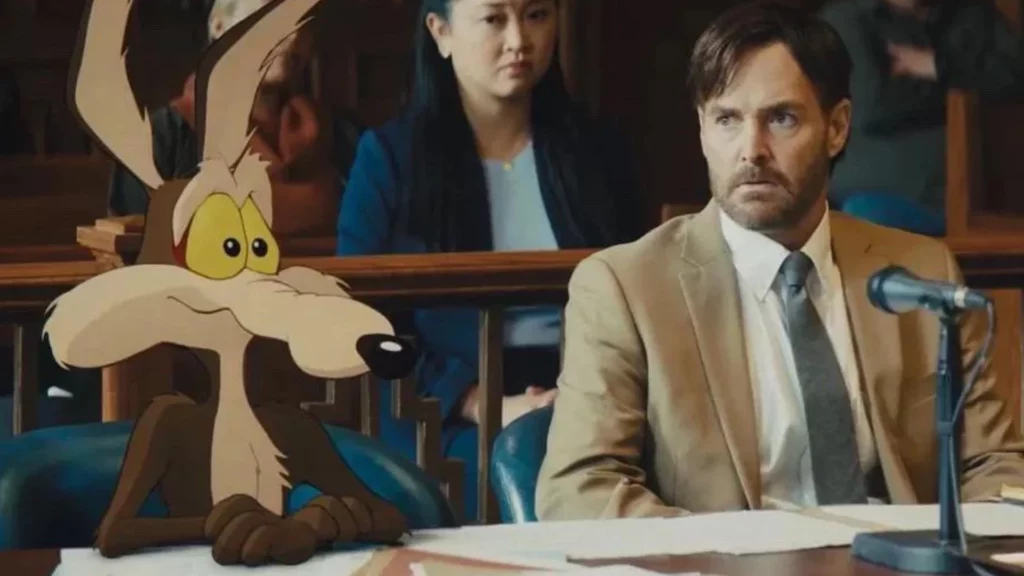
As the saying coined by Oscar Wilde goes, “Life imitates art.” But sometimes, Aristotle’s view that “art initiates life” proves equally true. That is certainly the case with Coyote vs. Acme, a vibrant, imaginative, and staunchly anti-corporation family comedy imbued with added meaning due to its rocky road to the big screen.
From director Dave Green (Teenage Mutant Ninja Turtles: Out of the Shadows, Earth to Echo), Coyote vs. Acme follows Wile E. Coyote, the devious and relentlessly hungry coyote determined to catch and eat the Road Runner once and for all. After failing in his pursuit for the umpteenth time, Coyote changes strategy, turning to down-on-his-luck human attorney Kevin Avery (Will Forte) to launch a lawsuit against the ACME Corporation, the company responsible for the string of disastrous products Coyote tried to use to catch the Road Runner. The lawsuit pits Kevin and Coyote against Buddy Crane (John Cena), the ACME Corporation’s head lawyer who Kevin used to work with.
The original Coyote/Road Runner shorts have a wonderful, childlike sense of humor unfolding around a very simple premise: a hungry coyote chases after (and repeatedly fails to catch) a long-legged bird. While entertaining as a concept, this is hardly the basis for a full-length feature film. But Academy Award winning screenwriter Samy Burch (May December, Late Fame) finds a unique and interesting way to expand the endless chase between Wile E. Coyote and the Road Runner into a full-fledged film filled with wit, empathy, and a message everyone needs to hear right now.
Coyote vs. Acme is based on a satirical article published in The New Yorker in 1990 by acclaimed humorist Ian Frazier. In the article, Frazier imagined the legal briefings of a lawsuit Wile E. Coyote lodges against the ACME Corporation, alleging the massive company of corporate malfeasance and liability due to their numerous ill-fated products. Whether it be Spring-Powered Shoes, Rocket Sleds, or countless other gadgets, Coyote has repeatedly relied on ACME’s products to catch the Road Runner, yet has been let down time and time again by poor engineering.
Frazier’s piece makes for an exceedingly clever entry point into a Coyote/Road Runner film that builds upon the foundation laid by the classic shorts. A courtroom drama between a cartoon coyote and a behemoth corporation packs just the right combination of lunacy and creativity.
Green’s film plays this admittedly absurd premise straight for the most part, a sharp call given that calling attention to the ludicrous nature of the film’s premise and surrounding world would pull the audience out of the story and dampen the emotional resonance of its themes. This is not to say that Coyote vs. Acme doesn’t have fun with its premise – it certainly does – but it does so in a way that ensures all the film’s characters treat the dilemma they’re in seriously and do not overtly act as if they are in a comedy.
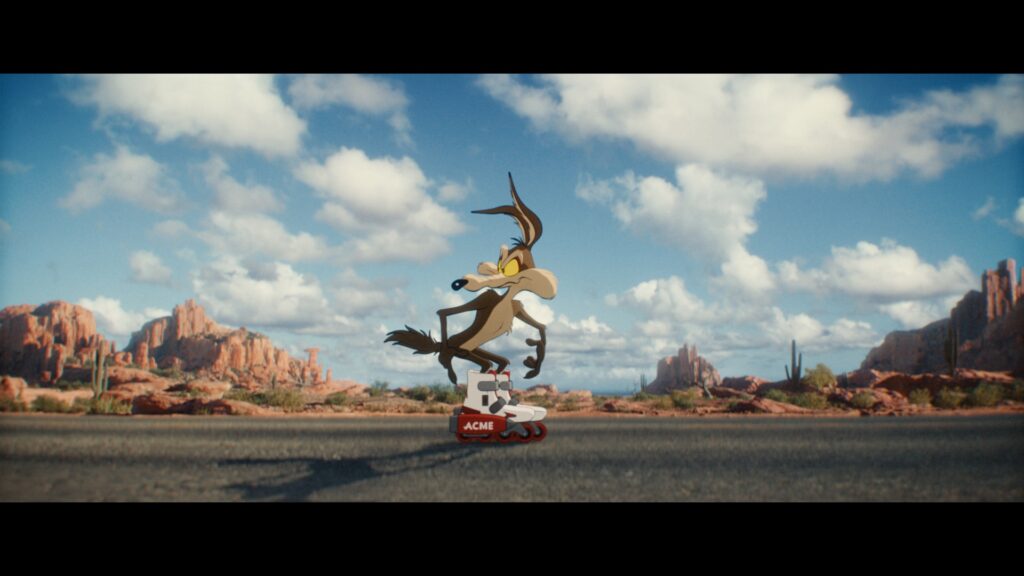
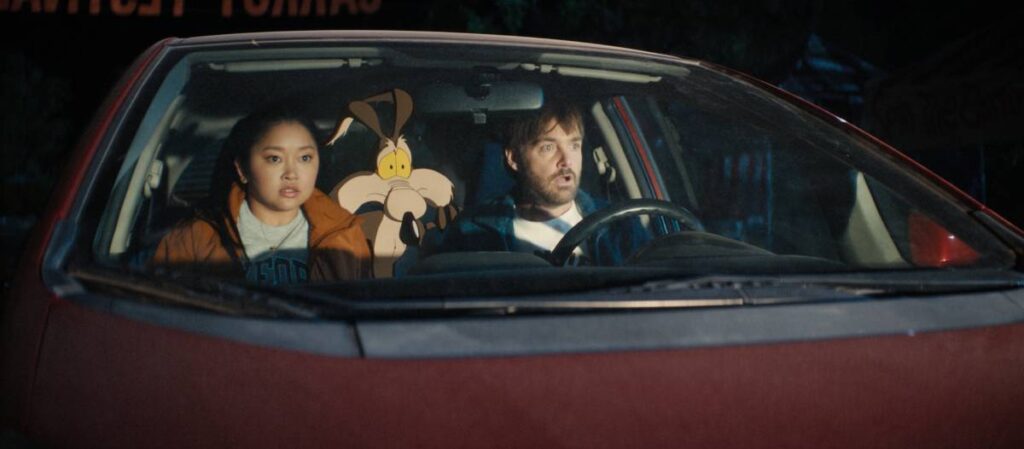
The hiring of Green to helm an ambitious live-action/animation hybrid is quickly cemented as the perfect call. The director of Teenage Mutant Ninja Turtles: Out of the Shadows and Earth to Echo is no stranger to mixing live-action and animation, but, here, takes on a decidedly greater challenge. By design, the animated characters and related objects are not intended to be photo-realistic. As such, the animation doesn’t seamlessly blend into the live-action the way most movies attempt to do. But Green’s precise shot compositions and camerawork ensure that Coyote vs. Acme’s visual language never feels out of place or off-putting.
Instead, the blend of live-action and old school animation gives Green’s film a novel visual language, particularly for modern audiences. The most obvious comparison is Who Framed Roger Rabbit, the 1988 classic that combined live-action performances with traditional hand-drawn animation to tremendous effect. Like Robert Zemeckis and Richard Williams’ film, Coyote vs. Acme treats animation, not as a flat overlay or simple gimmick, but as a physical presence that shares the same three-dimensional space, lighting, and logic (for the most part) as its live-action actors. Painstaking detail clearly went into how physical light interacts with the cartoon characters and how live-action actors interact with cartoon props.
Also like Who Framed Roger Rabbit is Coyote vs. Acme’s believable, lived-in alternate history in which cartoon characters co-exist with humans. Green’s film doesn’t over-explain or overcomplicate its world-building, instead simply letting the audience grow accustomed to this strange landscape by seeing how everyone is unfazed by the presence of cartoon characters in a largely human world.
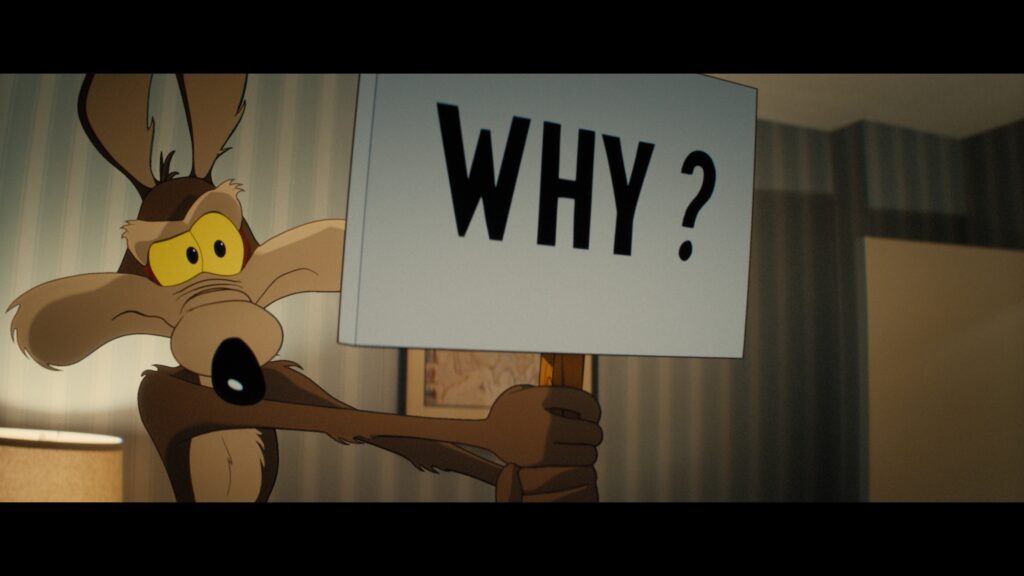
For the most part, the film excels with its sense of humor, which relies on a number of different kinds of jokes to generate laughs. Of course, there are ample physical gags, as one would expect from any story about Wile E. Coyote facing off against the Road Runner. Consistent with the original shorts, Coyote remains mute, using deadpan glances at the camera and small hand-written signs to humorously convey his emotional states.
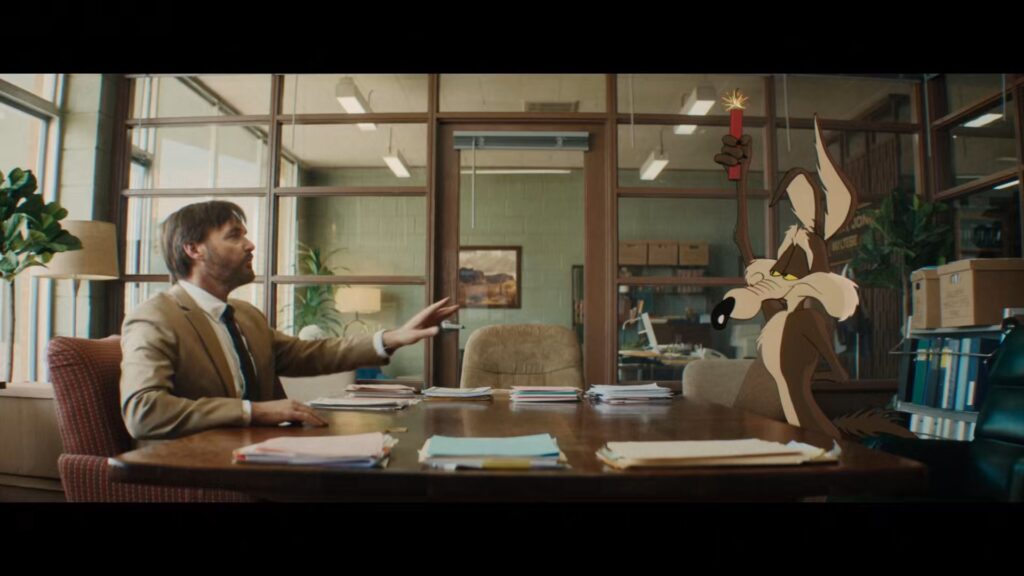
The prominence of human characters, however, imbue Coyote vs. Acme with an additional flavor of humor discrepant from the Coyote/Roadrunner shorts. Will Forte triumphs as a broken, unmotivated lawyer, who finds new meaning in life when his law firm Avery, Jones & Maltese (a tribute to Wile E. Coyote’s creators Chuck Jones and Michael Maltese) is tasked with going against the ACME Corporation. Unlike much of Forte’s previous work, the SNL legend and MacGruber star largely plays the straight man in the story, who juxtaposes the lunacy of Wile E. Coyote. That being said, Forte still masterminds plenty of laughs in the film due to his signature line delivery and commitment to the bit.
For as absurdly silly and visually innovative Green’s film is, Coyote vs. Acme bolsters a surprisingly poignant anti-corporation message. It doesn’t take a genius to recognize the irony of a movie about an underdog fighting against a massive corporation coming out of a controversy in which a massive corporation tried to bury said underdog movie. This fascinating, almost-meta background gives the film’s messaging staunch commentary added depth. Burch’s screenplay does not shy away from drawing unfavorable comparisons between ACME and the conglomerates that rule the world today, poking fun while also starkly critiquing their lack of empathy and singular focus on profit margins.
In turn, both on and off-screen, Coyote vs. Acme champions a straightforward, yet nonetheless powerful message about perseverance, resilience, and standing up for what’s right, regardless of how big the enemy before you stands. This is far from the first time such themes have been explored in a family film, but Green and company do it with such heart and authenticity that, coupled with the added context of the behind-the-scenes parallels, it is difficult to not get wrapped up in the emotion of it all.
The emotional throughline continues with a clever recontextualization of the classic Coyote and Road Runner conflict. The film does not undermine the decades of rich conflict between the characters, but it does add a spin that gives way to an endearing message about unlikely friendship, the need for community, and the bravery it takes to remain unwavering in pursuit of one’s goals. It’s not quite a tear-jerker as these themes are given attention in the final stretch, but there is undeniable heart, unburdened by pretension and inauthenticity, to admire about the characters, the journeys they go on, and the destinations they ultimately arrive at.
VERDICT: 7.5/10
Coyote vs. Acme epitomizes Oscar Wilde and Aristotle’s sayings that life initiates art and that art initiates life. Emerging from off-screen controversy that nearly resulted in the film being shelved and used as a tax write-off, director Dave Green’s movie serves as a vibrant, imaginative, and staunchly anti-corporation family comedy imbued with added meaning due to its rocky road to the big screen. Working from a clever premise, based on a satirical article by Ian Frazier, the film manages to do the impossible in expanding the classic, yet straightforward Coyote/Roadrunner shorts into a full-fledged film filled with wit, empathy, and a message everyone needs to hear right now. The blend of cartoon and live-action characters is achieved masterfully, both from a technical visual effects standpoint and a narrative, universe-building perspective. The film evokes memories of Who Framed Roger Rabbit in its seamless world-building, painstaking attention to detail, and willingness to have its characters treat admittedly absurd material as seriously as possible.
For the most part, the humor lands thanks to a combination of Will Forte’s trademark deadpan delivery and classic Wile E. Coyote physical gags. But it’s ultimately through the film’s staunchly anti-corporation message and championing of perseverance, resilience, and standing up for what’s right that makes Coyote vs. Acme as resounding of an achievement as it is. In addition to intelligently recontextualizing the classic Coyote and Road Runner conflict, the film endearingly comments on unlikely friendships, the need for community, and the bravery it takes to remain unwavering in pursuit of one’s goals. All of these themes prove just as relevant on screen as they do off-screen, giving Coyote vs. Acme a delightfully meta quality.
Thankfully, the movers and shakers behind the scenes actualized the themes of the movie by persevering, remaining resilient, and finally bringing one of the year’s best family movies to the big screen.