
By George & Josh Bate
One of the most celebrated directors in cinema history has had a decidedly hit-or-miss output in recent years. In the past 10 years, Ridley Scott has masterminded The Last Duel, the lavish medieval critique of systemic misogyny starring Matt Damon and Adam Driver, and Gladiator II, the epic, muscular sequel to one of the century’s best films. On the other hand, he oversaw the woefully uninteresting Napoleon and the maddeningly camp House of Gucci, two misfires that highlighted a marked fall from grace for the filmmaker behind Alien, Blade Runner, and numerous other iconic movies.
At a remarkable 88-years-old, Scott returns for yet another movie, a painfully generic post-apocalyptic thriller indistinguishable from The Last of Us, 28 Days Later, I Am Legend, and countless other, better stories.
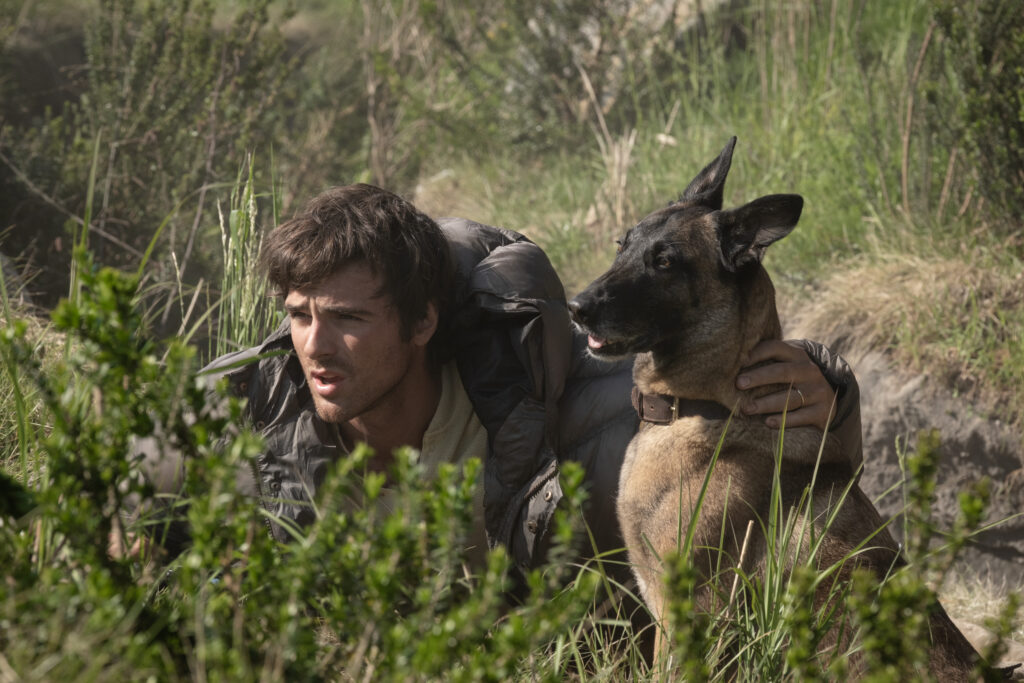
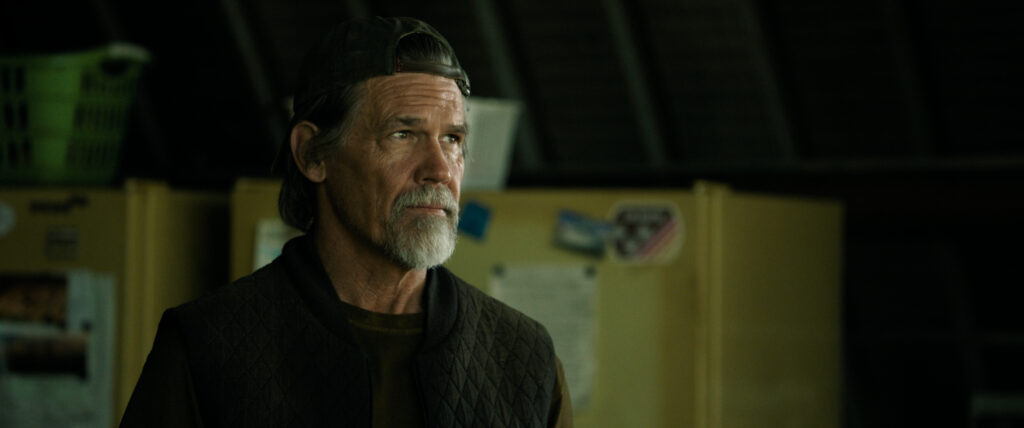
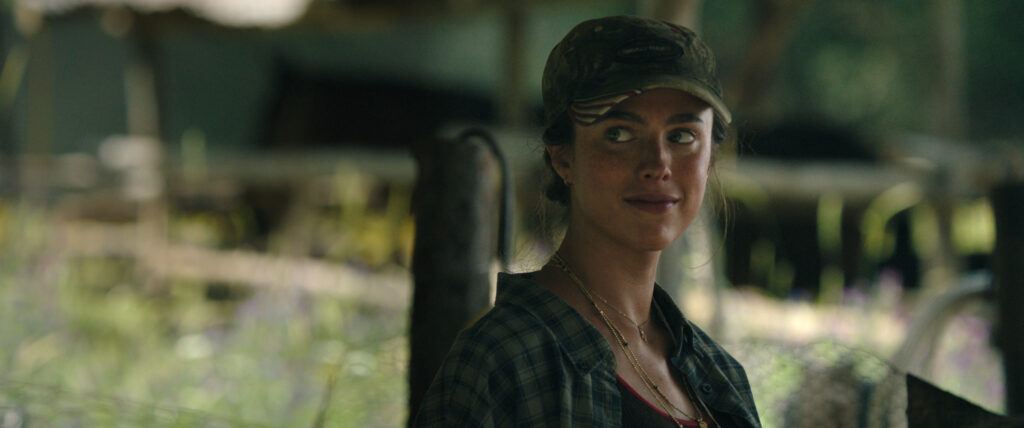
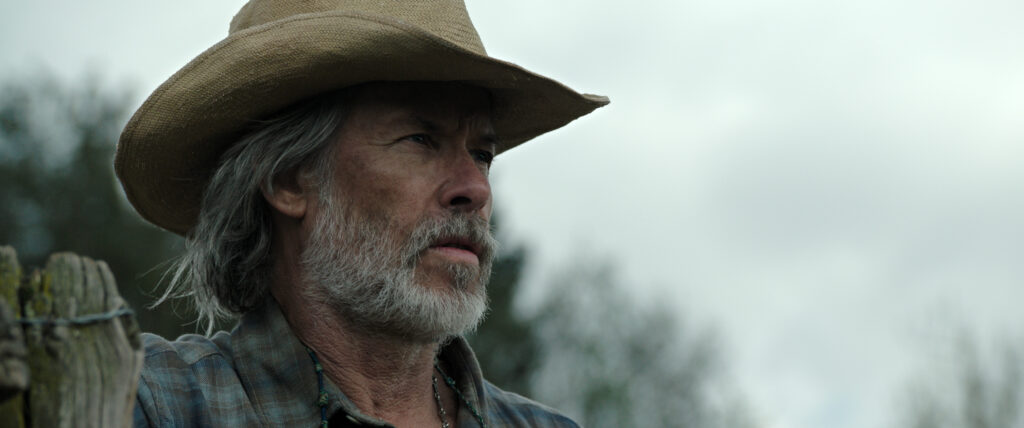
Based on the novel of the same name by Peter Heller, The Dog Stars takes place in a future devastated by a flu pandemic that almost wiped out the entirety of humanity. Hig (Jacob Elordi), a former mechanic grieving the loss of his wife, spends his days living on a desolate piece of land with his beloved dog Jasper and grizzled friend Bangley (Josh Brolin). Hopeful that the world beyond their makeshift home will give him the opportunity to live a more fulfilling life, Hig boards his vintage plane and embarks on a journey where he encounters rancher Pa (Guy Pierce) and his daughter Cima (Margaret Qualley).
Given the talent involved both in front of and behind the camera, it is difficult to conceive just how some of the industry’s most sought-after actors and one of cinema’s greatest directors were drawn to a project so strikingly lacking in novelty. The Dog Stars takes place, like numerous other movies and series, in a world decimated by some vaguely described pandemic. Buildings have collapsed, areas are sparsely populated, and those who remain must scavenge for basic resources in order to survive. Stylistically, narratively, and thematically, Scott’s film does nothing unique with these oversaturated tropes of the post-apocalyptic genre, rendering it a movie destined to remind viewers of better films and shows they’ve already seen.
The opening moments of The Dog Stars set the stage for a laboriously paced outing. There is little in the way of overt conflict for a startling amount of the film’s runtime, leaving much of the first half to a sulking, Edward from Twilight-esque Jacob Elordi moping around, being disagreeable with Josh Brolin, and flying around in his old plane.
One waits with baited breath for a degree of suspense or tension to be injected in the story, but it takes a frustratingly long time to arrive and is all too fleeting once it does. With a thoroughly uninteresting protagonist and a distinct lack of conflict, The Dog Stars is more likely to lull one into a doze than live up to its description as a thriller.
A thread of interest comes from Josh Brolin, whose scene-stealing turn as Bangley represents one of the film’s rare successes. Brolin’s hardened, cynical, and uncomfortably realistic former Marine adds much-needed personality and humor to the mix, although his intermittent presence in the film leaves one languishing more so in Elordi’s sour mood than experiencing the wit of Bangley.
Midway through its runtime, The Dog Stars comes alive with two superbly orchestrated action set-pieces that, at last, get the blood pumping. Both sequences would be worthy of a climactic showdown, but, instead, Mark L. Smith’s screenplay places them smack dab in the middle of the film and far too close to one another. One of the sequences essentially plays out as Josh Brolin starring in a Call of Duty Zombies short film, while the other takes the form of a nail-biting chase sequence that culminates in a daring attempt to take off in a vintage plane. With more set-pieces like this, the film would have at least consistently entertained, albeit not in an original way. Instead, they are more like the exception than the rule – two set-pieces that temporarily bring vibrancy to an otherwise tedious film.
As much of the film revolves around Elordi’s pursuit of a potential safe haven known as Grand Junction, The Dog Stars establishes a degree of intrigue as to what this place actually is. When this question is ultimately answered, the film unusually and uncharacteristically quickens up the pace at the one time in which slower, more calculated pacing would draw out the tension and maximize suspense. Similarities to other movies become particularly apparent in this predictable climactic stretch, which is then followed by an excessively long epilogue that makes the wait for the final credits to roll even more agonizing.
The Dog Stars bolsters solid craft from behind the camera, as one would expect from any movie directed by Ridley Scott. Harry Gregson-Williams’ score, alternating between folk and synth music, effectively establishes the tone of a given scene, while Scott and cinematographer Erik Messerschmidt capture some impressive landscapes from the altitude of Elordi’s plane. But even a filmmaker of Scott’s caliber can’t salvage a movie so sterile in its story, emotions, and characters.
VERDICT: 4.5/10
Veteran filmmaker Ridley Scott returns for a painfully generic post-apocalyptic thriller indistinguishable from The Last of Us, 28 Days Later, I Am Legend, and countless other, better movies and shows. Stylistically, narratively, and thematically, The Dog Stars does nothing unique with the wealth of oversaturated post-apocalyptic movie tropes it embraces and is made all the more tedious by agonizingly slow pacing. With little in the way of overt conflict, the intensity in Scott’s film is restricted to two superbly orchestrated action set-pieces that occur around the midway of the film and tease what could have been had the craft and tension of these sequences encompassed the entirety of the movie. Academy Award nominee Jacob Elordi sulks for nearly two hours as the post-apocalyptic equivalent of Edward from Twilight, while Josh Brolin injects much-needed personality and humor into the proceedings as a hardened former Marine. A predictable and uncharacteristically fast paced climax leaves little time for suspense to build and a romance between Elordi and Margaret Qualley’s characters is as uninspired as it is dull. Scott is undoubtedly one of the most celebrated directors in cinema history, but even a filmmaker of his caliber can’t salvage a film so sterile and lacking in novelty, so much so that it is difficult to wrap one’s head around why he and the film’s sought-after cast opted to dedicate their efforts to such a project.