
By George & Josh Bate
Sports dramas and horror flicks make a weirdly natural pairing. The cutthroat nature of competition, the physical toll of pushing one’s body beyond its limits, and the crushing pressure to succeed create an environment that is already rife with anxiety, obsession, and fear. Add in coaches demanding perfection, teammates willing to do whatever it takes to get ahead, and the ever-present possibility of failure, and it is easy to see why the world of sports makes such fertile ground for horror. Bloody Tennis takes that inherent darkness and drops it into an elite tennis academy, where the pursuit of greatness becomes increasingly indistinguishable from something far more sinister.
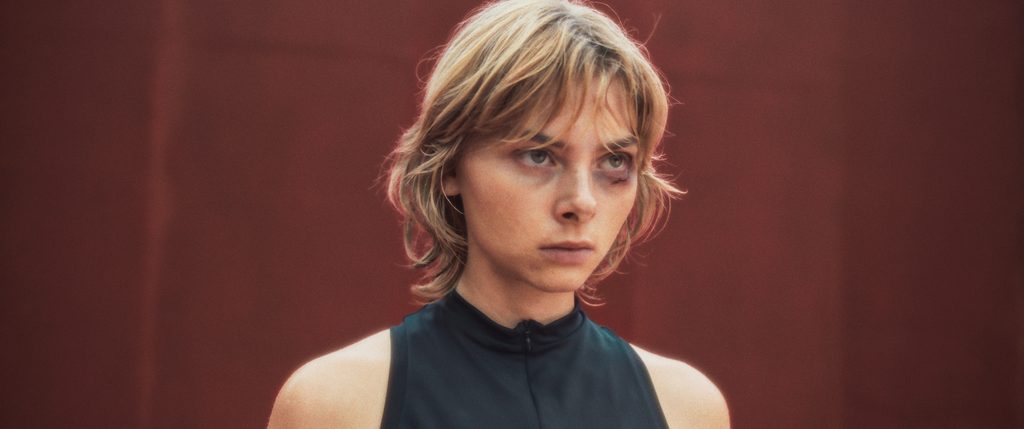
Making its world premiere at this year’s Fantastic Fest, Bloody Tennis follows Sophie (Sandra Guldberg Kampp), a young woman who has earned a coveted spot at an elite tennis academy hidden away in Southern Europe. Surrounded by fiercely ambitious young players and demanding coaches, she soon begins to notice unsettling aspects of the school that go well beyond the usual pressures of elite athletics. What initially appears to be an intense rite of passage gradually reveals a much darker side, forcing Sophie to weigh her ambitions against her relationships with her teammates and a burgeoning love interest.
Essentially, Bloody Tennis is Suspiria meets Challengers, with a little Soylent Green and Him thrown into the mix. The Suspiria comparison is particularly apparent in the film’s setting: an ominous, isolated academy where young women are sent to hone their skills in a demanding discipline under the watchful eye of an intimidating instructor. Like Susie Bannion in Dario Argento’s classic, Sophie begins to wonder whether the strange occurrences around her are simply the result of an unusually rigorous program or whether something far more sinister is happening behind the academy’s walls. Where Challengers supplies the combustible combination of ambition, sexuality, rivalry, and interpersonal drama, Bloody Tennis pushes those same ingredients into increasingly grotesque territory.
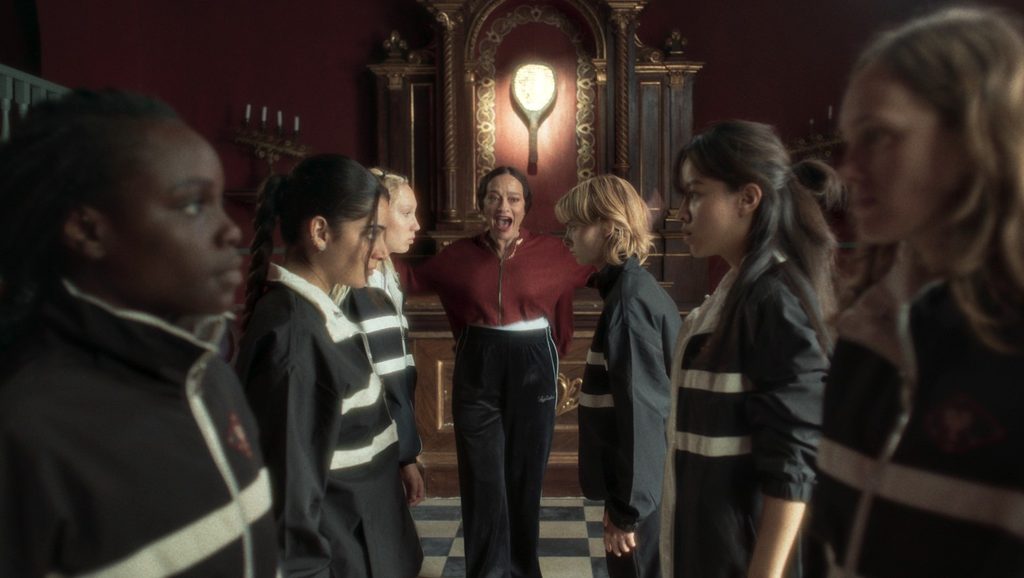
While Sophie tries to make sense of whether what is unfolding at the academy is just a byproduct of the cutthroat nature of elite sports or the result of something more insidious, the answer is abundantly apparent to the audience early on. There is a strange Igor-type figure lurking in the background, while the academy’s Madame Blanc figure serves as the imposing teacher presiding over the students. The movie is not necessarily concerned with keeping the nature of the academy a mystery, with its cold open making the presence of something decidedly abnormal glaringly clear. Instead, Bloody Tennis is more interested in watching Sophie gradually discover the extent of what she has gotten herself into. The question is less whether something strange is happening and more exactly what she does in response to all that strangeness.
Director Nikias Chryssos’ film thrives at the intersection of sports drama and horror movie. The drama and tension among the girls and coaches would be fierce and intense on their own, as every practice, match, and interpersonal relationship is colored by the pressure to succeed. Injecting strange behaviors, increasingly disturbing developments, and darker third-act revelations on top of that foundation, however, and things become edgier. Chryssos embraces the bizarre side of the premise, blending the brutality of elite sports with grotesque imagery and a growing sense that the academy operates according to rules that have little to do with conventional athletic training.
Sandra Guldberg Kampp is an assured lead in the film, but the decision to make her a rather stoic and unemotive character means she isn’t always easy to read. This helps make certain developments in the third act all the more surprising, as it becomes difficult to determine exactly what Sophie is thinking or how she will react when the full extent of the academy’s horrors comes into focus. At the same time, however, her reserved characterization keeps the audience at an emotional distance from Sophie for much of the film. There is at least a sweet queer romance to appreciate for a while, giving Sophie a connection that feels refreshingly human amid an environment increasingly defined by ambition, manipulation, and brutality.
While much of the film plays out predictably, Bloody Tennis takes an unexpected and bold turn in the third act. It leaves one thinking about what it takes to be successful in elite sports, what morals people are willing to forego in pursuit of greatness, and the minute possibility that supernatural forces may actually be at play. If these themes seem a bit familiar, it’s because they were covered quite well in last year’s horror movie Him. However, the direction this specific story heads in is interesting, and Chryssos ultimately finds some worthwhile wrinkles in familiar ideas about ambition and the price of success.
VERDICT: 7/10
Making its world premiere at this year’s Fantastic Fest, Bloody Tennis is a tense sports-horror hybrid that gets plenty of mileage out of placing the cutthroat world of elite athletics inside an increasingly grotesque nightmare. While its story follows a fairly predictable path for much of its runtime and its emotionally distant protagonist can make it difficult to fully connect with Sophie, the film benefits from an intriguing premise, an assured lead performance from Sandra Guldberg Kampp, and a third act that takes the story in an unexpected direction. The combination of Suspiria-style academy horror, Challengers-esque sporting rivalry, and increasingly bizarre body-horror elements makes Bloody Tennis an entertainingly peculiar genre exercise. It may not exactly be a grand slam, but Chryssos’ film proves that there is plenty of horror to be found in the pursuit of athletic greatness.
Bloody Tennis made its world premiere at this year’s Fantastic Fest. The film releases on Shudder on September 25.