By George & Josh Bate
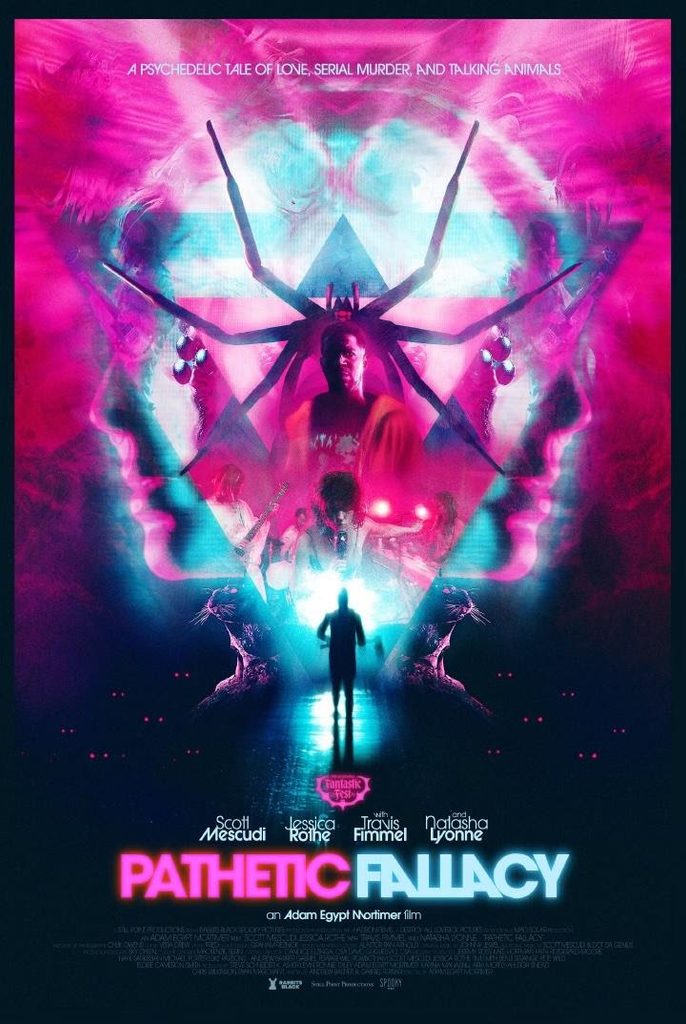
If Kid Cudi, David Lynch, Jane Schoenbrun, and The Daniels had a baby, and that baby was a movie, and that movie premiered at Fantastic Fest, you’d have Pathetic Fallacy, a psychedelic romance horror film featuring some of the most emotionally devastating and downright bizarre movie moments you’ll see all year.
From director Adam Egypt Mortimer, Pathetic Fallacy stars Scott Mescudi as Asher and Jessica Rothe as Iris, a couple madly in love after meeting at a karaoke bar and bonding over a shared performance of Darondo’s “Didn’t I.” Their love story is cut heartbreakingly short, however, when Iris passes away from cancer, leaving Asher distraught and desperate for answers. This desperation leads Asher to a strange mountain town filled with ever stranger people (and creatures), one of whom offers Asher the chance to be reunited with Iris given he upholds his end of a dark bargain.
Pathetic Fallacy has a simultaneously soulful and soul-crushing introduction that can best be described as if the beginning of Pixar’s Up was in live-action and starring Kid Cudi and Jessica Rothe. Mescudi and Rothe very quickly earn viewers’ emotional investment in an exceedingly sweet and deeply real romance between two people who have a beautiful future ahead of them. It’s a testament to the work Mescudi and Rothe do in the early part of the film that, when the latter’s character succumbs to cancer, the acute grief Mescudi’s Asher experiences bleeds across the screen and onto the audience. His pain quickly becomes the audiences’ pain and, immediately, the film secures an iron clad grip around the heartstrings.
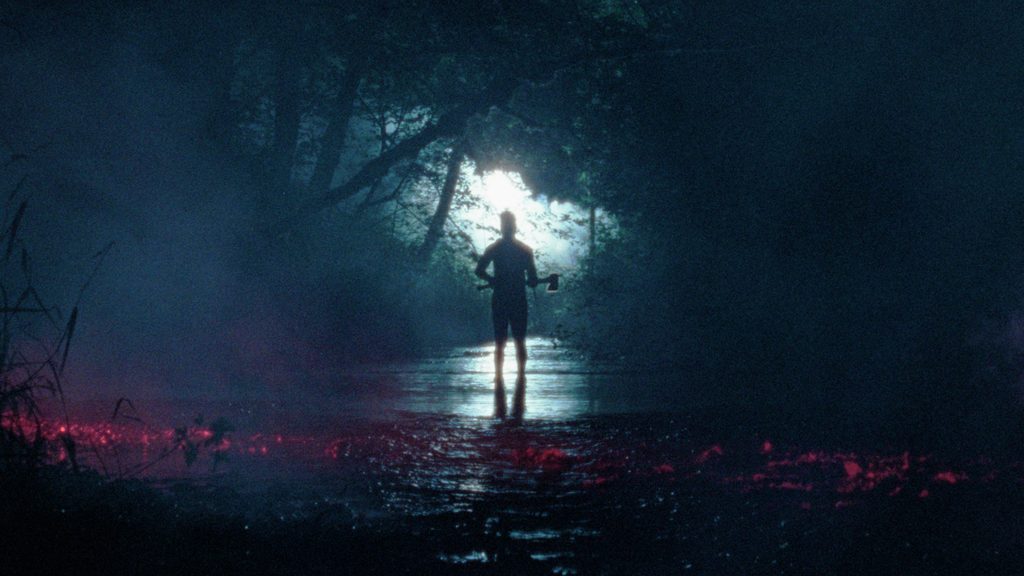
While the film’s beginning is grounded in reality, Pathetic Fallacy gets increasingly strange as it moves along, while never losing the raw emotional truth at the core of its story. Trippy visions of an otherworldly Mount Samdi draw Asher out of isolation and to a mountain town where he encounters a maddening, eccentric, and homicidal stranger, played with incredible manic energy and substance-fueled unpredictability by an against-type Travis Fimmel.
But Asher’s encounter with Fimmel’s Doyle character is far from the strangest thing he’ll encounter while up in Mount Samdi. In fact, Doyle is startlingly normal relative to the talkative animals that inhabit the forest and a spider voiced by Natasha Lyonne who tempts Asher with the possibility of being reunited with Iris.
It’s during a truly bizarre, almost Everything Everywhere All At Once-esque second act that some audience members may lose interest in Pathetic Fallacy. Trippy, offbeat, and populated by creative ideas, this middle portion boldly tows the line between coherence and psychedelic, and sometimes steps a little too far into the latter. However, the film thankfully never spirals into a kaleidoscope of nonsense, largely due to Mortimer’s unwavering positioning of Asher’s grief as the central element driving the narrative and Mescudi’s remarkably intimate performance.
Known for his blending of genres, sonic innovation, and normalization of mental health struggles within the realm of modern music, Mescudi delivers the finest performance of his entire acting career in Pathetic Fallacy. As stated, he ensures that Iris’ death hits as hard as it does. As the film continues and evolves, Mescudi offers a profoundly immersive turn as a man wandering through life and willing to overlook eccentricities so that he can be reunited with the woman he loves.
Just as incredible, albeit in a smaller role, is modern day scream queen Jessica Rothe, who brings a whopping three films to Fantastic Fest this year (River, Beware Boiúna, and Pathetic Fallacy). Rothe produces an agonizing turn in the early part of the film, making the audience vicariously experience the love Asher does for her given how warm, kind, and real she feels. But that’s not the end of Rothe in the film. Borrowing a similar idea from Bram Stoker’s Dracula and The Face of Love, Mortimer’s film shows Asher’s bewildering and misguided hope upon meeting a woman who looks just like his lost love. And, once again, in these scenes, Rothe excels as she transforms into an entirely different and edgier character than Iris.
With Mescudi and Rothe elevating the romance and heart of the film to incredible heights, a hypnotic synth score by Johnny Jewel and additional music by Mescudi and Dot Da Genius render Pathetic Fallacy undeniably, unreservedly, and unabashedly cool. Mortimer’s film isn’t a musical in a traditional sense, although it does involve characters occasionally breaking out into some amazing songs. Despite the density of its protagonist’s emotional anguish, the film presents a world that you somehow want to exist in. It’s all so dreamy, sleek, and cool, like a magical Kid Cudi music video come to life in long-form.
Mortimer’s film crescendos into a moving finale that replicates the poignancy of its beginning. It becomes clear in this final act that, like I Saw the TV Glow and Everything Everywhere All At Once, Pathetic Fallacy expertly uses the deconstruction of physical reality as we know it to depict the deconstruction of emotional reality for its protagonist. While a tad unwieldy with some of its more psychedelic elements in its middle act, the film exercises more restraint in the final moments and narrows in on a deeply emotional place.
VERDICT: 8/10
Making its world premiere at this year’s Fantastic Fest, Pathetic Fallacy is a psychedelic romance horror film that blends the soulful and soul-crushing with the trippy, offbeat, and downright bizarre. While the film’s increasingly psychedelic middle act occasionally tows the line between coherence and nonsense, director Adam Egypt Mortimer never loses sight of the raw emotional truth at the core of the story, largely thanks to Mescudi’s remarkably intimate and immersive performance and Rothe’s agonizing turn. With a hypnotic synth score, talkative animals, eccentric characters, and a magical Kid Cudi music video-like world, Pathetic Fallacy is undeniably cool, emotionally devastating, and deeply strange, ultimately narrowing in on a moving finale that uses the deconstruction of physical reality to depict the deconstruction of emotional reality. Playing like the brainchild of Kid Cudi, David Lynch, Jane Schoenbrun, and The Daniels, Mortimer’s film features some of the most emotionally devastating and downright unusual movie moments you’ll see all year, making it a must-see for anyone wishing to see something different and willing to join Mescudi on one wild musical odyssey.