
By Josh Bate
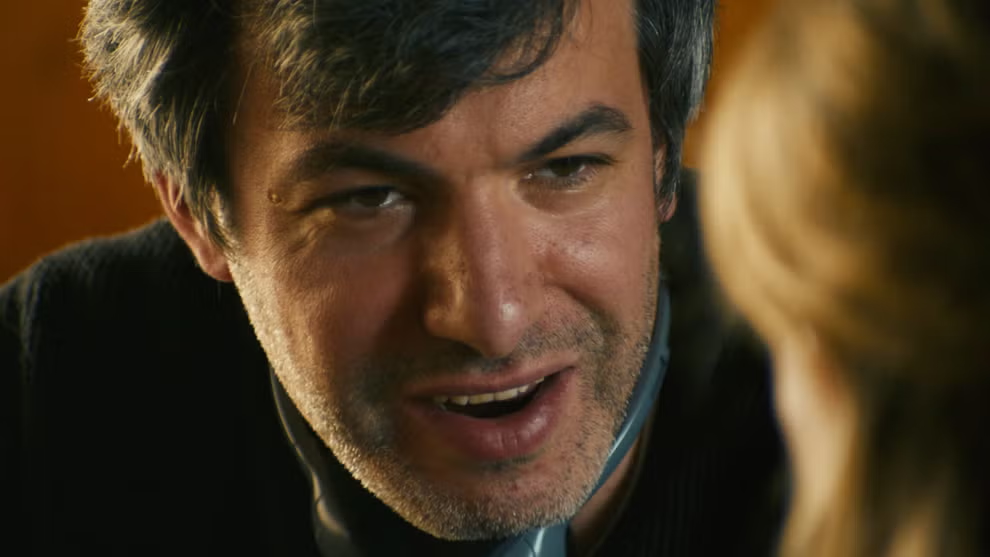
Media and public interest surrounding Elizabeth Holmes over recent years rivals any person on the planet. A meteoric, myth-making rise to become the ‘Next Steve Jobs’ followed by a catastrophic, high-stakes scandal made Holmes a topic of discussion as the narrative surrounding her life shifted from a feminist tech-pioneer triumph to an ominous corporate thriller overnight. Fixated on her physical transformation, sense of fashion, and unblinking stare, the public questioned whether Holmes was a calculated criminal or someone who genuinely and delusionally believed in her own lies, and it’s with this fascination that spawns You Can See Everything, an absorbing, even hypnotic documentary that gives new meaning to the term thought-provoking.
From co-directors Nathan Fielder and Lance Oppenheim (Primetime), You Can See Everything follows Holmes in the thirty-four days leading up to her imprisonment. Holmes and her husband Billy invite Fielder and his skeptical film crew into their home to intimately document every facet of their lives, allowing Fielder to grow closer to the notorious figure and inquire directly about her culpability in the Theranos scandal.
A theatrically released documentary with a runtime of 174 minutes, You Can See Everything is hardly the kind of film one would think would generate buzz and conversation, but Fielder and Oppenheim’s work had done exactly that. Making its world premiere at this year’s Telluride Film Festival, the A24 documentary immediately gained immense attention and praise for its unexpected mid-film twist (which we’ll get to) and its uncomfortably intimate portrait of a controversial real-life figure, initial festival reception that tends to artificially inflate the quality of a film and, in turn, lead to inevitable underwhelm when more audiences eventually watch and discover it’s not nearly as jaw-dropping as in its initial admirers claimed it to be.
Resoundingly, Fielder and Oppenheim demonstrate that the hype surrounding their project is far from unfounded. After a brief exposition about the controversy surrounding Holmes and her blood-testing corporation Theranos, the film kicks off with Fielder and his film crew embedded within the home of Elizabeth Holmes, her husband Billy, and their two young children. Such unprecedented access to such a prominent person would typically come from a seasoned documentarian with eloquent speech and meticulously calculated questions, but Fielder is a comedian by trade and, as such, takes a decidedly different approach to understanding Holmes.

While rarely laugh out loud funny, the film possesses a strong understated sense of humor, which primarily comes from Fielder’s awkward facial micro-expressions and shockingly blunt questions. In the early stages of the film, there’s a sense that the filmmakers are being somewhat pretension and even exploitative with their project as it is easy to come to the conclusion that a comedian interviewing a convicted criminal on the precipice of a jail sentence thinks he is better than her.
But Fielder swiftly abandons any semblance of pretension with how raw, authentic, and even innocent he is with his approach to Holmes. There’s an earnest quality to Fielder as the odd interactions between Elizabeth and Billy boggle his mind and as he struggles to discern whether Elizabeth knowingly defrauded investors out of billions of dollars.
It’s through this latter point that You Can See Everything adopts the trappings of a mystery. Although Fielder’s objective for making a documentary is never explicitly stated, it is clear that questions about Holmes’ culpability lay at the heart of much of his interest and drive forward much of his inquiries. A particularly captivating scene in the first half of the film in which Fielder, Elizabeth, and Billy watch Abbott and Costello’s “Who’s on First” comedy routine highlights just how enthralling it is to be offered such an intricate understanding of a controversial figure’s mind works. Or, as is posed later in the film, potentially how her capacity for manipulation dwarfs all.
Much has been made of a game-changing mid-film twist in You Can See Everything that drastically alters the direction of the film. And, while somewhat overhyped by many who saw the film out of Telluride, indeed the film takes quite the pivot around its halfway mark. To get into what this pivot entails exactly would be delve into spoiler territory, which this review will not do, but needless to say it ensures that Fielder and Oppenheim’s film evolves beyond a mesmerizing, intimate, mystery-laden documentary to somewhat far more clever, inventive, and thought-provoking.
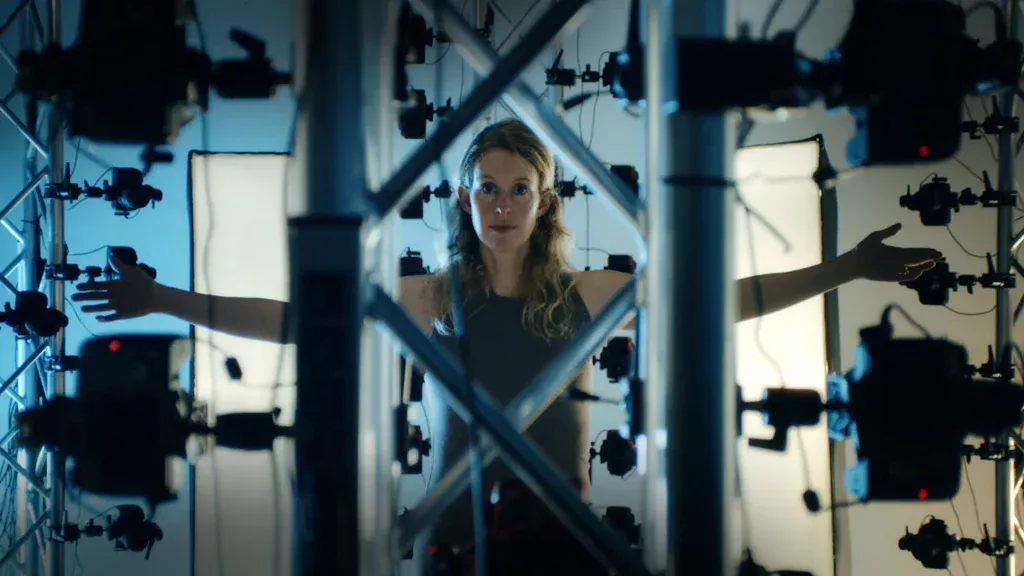
Thought-provoking is the operative word as You Can See Everything adds layers upon layers upon layers as its runtime progresses, all of which render it a movie that demands to be talked about in extraordinary detail after the credits roll. The many nuances and complexities of love, bias, culpability, autonomy, co-dependence, media ethics, and more are explored and interrogated with such exacting attention and care that the film makes for surprisingly cerebral viewing. This is not cerebral in the sense of a heady, complex film from Christopher Nolan or an abstract trip from David Lynch, but, rather, cerebral in that it invites the audience, not only to investigate the central mystery along with Fielder, but to contemplate subversive layers of universal themes seldom afforded this degree of scrutiny.
Exceedingly clever every step of the way, You Can See Everything makes extraordinary use of every second of its runtime by throwing one last twist in the mix before the credits roll. This is not a twist in a traditional sense, but it is a twist that asks the audience to reconsider the validity of everything they just saw, a rare move for a documentary in its willingness to admit the potential bias that swayed the telling of the story.
VERDICT: 8.5/10
You Can See Everything is an absorbing, even hypnotic documentary that gives new meaning to the term thought-provoking. Fielder and Oppenheim demonstrate that the hype surrounding their project is far from unfounded, crafting an uncomfortably intimate portrait of a controversial real-life figure. While rarely laugh out loud funny, the film possesses a strong understated sense of humor, alongside a raw, authentic, and even innocent approach to Holmes. Exceedingly clever every step of the way, You Can See Everything adds layers upon layers upon layers as its runtime progresses, exploring the many nuances and complexities of love, bias, culpability, autonomy, co-dependence, and media ethics. It is a mesmerizing, intimate, mystery-laden documentary that demands to be talked about in extraordinary detail after the credits roll. A groundbreaking documentary that pushes the boundaries of what the medium can entail, You Can See Everything is resoundingly one of the year’s best films.
You Can See Everything is in theaters nationwide on Friday October 16.