
By George & Josh Bate
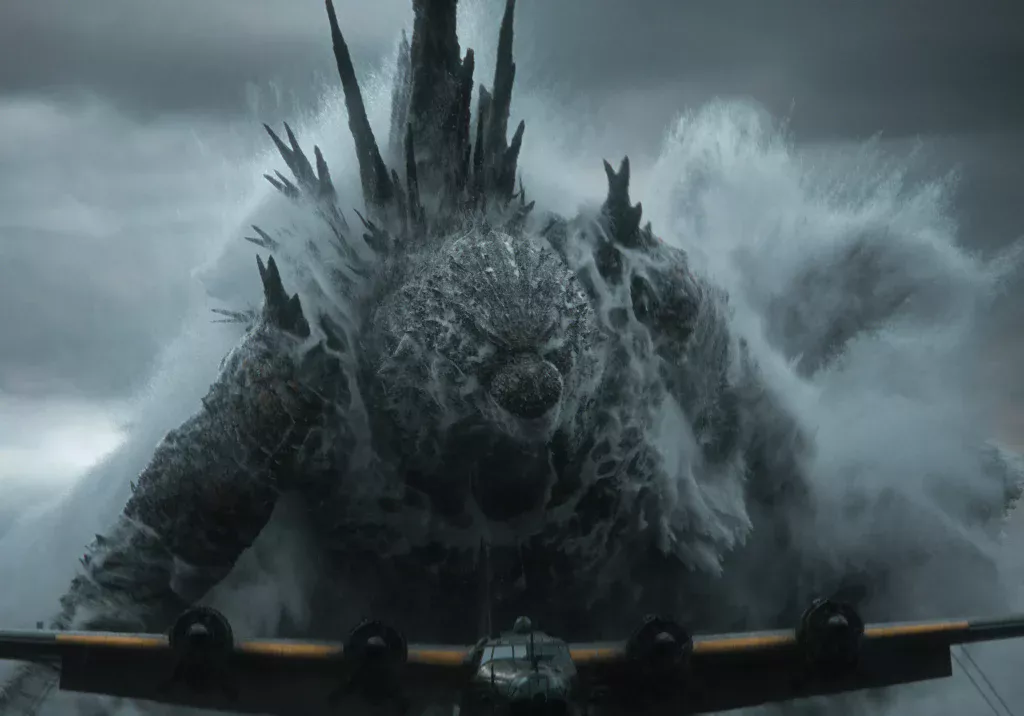
In 2023, filmmaker Takashi Yamazaki delivered a deeply emotional and Academy Award-winning drama about postwar trauma, survivor’s guilt, the value of choosing life over death, healing through unity amidst adversity, and the importance of found family. The film just so happened to be the 37th movie in the, at the time, 69 year old Godzilla franchise, in turn demonstrating that immense, terrifying atomic-powered spectacle and scale can seamlessly co-exist with grounded characters and profound emotion. Although there were originally no plans for a follow-up to Godzilla Minus One, widespread acclaim quickly led to the commissioning of a sequel that promised to continue the compelling journey of Kōichi Shikishima as he and post-World War II Japan face off against the unstoppable force of nuclear destruction that is Godzilla. While not quite as profoundly touching or narratively precise as its predecessor, Godzilla Minus Zero overwhelmingly impresses as a breathtaking demonstration of how epic spectacle moviemaking can seamlessly and perfectly co-exist with the most intimate of character studies.
Godzilla Minus Zero picks up two years after the events of the preceding film. After Godzilla was defeated and its remains sunk to the bottom of Sagami Bay, postwar Japan continues to recover from the destruction caused by the massive kaiju and the wartime devastation that preceded it. Kōichi Shikishima (Ryunosuke Kamiki), Noriko (Minami Hamabe), and their adopted child Akiko (Sae Nagatani) navigate their domestic life amidst national recovery when another ancient kaiju, Ghidorah, emerges and, soon after, Godzilla resurfaces, plummeting the Shikishima family and the rest of Japan into yet another harrowing fight for survival.
Although Godzilla Minus One earned plaudits for its stunning visual effects, produced on a modest budget that pales in comparison to the average U.S. blockbuster, Takashi Yamazaki’s film proved particularly compelling due to the human characters and poignant themes that together grounded a massive monster movie. In cultivating characters the audience comes to care for so deeply, the film made its titular monster all the scarier, which was further amplified by the decision to reject the generic anti-hero characterization that has defined Godzilla for quite some time and restore him to his destructive nuclear menace origins.
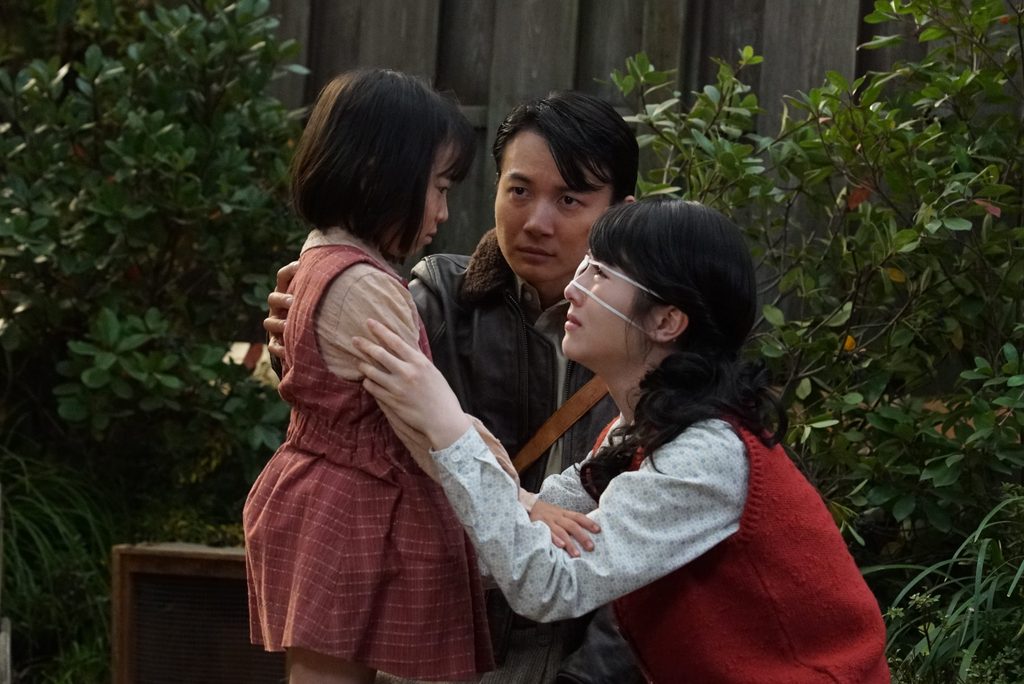
In Godzilla Minus Zero, Yamazaki continues to deftly balance the immense with the intimate. After a somewhat jarring introduction, which perplexingly opts against giving Ghidorah much background or explanation, the sequel adopts a near identical narrative structure to its predecessor. Just like Godzilla Minus One, the new film follows the introduction of a terrifying kaiju with a slower, human-focused story before chronicling a team’s calculated, science-driven plan to kill the big monster. After the initial plan inevitably fails, the team devises another plan, in a manner that resembles the set-up for a heist movie, which unfolds in a whopping, high-stakes final act.
In mirroring the narrative structure of the previous film so closely, Yamazaki understands the ‘if it ain’t broke don’t fix it’ adage all too well. In less capable hands, such mirroring may prove monotonous or repetitive, but the filmmaker ensures that his film builds upon, rather than merely copying, the story that came before it.
Koichi Shikishima and his family remain the focus of the story, while the scientist Mr. Nodo takes on a more prominent role this time around. Years after the events of the first film, Koichi has built a peaceful domestic life with his wife Noriko and their adopted child Akiko, which is suddenly put on the line upon the emergence of Ghidorah. Whereas the previous film compels with its confrontation of Japanese wartime ideology and converged on a moving message arguing that human lives are precious and that individuals do not owe their lives to hollow sacrifice, Godzilla Minus Zero toys with slightly less precise and novel commentary around its core family. The film urges audiences to leave the theater determined to make the world, even if it is only a little bit, better for the next generation than it was for ours, a message that materializes through Koichi and Noriko’s deliberation between caring for their daughter and ensuring the security of the world in which she will inhabit in the future. When compared to the emotional heights of Godzilla Minus One, the sequel falls short in stirring emotion and generating tears, but this does not mean the film lacks its share of wholesome, moving moments, most of which revolve around young Akiko.
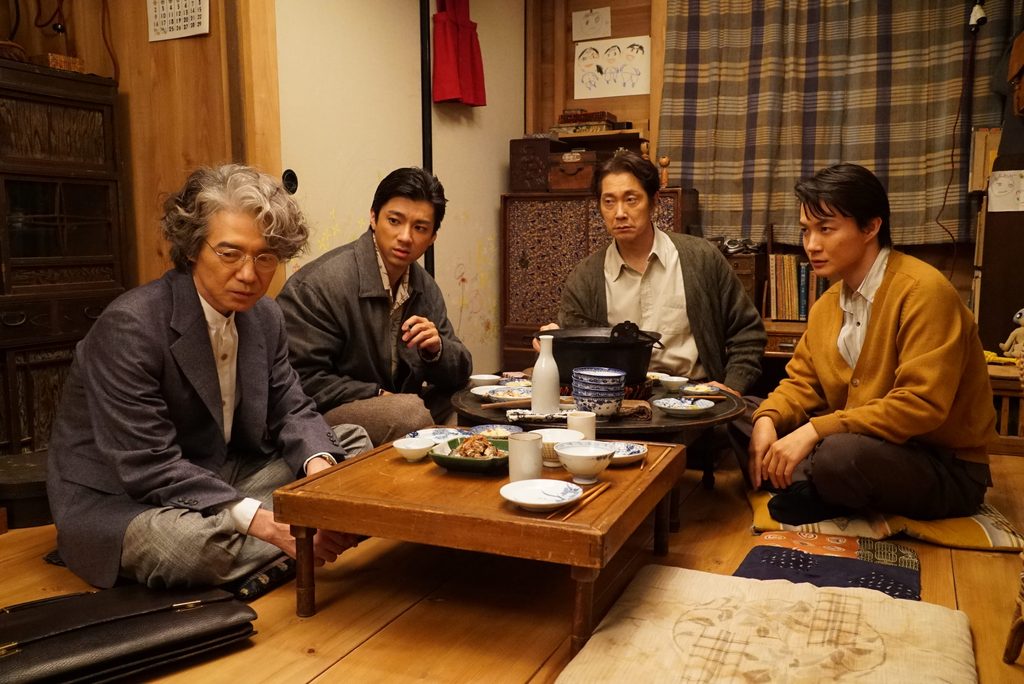
With Captain Seiji Akitsu (Kuranosuke Sasaki) and young crewman Shiro Mizushima (Yuki Yamada) disappointingly sidelined in Godzilla Minus Zero after their prominent and memorable roles in Godzilla Minus One, the film dedicates more time to Kenji Noda (Hidetaka Yoshioka), the Naval weapons engineer who now serves as Japan’s leading expert in combating kaiju. The wiry and sharp Noda arguably plays as sizable a role in the film as Koichi, with much of the runtime dedicated to Noda overseeing intricate plans to defeat Ghidorah and Godzilla.
Noda’s more prominent role goes hand-in-hand with the introduction of a new character, Professor Kanji Murakami (Min Tanaka). Frequently dubbed ‘The Professor,’ Min Tanaka’s character is a biologist who miraculously survived the nuclear bomb drop on Hiroshima, Godzilla’s attack on Ginza in the first film, and Ghidorah’s emergence at the beginning of this film. Tanaka brings stature and presence to a fascinating character who is scarred by the loss of his family and has an ulterior motive to get revenge against those responsible for their deaths.
Unfortunately, the Professor’s subplot, which is interesting enough to warrant its own film, is woefully underdeveloped and resolves in a manner as unearned as it is abrupt. In turn, the Professor feels like an afterthought in a story interested, but not willing to commit, to dedicating ample time to a character whose journey could have made for one of the film’s most novel elements. Additionally, in tying Noda’s journey to the Professor’s inchoate arc so closely, the film ultimately does a disservice to both characters and their accomplished performers, although there is some particularly (and disturbingly) timely commentary on nuclear proliferation and breaking the cycle of war that comes with their shared role in the story.
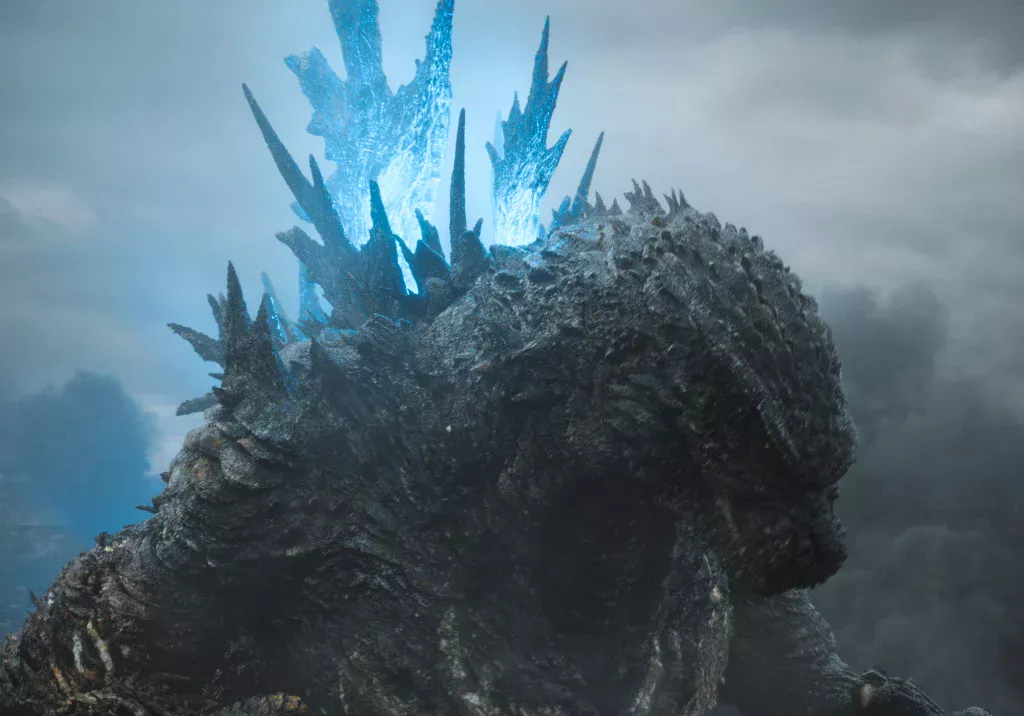
For many, however, the appeal of a Godzilla movie comes in the form of the awe and spectacle of gargantuan titans colliding. LIke its predecessor, Godzilla Minus One achieves a whopping scale virtually every other film in history fails to come close to. Stunning visual effects and a keen eye from Yamazaki to always frame his massive monsters in a way that depicts their terrifying size allows the film to provoke the kind of terror, panic, and dread of a full-fledged horror movie. Such a visceral response from viewers is further amplified by superb, eardrum-bursting sound design and a score from Naoki Satō that matches the grandeur of its epic monsters. While some viewers may be disappointed by the relative infrequency of massive action sequences amidst the 135 minute runtime, the action that does grace the screen will have your jaw dropping to the floor.
VERDICT: 8/10
Godzilla Minus Zero overwhelmingly impresses as a breathtaking demonstration of how epic spectacle moviemaking can seamlessly and perfectly co-exist with the most intimate of character studies. Although not quite as profoundly touching or narratively precise as its predecessor, Takashi Yamazaki’s sequel deftly balances the immense with the intimate, building upon rather than merely copying the story that came before it. The film compels once again through its human characters and poignant themes, exploring the importance of family, the responsibility of making the world a better place for the next generation, nuclear proliferation, and breaking the cycle of war. While some of its character arcs feel underdeveloped and its overarching emotional impact falls short of the heights of Godzilla Minus One, there is no shortage of wholesome, moving moments. For many, however, the appeal of a Godzilla movie comes in the form of the awe and spectacle of gargantuan titans colliding, and Godzilla Minus Zero delivers in this regard. Stunning visual effects, superb, eardrum-bursting sound design, and a score that matches the grandeur of its epic monsters provoke the kind of terror, panic, and dread of a full-fledged horror movie. Just as likely to have your jaw dropping to the floor as it is to have you drowning in tears, Godzilla Minus Zero is a towering achievement that demands to be seen on the biggest screen possible.