
By George & Josh Bate

WARNING: The following contains spoilers for Dexter: Resurrection Season 2 Episode 3: “Live Free or Die”
After two thoroughly entertaining, yet overstuffed initial episodes, Dexter: Resurrection Season 2 returns for a third outing that retains the signature Dexter charm and adheres closely to the series’ established formula, yet bears more a resemblance to the later seasons of the original run than the more refined New Blood and Resurrection Season 1.
The first two episodes of Dexter: Resurrection Season 2 didn’t shy away from throwing its fair share of plot threads and characters at the audience. At the heart of the story so far is Dexter Morgan (of course), television’s favorite serial killer who is no longer content merely killing bad guys — he wants to be recognized for his work. His son, Harrison, has joined the New York Police Department and is fighting crime in a manner slightly more legitimate than his serial killing father. Then there’s Claudette Wallace, the detective determined to finally bring the New York Ripper to justice. Meanwhile, the New York Ripper himself, Don Framt (Brian Cox), continues to taunt both Wallace and the victims of his brutal slayings. But Framt and Dexter aren’t the only serial killer stalking the streets of NYC. The Five Boroughs KIller (Dan Stevens) is two kills into a reign of terror on his own and is increasingly panicking the people of New York. Former Miami Metro homicide detective Joey Quinn (Desmond Harrington) is also in town, following up on Angel’s murder by trying to track down Leon Prater. Prater’s former right-hand woman, Charley (Uma Thurman), also has an aim of her own — to make amends for her years of wrong-doing and help Dexter kill various murderers Prater collected.
Needless to say, and based on the wealth of threads and characters in the preceding paragraph, Season 2 is already balancing more than a few elements heading into its third episode. While this lays the groundwork for various stories to intersect and satisfyingly unfold as the season progresses, it also deprives the initial episodes of much focus. “Live Free or Die” continues to struggle in this regard, leaping from one disparate storyline to the next with little in the way of connective tissue or true understanding of what direction this season of Dexter is truly heading in.
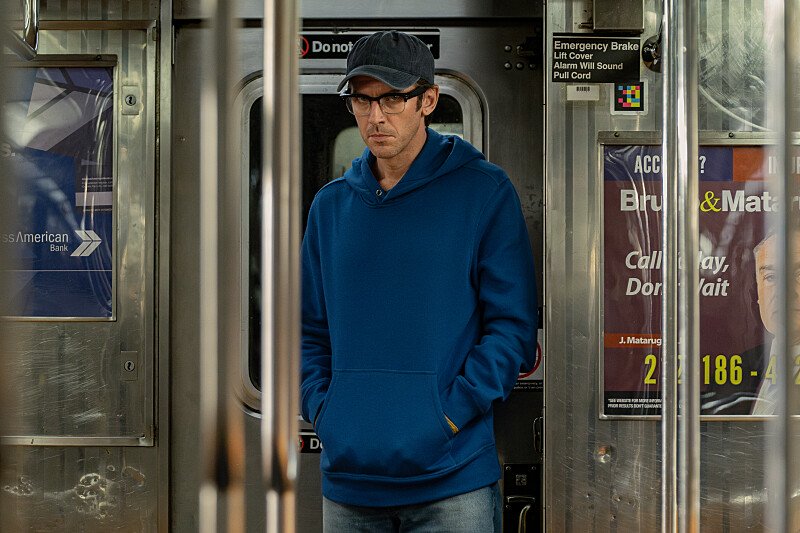
Bookending the episode is Dan Stevens’ Five Boroughs Killer, who has yet to amount to a serial killer worthy of the accomplished actor bringing him to life. The chase sequence that opens up the episode brings some early suspense and tension to the proceedings but there is still so little known about the Five Boroughs Killer to make him a distinctive figure amongst the array of killers that graced the screen in seasons past. There are hints about FBK’s background sprinkled throughout the episode, however. He wears a wedding band, which, coupled with the Mr. and Mrs. mugs in his kitchen cabinet, suggest that he either has or once had a wife who he loved. His mantra that accompanies each of his murders, “Nobody cares,” and the fact that he picks up litter and throws it away in disgust could suggest that FBK’s wife was murdered and left FBK disillusioned with society and with the impression that nobody cares to do any good in the world. The jury is still out on whether FBK will evolve into a more fascinating serial killer than he already is, but Stevens’ involvement in the show gives us hope. Surely there must be something noteworthy about FBK to draw an actor of Stevens’ caliber into the 12th season of a long-running show.
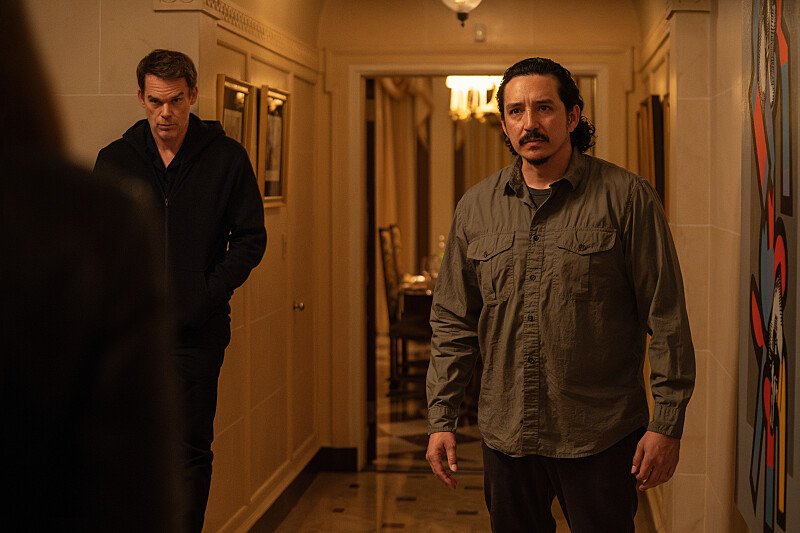
Decidedly more intriguing (and unsettling) is the Sleepy Eyed Stranger, performed with eerie apathy and stillness by Gabriel Luna. After a pretty bad-ass introduction set to Nine Inch Nails’ “The Day the World Went Away,” hopes became pretty high for what Luna’s character could bring to the series. Unfortunately, Luna exits the show just as quickly as he enters it, essentially rendering him a fairly generic kill-of-the-week.
Making Luna’s fleeting appearance in the show all the more egregious is that the Sleepy Eyed Stranger operates more as a plot device to further Dexter and Charley’s bond than a fully developed character unto himself. Out of the various characters and storylines in Season 2 so far, everything revolving around Charley is proving to be the least interesting of the bunch, although this is no fault of the commanding and sophisticated screen presence that is Uma Thurman. The series appears to be building toward some kind of romantic bond between Dexter and Charley, as evidenced by the fairly cringe-worthy cover story to pretend that they’re all lovey dovey with one another. Much like the other threads this season, Charley may develop in a way that increasingly compels, but, as of now, it’s little the series hasn’t seen before (despite Dexter’s insistence that Charley is a different kind of companion for him as he and his companions have always occupied mentor-mentee relationships, whereas Charley is more of an equal).
Fan-favorite Joey Quinn proves to be a thorn in Dexter’s side in this episode, continuing the bothersome role he played in his Miami Metro’s colleagues life for much of the series’ original run. Quinn’s presence in Season 2 still feels a bit odd as he and Dexter never really acknowledge their complicated history with one another and, perhaps even more bafflingly, Quinn seems unfazed by the fact that Angel believed Dexter was the Bay Harbor Butcher and died shortly after journeying to NYC to apprehend him. Nonetheless, Desmond Harrington remains such a compelling performer that it’s difficult not to celebrate Quinn’s return to the fold. His slick talking that belies his sharp street smarts, morally gray realism, and undying loyalty all continue to make him a blunt, energetic, and bravado-filled force for Dexter to reckon with.
Elsewhere, kept decidedly separate from much of the surrounding episode, Claudette’s fascination with the New York Ripper and the Bee Gees’ “Stayin’ Alive” is finally explained. As depicted in a flashback, the first crime scene that Claudette responded to was a murder committed by the New York Ripper in an apartment building. In the apartment, the classic Bee Gees song was playing on a record, but Claudette did not stop the song as she wanted to preserve the forensic integrity of the crime scene. This explains why Claudette repeatedly listens to “Stayin’ Alive,” as a constant reminder of what drives her to hunt down and finally apprehend the New York Ripper.
Brian Cox’s twisted Don Framt takes full advantage of this point of vulnerability by singing the Bee Gees’ song on the side of the road as Claudette and the NYPD respond to FBK’s latest murder. The ever-composed and unnaturally stoic Claudette breaks for the first time in two seasons as she loses her temper and forces Framt to fall out of his wheelchair. Claudette remains a fairly difficult character to invest in, largely due to the lack of personality and range she exhibits. Some have labeled Claudette a walking autism stereotype, which feels a little harsh, but captures just how thinly characterized Kadia Saraf’s character is. Especially when compared to the towering law enforcement figures across Dexter’s run – whether that be Angel, Quinn, LaGuerta, Matthews, Doakes, or Angela – Claudette can’t help but fall short.
Then there’s Harrison, who is side-lined to the very periphery of the story in “Live Free or Die.” A conversation over the phone between Harrison and Dexter that concludes the episode reveals Harrison’s frustration about the lack of progress traditional law enforcement yields, potentially suggesting that Harrison may come to see justice the way his father sees it. The inevitable clashing between Harrison and Dexter still feels like the most promising conflict for Season 2 to explore, although it hasn’t received much attention so far.
For all its missteps, however, Dexter: Resurrection Season 2’s third episode wraps up in unexpectedly moving fashion. There’s something quite touching and even heartwarming about Dexter, a character who people have followed for over 20 years, evolving from a young single man to a father of a grown adult. With James Remar’s Harry next to him providing reassurance, Dexter tells Harrison, “Justice needs a little help sometimes” and softly helps his son better understand his unconventional lifestyle. Even in the puzzling absence of any development in Dexter’s desire for recognition, a core theme introduced in the earlier episodes, the third installment culminates on a tender note.
VERDICT: 6.5/10
After two thoroughly entertaining, yet overstuffed initial episodes, Dexter: Resurrection Season 2 returns with a third outing that retains the signature Dexter charm and adheres closely to the series’ established formula, yet bears more resemblance to the later seasons of the original run than the more refined New Blood and Resurrection Season 1. “Live Free or Die” continues to struggle with an overabundance of plot threads and characters, leaping from one disparate storyline to the next with little connective tissue or clear direction. While the Five Boroughs Killer remains an intriguing work in progress, Dan Stevens’ new serial killer has yet to emerge as a distinctive addition, and Gabriel Luna’s promising and unsettling Sleepy Eyed Stranger is disappointingly reduced to a generic kill-of-the-week. Meanwhile, the developing relationship between Dexter and Charley feels familiar and somewhat cringe-worthy, although Uma Thurman remains a commanding screen presence and brings a level of sophistication to the proceedings. Joey Quinn’s return proves to be a welcome addition, with Desmond Harrington bringing his signature slick talking, morally gray realism, and undying loyalty back to the fold, while Claudette’s backstory and fascination with “Stayin’ Alive” offer some insight into her pursuit of the New York Ripper. Harrison, meanwhile, remains frustratingly sidelined, despite the inevitable clash between father and son feeling like the season’s most promising conflict. Nevertheless, the episode wraps up in unexpectedly moving fashion, as Dexter’s tender conversation with Harrison highlights just how far the character has evolved over the past 20 years, culminating in a surprisingly heartwarming moment that reinforces one of the series’ most compelling relationships. Ultimately, Dexter: Resurrection Season 2 may be juggling too many knives, occasionally cutting itself in the process. However, even when its rougher edges are showing, in turn evoking more of Season 7 and 8 of the original show than other seasons, Dexter remains an irresistibly entertaining killer who knows exactly how to keep us coming back for more.
The second season of Dexter: Resurrection premiered globally Friday, October 18 on Paramount+. New episodes of the ten-episode second season are available to stream weekly on Fridays, culminating in the season finale on Friday, January 1.