
By George & Josh Bate
The following is a NON-SPOILER review of all eight episodes of Blade Runner 2099
It’s difficult to conceive how Blade Runner received a polarized and lukewarm critical and commercial response upon its initial release. While some lauded Ridley Scott’s 1982 cyberpunk classic for its groundbreaking visual effects and production design, many dismissed it as an overly slow and dense film lacking narrative momentum. Over 40 years since the release of the original film (and its numerous versions, including Scott’s definitive The Final Cut), Blade Runner has been heavily reevaluated and cemented its legacy as a foundational piece of science fiction cinema. After the mediocre box office performance of Denis Villeneuve‘s superb follow-up, Blade Runner 2049, the franchise makes its transition to live-action television with a new series that cleverly inverts the original’s core premise, fascinatingly expands the in-universe mythology and world-building, and offers the kind of thought-provoking exploration of deep, ontological topics that made the original Blade Runner so singular in the first place.
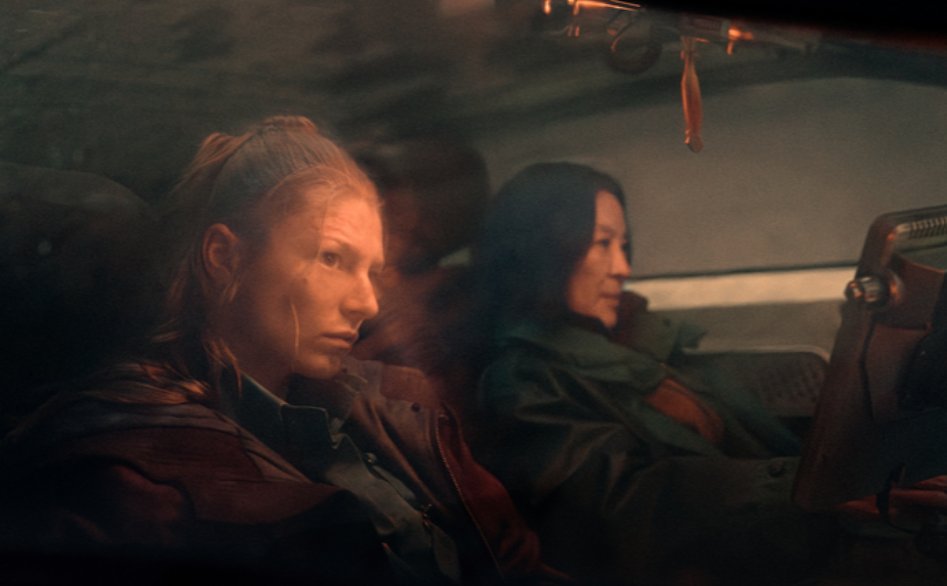
Premiering November 25 on Prime Video, Blade Runner 2099 takes place fifty years after Blade Runner 2049, following the events of a replicant rebellion that resulted in replicants assuming positions of authority and relegating humans to second-class citizens. After becoming a fugitive, a human named Cora (Hunter Schafer) goes undercover as a Blade Runner, a replicant detective tasked with hunting down insurgent humans, in exchange for safe passage out of Los Angeles for her and her brother Elias (Lewis Gribben). While undercover and tasked with finding and delivering a piece of evidence to a buyer, Cora is partnered with Olwen (Michelle Yeoh), a dying replicant Blade Runner. Together, Cora and Olwen stumble into a mystery that could put the fate of humans and replicants in jeopardy.
From the moment on-screen text graces the screen and orients viewers to the world in which the series is set, Blade Runner 2099 makes it clear that it is not opting for a safe, routine, nostalgia bait follow-up to a beloved classic. Akin to how Blade Runner 2049 took bold narrative leaps to deepen and expand the dystopian world established in the original film, the new series similarly moves the world-building forward in drastic directions that change the entire landscape of its story. Blade Runner 2049 concluded on a note that suggested a replicant uprising was on the horizon, and Blade Runner 2099 delivers on this promise by depicting the aftermath of such a rebellion. The reversal of power between replicants and humans gives way to an interesting narrative foundation from which the story builds upon, one that feels particularly timely given contemporary attitudes and growing resentment toward AI. While Villeneuve’s film offered a more sympathetic perspective on replicants, the new series depicts a challenging world for humans to live in following a total replicant takeover and, in this sense, bears similarities to the warnings proclaimed by James Cameron’s Terminator films.
This time around, the perpetual, rain-drenched darkness of Scott’s original film is replaced by a Sunshine Noir aesthetic, giving the series a Miami Vice-esque quality. That is not to say that Blade Runner 2099 is devoid of the iconic visuals that made the original film so striking, but, like Blade Runner 2049, the series expands the visual language of this world in increasingly imaginative ways. Budget limitations of a streaming series relative to a big-budget feature film production prevent Blade Runner 2099 from reaching the breathtaking visual heights of Villeneuve’s meticulously crafted sequel, yet the series deserves praise for living, breathing, and feeling like a logical extension of the stories and worlds that came before it.
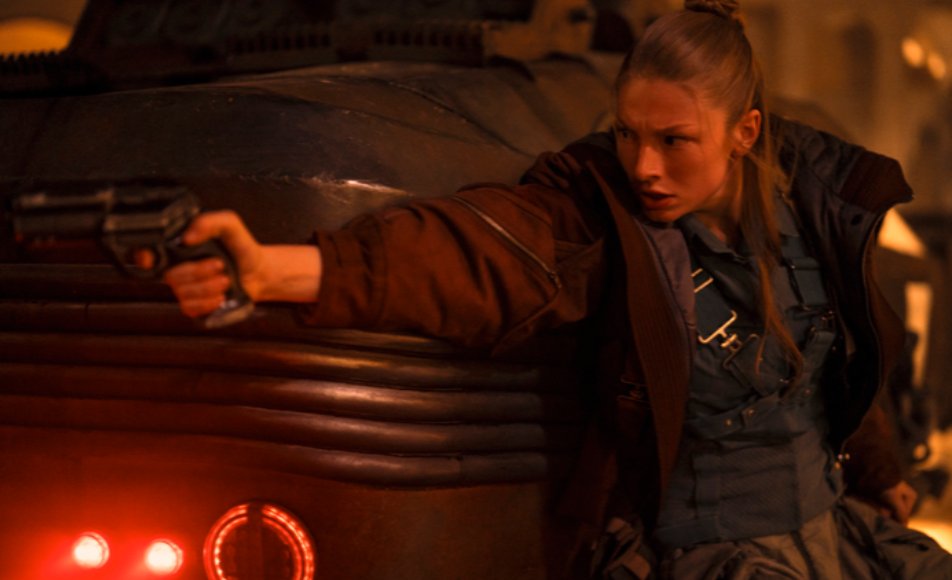
The aforementioned set-up is just the start of another cyberpunk, neo-noir mystery to unravel. Although somewhat convoluted and disorienting at times, Blade Runner 2099 nonetheless intrigues from start to finish with a storyline filled with unexpected reveals, ambitious twists, and an episodic structure that never ceases to pose absorbing questions for viewers to ponder and debate over. To delve into what this mystery entails exactly would be to spoil much of the fun of the winding narrative, but long-time fans of the franchise will admire the extent to which the episodes intelligently and gallantly further the mythology and integrate elements from Phillip K. Dick’s novel that failed to make their way into the films.
Amidst this mystery is a story that features no shortage of reflective, intellectual, and philosophical themes and ideas. As is expected from any project bolstering the words ‘Blade Runner,’ the new series examines what it means to be human by challenging society’s equation of humanity with biological birth. Whereas Blade Runner 2049 interestingly separated the human from the humane in depicting replicants with extraordinary empathy and humans devoid of such compassion, Blade Runner 2099 takes a more nuanced approach to this concept by highlighting the moral failings and triumphs of both replicants and humans.
Regarding themes more novel to the franchise, Blade Runner 2099 explores mortality, parenthood, and the power of making our own memories with remarkable sophistication. The emotions provoked by the series may not equate to Roy Batty’s iconic “Tears in the Rain” monologue from Blade Runner or Agent K’s devastation upon realizing he is not the first child born of a replicant in Blade Runner 2049, but they nonetheless make for powerful viewing that leaves a lasting impression.
The performances in Blade Runner 2099, however, are more of a mixed bag. At times, Hunter Schaffer has the emotional range of a teaspoon, while, in other moments, she single-handedly carries the series through some of its most challenging moments. The same can be said for Michelle Yeoh, whose performance comes to brilliant light in fits and starts, but is often of even the most subtle expressions of personality to render her character someone worth investing in. Other performances, namely that of Lewis Gribben, who plays the brother of Schaffer’s character, frustrate more than they compel and highlight how the quality of the material is not always matched the the quality of its actors.
One of the more recognizable names in Blade Runner 2099 is Tom Burke, the English actor known for playing the titular role in the detective series Strike. Burke is a brilliant actor and plays an important role in the series, yet he remains far too peripheral much of the early episodes. This proves to be such an issue that reveals in later episodes don’t pack the kind of jaw-drop or emotional impact one would expect.
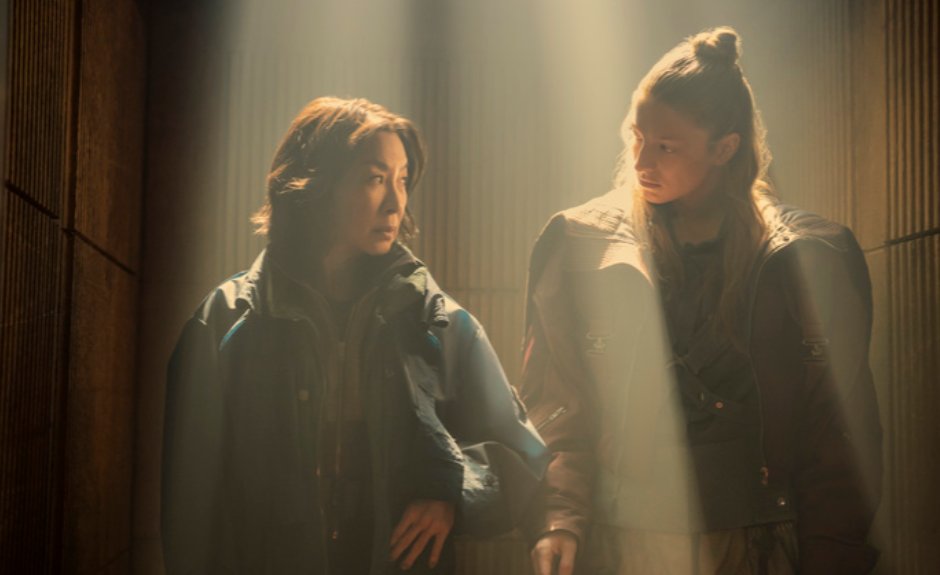
Nonetheless, as the eight episodes wrap up, it becomes abundantly clear that showrunner, creator, and executive producer Silka Luisa has engineered a worthy and fitting addition to the esteemed Blade Runner franchise. Cinematic with its visuals, sophisticated in its plotting, and profound with its ontology and themes, Blade Runner 2099 overwhelmingly succeeds in replicating what made Blade Runner and Blade Runner 2049 so special: coupling the cyberpunk aesthetic with a philosophical depth seldom found in mainstream entertainment.
VERDICT: 7/10
Blade Runner 2099 proves to be a worthy and fitting addition to the esteemed Blade Runner franchise, cleverly inverting the original’s core premise while fascinatingly expanding its in-universe mythology and world-building. Although somewhat convoluted and disorienting at times, the Prime Video series’ ambitious twists, unexpected reveals, and absorbing mysteries will keep viewers intrigued and riveted from start to finish. Its imaginative Sunshine Noir aesthetic, sophisticated plotting, and thought-provoking exploration of humanity, mortality, parenthood, and memory give the series remarkable philosophical depth. While the performances are a mixed bag and some characters are underdeveloped, Blade Runner 2099 overwhelmingly succeeds in coupling the cyberpunk aesthetic with the ontological insights that made its predecessors so singular, delivering a cinematic and profound continuation of the beloved franchise.
The new limited series from Amazon MGM Studios and Alcon Television Group, starring Michelle Yeoh and Hunter Schafer, will premiere globally on Prime Video on November 25, 2026.