
By George & Josh Bate

Most people can remember and even viscerally feel the anxiety and vulnerability that accompanied their clumsy first kiss or awkward confession of a long-held crush. In his feature directorial debut Leviticus, Adrian Chiarella elevates these all-too-relatable anxieties to horrific heights by exploring what happens when the person we desire the most is also the person trying to destroy us. While featuring a clever premise and packing timely commentary on an urgent issue, the new NEON horror underwhelms with its heavy-handed metaphor and staggered pacing.
Screening at this year’s Chicago Critics Film Festival, Leviticus centers on two teenage boys – Naim (Joe Bird) and Ryan (Stacy Clausen) – living in a small religious, industrial town in Australia. The boys develop a strong romantic connection with one another, which they wish to keep hidden from their oppressive families and religious community. But when their sexual exploits are discovered, the boys are forced into a twisted religious ritual that gives rise to a violent, invisible entity. The entity takes the form of the person you most desire, which, in Naim and Ryan’s cases, is each other. As they navigate their burgeoning connection, the boys also have to reckon with a monster that looks, sounds, and acts just like the person they want the most.
Leviticus wears its LGBTQ+ advocacy and messaging overtly on its sleeve, for better and for worse. Chiarella lands on a clever idea to explore issues related to queer safety and love through the prism of the horror genre. Adolescent romance is already terrifying enough, nevermind queer adolescent romance. But throw into the mix a terrifying, unseeable monster that takes the shape of your deeply-held crush and the film gives new meaning to teen angst.
Unfortunately and purposefully reminiscent of the ways in which queer people are treated by many, the community and families in Leviticus treat our lead characters like the monsters of a horror story. Just as how Frankenstein depicted the angry villagers running the Creature out of town with fire and pitchforks, Chiarella’s film depicts a religion-focused, small town community that views Naim and Ryan as deviant, even villainous. There’s enough of interest and urgency to explore here without delving into horror tropes, as a story about queer youth navigating their sexual identity in a small town is ripe for rich dramatic material and would likely resonate with many viewers whose experiences are not typically put to screen.
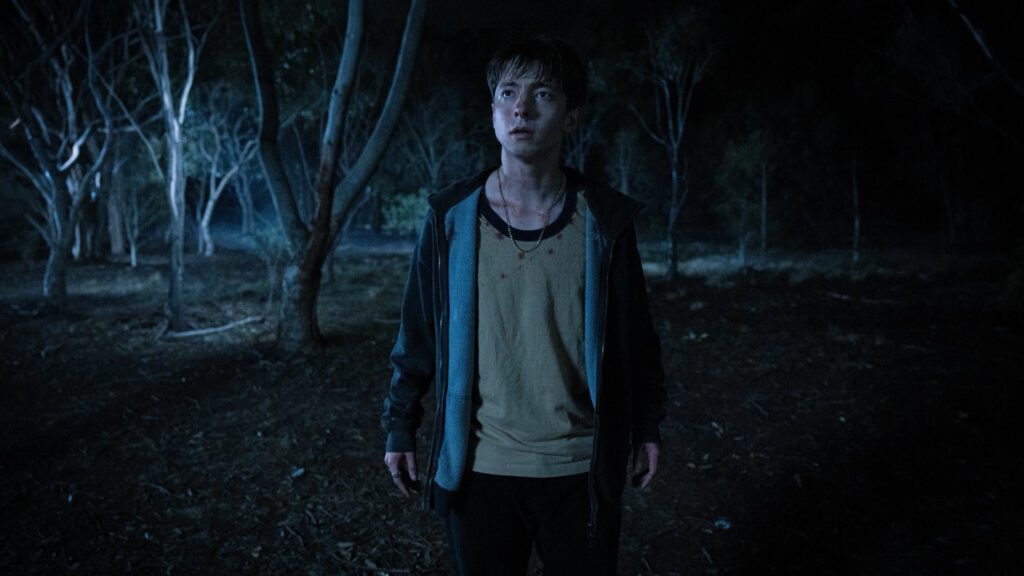
But Leviticus does indeed embrace horror tropes and, in doing so, plays like a disappointing derivative of It Follows. Much like how David Robert Mitchell’s breakout film from 2014 packed a parable about sexually transmitted infections into a horror movie, Chiarella couches commentary on the LGBTQ+ experience in the conventions of the horror genre. Unfortunately, the dissimilarities between their commentary aside, It Follows and Leviticus bear far too much of a resemblance to one another. Much of the scares in Chiarella’s film come in the form of our lead character Naim being followed by and trying to run away from another, which is the exact same manner in which It Follows delivered scares. Beyond scares, even the shot composition, pacing, and minimalist dialogue resemble Mitchell’s film and, in turn, inevitably invite comparison to a better movie.
Whereas It Follows effectively built dread with deliberately slow pacing, Leviticus errs in taking far too long to arrive on its primary conflict. Before Naim and Ryan are hunted down by an entity that looks just like one another, the film spends an excessive amount of time disjointedly moving through a number of plot beats. Some of these beats are necessary to the story, namely the ample time spent to capture the romance between Naim and Ryan, but other plot developments feel like they are merely delaying and getting in the way of the true conflict and narrative from kicking into gear. But, with a scant runtime of just 88 minutes, the film appears to only just be starting when it wraps up prematurely and with shockingly no resolution to the story.
While stumbling with its pacing and use of horror conventions, Leviticus triumphs in its sheer authenticity. Chiarella doesn’t rely on flashy color palettes or unusual camera angles. Instead, he creates a world that feels real and lived-in, disturbingly so in fact. Aiding immensely in making the film feel as real as it does are the two stellar lead performances at the heart of the film.
Joe Bird, who previously appeared in the Australia horror hit Talk to Me, excels in portraying a normal teenage boy scared to death of what his sexual desires mean for him and his future. Bird wears restrained anguish and anxiety on his face so genuinely and creates a character easy to root for and heartbreaking to see struggle.
Stacy Clausen, meanwhile, is given the additional task of playing a dual role. While playing Ryan, the subject of Naim’s desires, Clausen also plays the entity that looks just like Ryan. As the story unfolds from the perspective of Naim, Bird is never given the opportunity to play the entity that stalks Ryan, while Clausen is given ample opportunities to play the entity that stalks Naim.
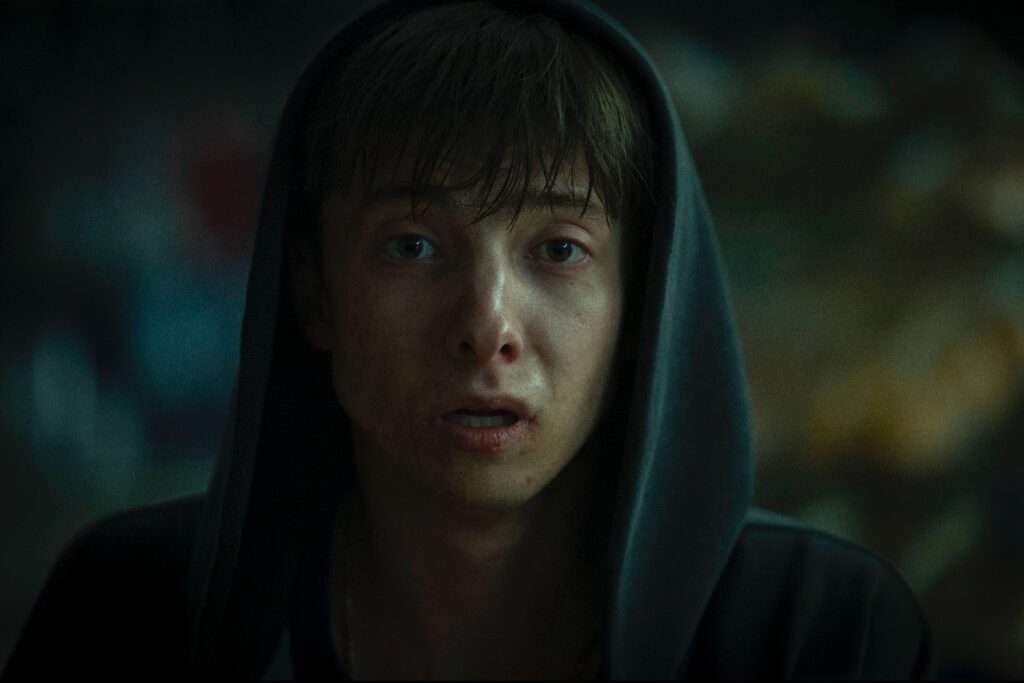
Together, Bird and Clausen share incredible, understated romantic chemistry. Moments of affection and tenderness between the two are beautiful and feel undeniably honest. In another world, it would have been interesting to see a version of the film stripped of its supernatural, more horror-overt elements and just focused on a passionate romance between two queer youth in an oppressive town. Instead, we’re left with a film that, when leaving into the horror genre, lacks novelty, seldom scares (outside of one brilliantly crafted jump scare), and concludes prematurely before taking its clever premise to its fullest potential.
VERDICT: 5/10
Leviticus taps into the universal anxiety and vulnerability of first love and queer adolescent romance, elevating those fears into horror territory with a clever premise in which the person you desire most becomes the thing that poses the most danger to you. Adrian Chiarella uses this concept to explore timely LGBTQ+ themes, particularly the dangers faced by queer youth in oppressive religious communities, though the film’s messaging often feels heavy-handed. While its authentic, lived-in world and strong performances from Joe Bird and Stacy Clausen ground the story with tenderness and compelling chemistry, the film struggles with staggered pacing, spending too long meandering before reaching its central conflict and ultimately ending without resolution. Its reliance on familiar horror tropes and overt resemblance to It Follows further undercut its originality, leaving Leviticus as a well-intentioned but underwhelming blend of queer drama and supernatural horror that never fully realizes its potential.