
By George Bate
The following is a review of episodes one and two of Carrie out of Toronto International Film Festival
When it was announced that Mike Flanagan was going to make the fourth screen adaptation of Stephen King’s 1974 novel Carrie, there was an air of disappointment in that one of the most visionary voices in horror cinema was dedicating his time to a story that has been told numerous times before, including Brian De Palma’s iconic adaptation from 1976, rather than an original story. But leave it to the mastermind between The Haunting of Hill House, Midnight Mass, and The Life of Chuck to strikingly reinvent King’s beloved novel, bringing into the modern day to comment on themes disturbingly relevant and prescient.
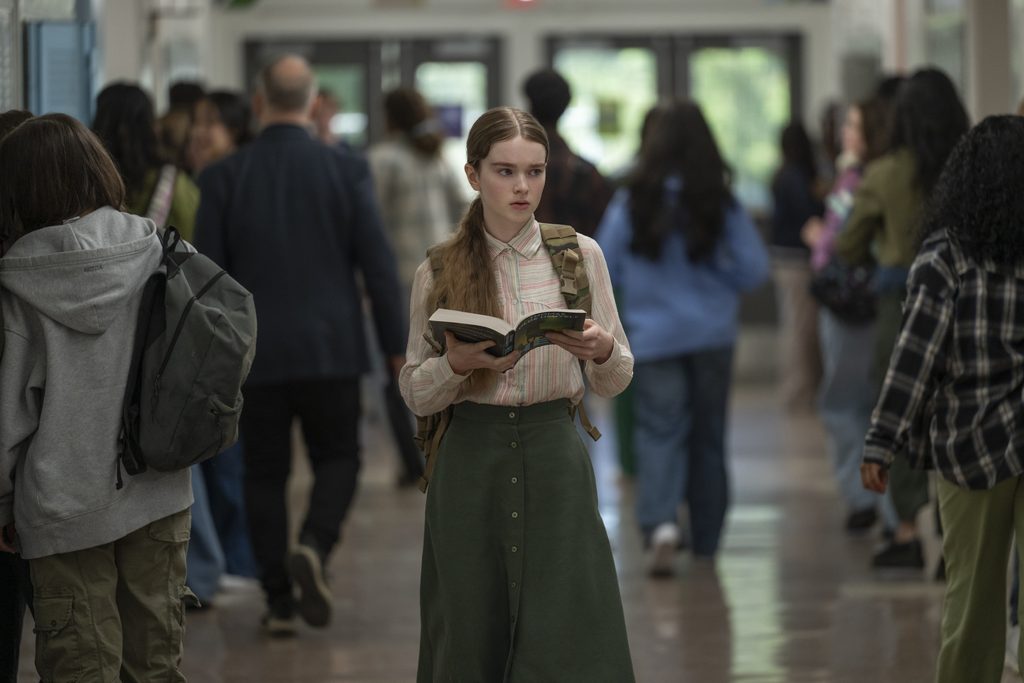
Making its world premiere at Toronto International Film Festival with its first two episodes, Carrie stars Summer H. Howell as the titular character, an adolescent girl suddenly thrown into the spotlight following the death of her father, a troubled man who kept both her and her mother Margaret (Samantha Sloyan) confined to their home. Now mandated to attend high school, Carrie is exposed to the cruelties of the modern world as her domineering mother tries to keep her daughter as sheltered as possible.
The ending of Carrie remains one of the most memorable conclusions in horror movie history, with imagery of Sissy Spacek’s prom queen drenched in blood forever etched in the minds of cinephiles everywhere. Cleverly, Flanagan knows that much of his audience will likely be all too familiar with how Carrie’s story concludes and, as such, teases the fateful high school fire in the initial moments of the first episode. While flash forwards suggesting some ominous culminating note to the narrative threaten to deprive stories of their intrigue and unpredictability, by the end of the second episode, it is resoundingly clear that the new series offers far more of interest beyond its inevitable conclusion, some of which is rather unexpected.
Briskly proceeding through the story’s prologue and plummeting Carrie into a cutthroat high school setting, Flanagan’s series fascinatingly contemporizes King’s novel. In addition to making social media a feature of its story, Carrie commendably serves as the rare piece of major media brave enough to comment on the horrors of school shootings. Flanagan handles this difficult topic with the sensitivity it deserves, while shining a spotlight on the disturbing extent mass violence toward children has been normalized in the present day U.S.A.
The subtlety and delicacy of its commentary on social media and school shootings is not always matched by its portrayal of several characters in the series. The kids who torment Carrie, led by the ringleader Chris Hargensen (Alison Thornton), are often theatrically over-the-top in their exaggerated cruelty toward our titular character. The first two episodes seem to suggest that there will be more nuance in store for Chris’ journey, but, as of now, she and the other bully figures feel like they are the rare pieces of King’s story not seamlessly brought into the present day in the new series.
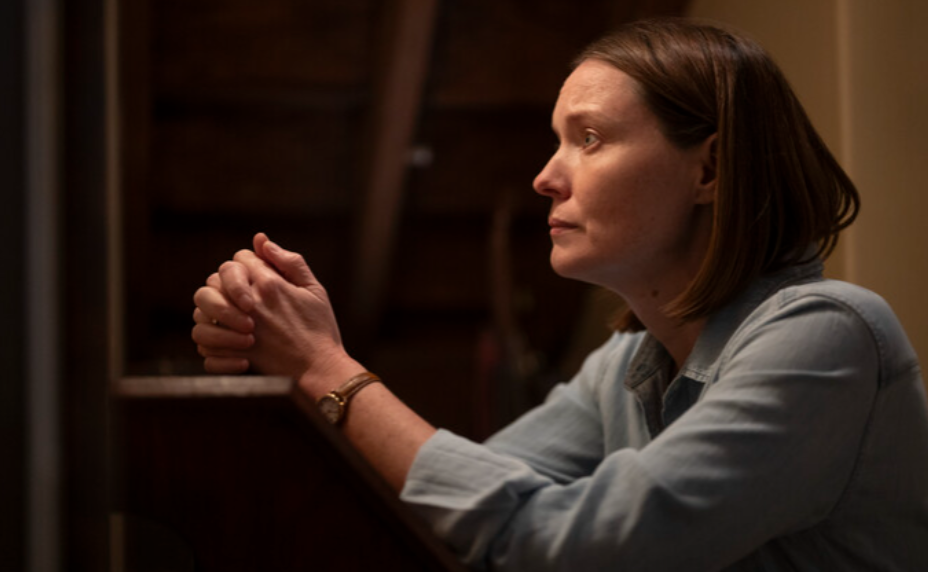
An interesting departure from King’s original novel and De Palma’s film, Flanagan’s series updates the characterization of Carrie’s mother, Margaret. Rather than the abrasive, tyrannical religious extremist depicted in the source material, Margaret, unlike the bullies, is afforded more nuance. Although Samantha Sloyan essentially delivers the same performance she did in Midnight Mass as Bev Keane, the Flanagan regular is undoubtedly effective at portraying a mother who, despite her harmful isolationist beliefs and conservative values, truly loves her daughter more than anything in the world. Flanagan and Sloyan approach Margaret as a far more complex, multi-dimensional character than previous adaptations, which will presumably only grow more layered as the series progresses.
Opposite Sloyan and anchoring the first two episodes with an authentic, vulnerable, and emotive performance is Summer H. Howell. The actress, who reportedly beat out 1,500 other actors for the lead role, brings such heart and warmth to Carrie White, making both empathy toward her and anguish in response to her mistreatment come effortlessly. A scene in the second episode with a similarly superb Tim Bagley may just be one of the best scenes in television all year.
But Carrie is far more than just Carrie and her mother. Flanagan uses the long-form medium to not only more slowly draw out Carrie’s torment, but to flesh out a myriad of interesting side characters. Carrie’s gym teacher Rita (Amber Midthunder), remorseful bully Sue Snell (Siena Agudong), and school principal Henry Crayle (Matthew Lillard) are just some of the characters Flanagan makes into genuinely interesting components of the story in their own right. Each has a part to play in Carrie’s tumultuous journey, yet they all have distinct personalities and motivations that render them more substantial than their portrayals in previous adaptations.
As the two episodes wrap up, Flanagan tantalizingly teases the novel directions his version of Carrie will take in the coming installments. Although the series begins on solemn, even bleak footing, admittedly fitting with the source material, and overuses ill-fitting licensed music, Carrie has quickly dispelled concerns that Flanagan’s time and effort should have been dedicated to other, more original stories as the prolific horror filmmaker swiftly proves he can effectively breathe new life into a story over a century old.
VERDICT: 7.5/10
Making its world premiere at this year’s Toronto International Film Festival, Mike Flanagan’s Carrie strikingly reinvents Stephen King’s beloved novel, bringing it into the modern day to comment on themes disturbingly relevant and prescient. Summer H. Howell delivers an authentic, vulnerable, and emotive performance as Carrie White, while Samantha Sloyan brings more nuance and complexity to Margaret, making her a far more multi-dimensional character than previous adaptations. Flanagan fascinatingly contemporizes King’s novel through social media and a sensitive exploration of the horrors of school shootings, while also using the long-form medium to flesh out a myriad of interesting side characters. Although some of the bully characters feel theatrically over-the-top and the series occasionally overuses ill-fitting licensed music, Carrie has quickly dispelled concerns that Flanagan’s time should have been dedicated to more original stories, as the prolific horror filmmaker proves he can effectively breathe new life into a story told numerous times before.