
By Josh Bate
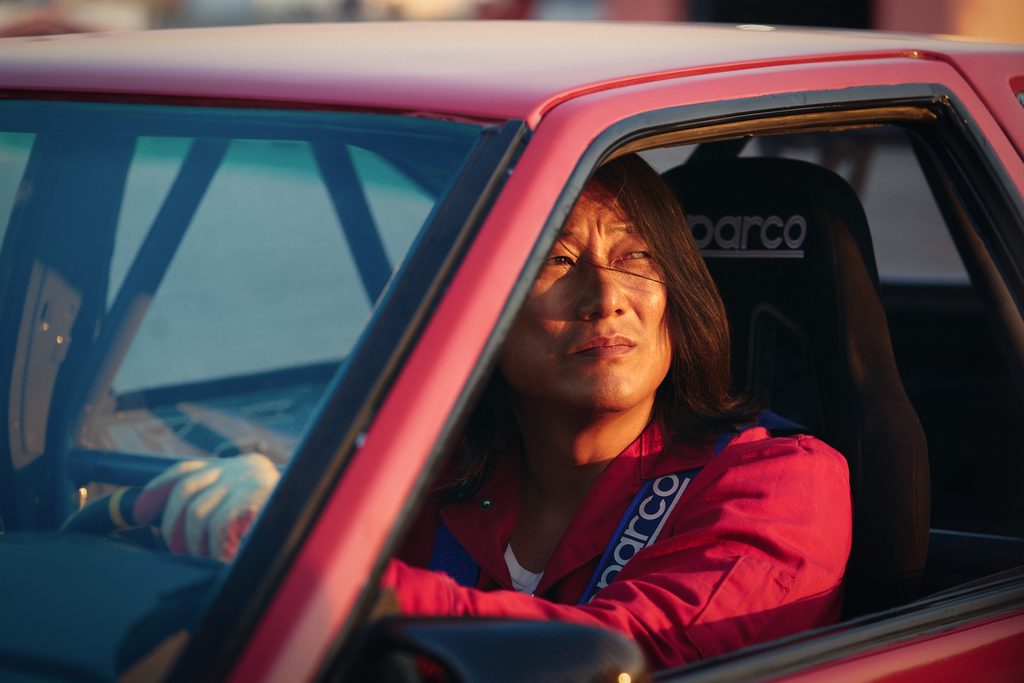
Anyone going into Drifter expecting the pedal-to-the-metal spectacle associated with Sung Kang’s years in the Fast & Furious franchise may be surprised by what they find. There are certainly plenty of engines roaring, tires smoking, and cars sliding sideways, but Kang’s second feature as a director is ultimately less interested in speed than it is in what happens when someone who has spent years keeping the world at a distance finally decides to let people in. The result is a reflective and soulful sports drama that uses drifting, and Kang’s obvious affection for car culture, as the foundation for a story about belonging and found family.
Making its world premiere at this year’s Toronto International Film Festival, Drifter introduces Kang as Tree, a withdrawn janitor living in a small desert community. His life is deliberately uneventful, with most of his time spent working, keeping to himself, and driving Lola, his aging Toyota Corolla AE86. Beneath that quiet routine, however, Tree is carrying the weight of a painful past. When an unexpected opportunity gives him the chance to compete in a major drifting event, he takes it, even though doing so means stepping outside the isolation that has protected him for years.
That premise gives Kang plenty of room to explore why cars can mean so much to the people who love them. His own history with automobiles clearly informs the film. Cars and movies were both places where Kang found a sense of community and identity, and Drifter feels like an attempt to return that gift to the culture that inspired him. Rather than using drifting simply as visual decoration, the film treats it as a genuine form of expression and art.
At 147 minutes, Drifter takes its time getting where it is going. That leisurely approach may test the patience of viewers looking for a conventional racing movie, but it also gives the film space to establish Tree’s emotional state and allow his relationships to develop naturally. It also allows the audience to sit with the characters and immerse themselves in their world.
An early glimpse into his past establishes why he has become so closed off. Tree has responded to loss by essentially putting his life on pause. Kang plays Tree with minimal dialogue and almost no outward affect, making the character’s eventual emergence from that emotional shell all the more meaningful.
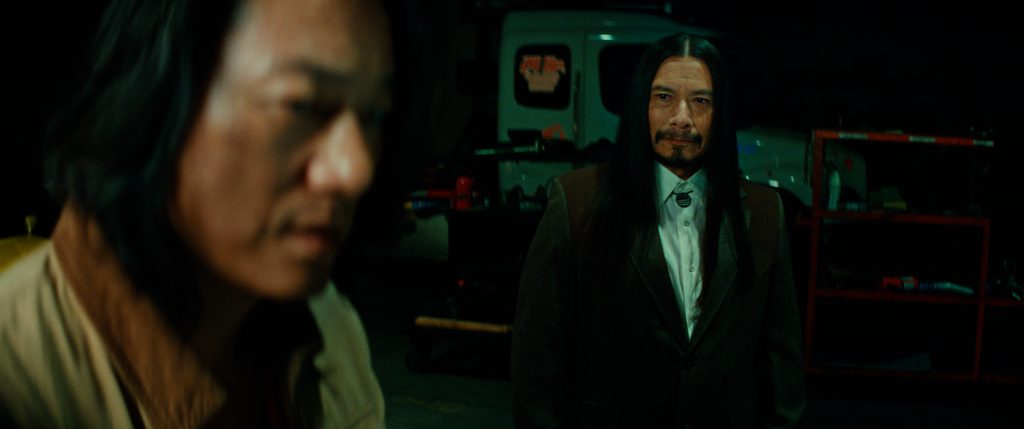
Fortunately, Tree is surrounded by a strong ensemble. Coach Bennett (Michael Nehring), Rosie (Tamara Braun), Burdy (Grant Sullivan), and Dusty (James Pumphrey) are not simply supporting figures placed around the protagonist to move the plot forward. Each has a personality and trajectory of their own, giving the wider community in Drifter a convincing sense of life.
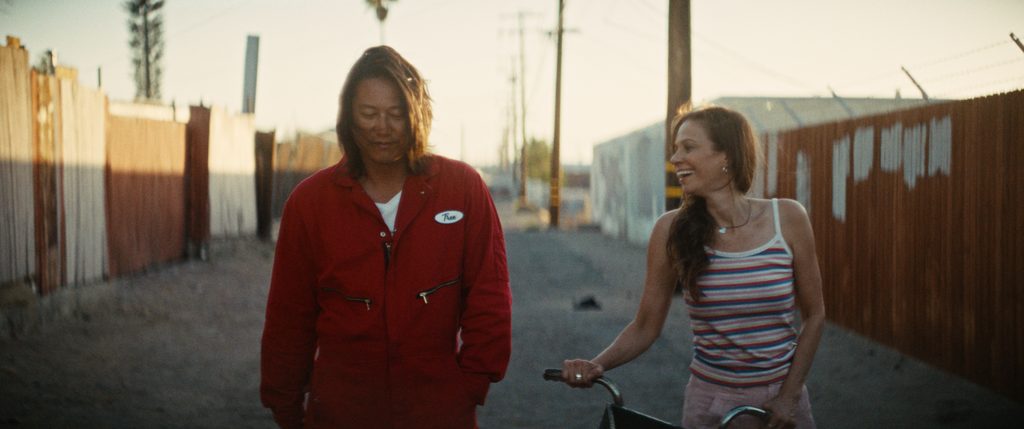
The relationship between Tree and Rosie is particularly effective. Braun brings warmth and energy to their scenes together, creating a welcome contrast to Tree’s guarded personality. Their connection never feels like merely another requirement of the sports-movie formula; instead, it becomes an important part of Tree’s gradual realization that he doesn’t have to navigate the world alone.
Kang’s performance is key to making Tree’s progression work. Tree is intentionally difficult to read at first, yet Kang finds subtle ways to communicate what is happening beneath the surface. When Tree finally begins allowing himself to experience emotions he has spent years suppressing, the change feels gradual rather than artificially dramatic.
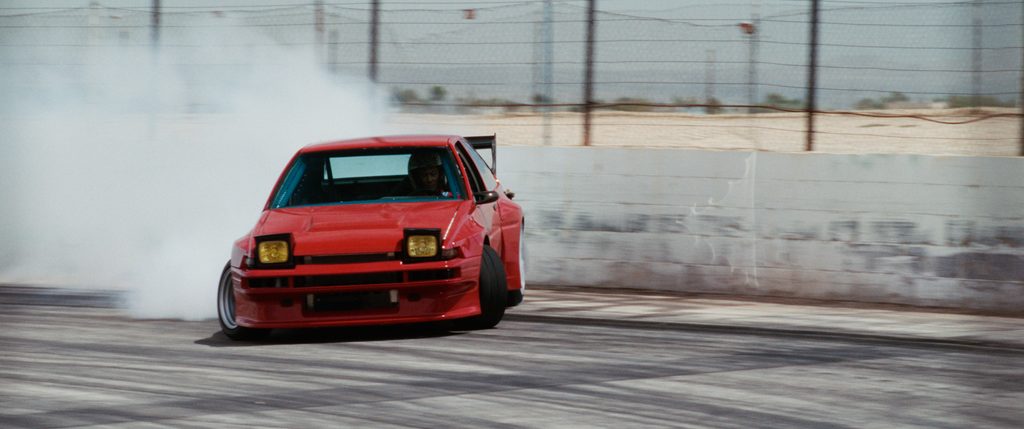
If the drama moves at a measured pace, the film’s drifting sequences are anything but restrained. Kang brings the visual instincts he developed during his time around the Fast & Furious series to the action, using sweeping camera movements, close perspectives, and elaborate choreography to make the cars feel like physical forces rather than props. The result is some exceptionally engaging automotive filmmaking.
More importantly, Kang understands what makes drifting different from conventional racing. The objective isn’t simply to reach the finish line first. Drivers are evaluated on their ability to maintain an exact line, achieve impressive angles, and demonstrate personality and control while the car is deliberately being pushed beyond what would appear to be its limits. That gives the sport a natural connection to Tree. His greatest talent is essentially the ability to remain composed while everything appears to be falling apart. The car becomes the place where he can communicate without having to find the words.
The film’s affection for the Toyota AE86 reinforces that idea. Lola isn’t an exotic supercar or an expensive racing machine. She’s an ordinary, aging Corolla that has acquired legendary status because of what skilled drivers have been able to accomplish with it. In Tree’s hands, the car becomes an extension of his personality and a character unto itself.
Kang also deserves credit for bringing the wider drifting community into the film. Appearances from figures including Adam LZ, Dai Yoshihara, Rutledge Wood, and Brian Scotto lend the competition scenes an added sense of credibility and help establish that this is a world with its own history and culture.
Familiarity with the sports genre formula doesn’t diminish the sincerity of what Kang is attempting in Drifter. His film is less interested in reinventing the sports movie than in using a familiar framework to tell a deeply personal story about someone who has spent his life believing that isolation is safer than connection.
VERDICT: 8/10
For all its tire smoke and high-speed spectacle, Drifter is really about learning how to stop going through life alone. Kang has made a film that feels authentic to the culture that inspired it while remaining accessible to anyone who has ever felt overlooked or out of place.
Making its world premiere at this year’s Toronto International Film Festival, Drifter is an assured and deeply soulful second directorial outing for Sung Kang, who trades the wild races of the Fast and Furious franchise for a decidedly more somber and reflective film. Kang oversees an underdog story unconcerned with its adherence to the sports drama playbook and far more concerned tapping into poignant emotions of breaking free from depression by finding community. Sung Kang impresses both in front of and behind the camera, while his supporting cast affords each and every member of the ensemble a fleshed-out character arc to follow. A love letter to car culture and the community it fosters, Drifter is an intentionally slow paced venture that may not be for everyone, especially those seeking out a more fast-paced car-based action film, but it overwhelmingly succeeds in what it sets out to achieve.