
By George Bate
Just when you thought we’d had enough Iraq War movies, Reed Van Dyk comes along with a quietly devastating drama that attempts to look at the conflict from an angle more concerned with its aftermath than its battlefield spectacle. War films have been a Hollywood staple for generations, but the sheer volume of movies about the wars in Iraq and Afghanistan eventually made the genre feel increasingly familiar. For every Zero Dark Thirty that found something compelling to say, there were plenty of others that seemed content to reproduce the chaos, violence, and bloodshed audiences had already seen. Van Dyk’s Atonement, making its world premiere at this year’s Toronto International Film Festival, tries to move beyond that formula by focusing on guilt, trauma, grief, and the difficult possibility of forgiveness.
Atonement begins in the early days of the Iraq War, when the Khachaturian family is forced from their home by U.S. military action and takes shelter with relatives. Three generations find themselves living together under one roof, attempting to create some sense of safety amid the surrounding conflict. When another bombing strikes nearby, however, the family decides to make the dangerous journey back across Baghdad. Their attempt to return home goes horribly wrong when they are caught in a firefight between U.S. Marines and insurgents. In the confusion, Marine Lou D’Alessandro (Boyd Holbrook) makes a split-second decision that has devastating consequences for the family. A decade later, Lou is still haunted by what happened. Struggling with PTSD and unable to escape his memories of Iraq, he reaches out to Michael Reid (Kenneth Branagh), a journalist who once interviewed D’Alessandro and now helps him make contact with Mariam Khachaturian (Hiam Abbass) and the surviving members of her family in order to make amends.
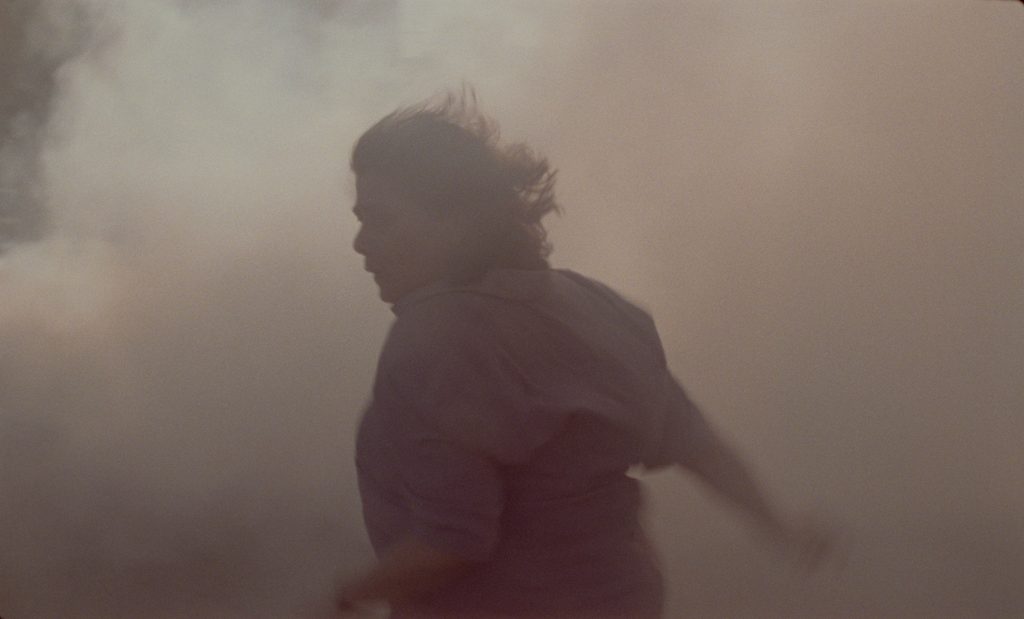
Atonement begins in a manner many would expect from a film about the Iraq war. The opening stretch, which depicts the instigating incident, is filled with gunfire, military vehicles, machine guns, and rocket launchers, and initially resembles the sort of Iraq War sequence audiences have encountered countless times before. The violence is important to establishing what happened, but the movie becomes considerably more distinctive once it leaves the battlefield behind and embraces the meaning behind its title. When the story jumps forward ten years, Van Dyk fills his film with conversations about guilt, shame, grief, responsibility, and whether moving forward is even possible. The restraint is welcome, although some of these exchanges can feel overly deliberate in their attempts to communicate the film’s themes.
Holbrook is the primary reason the quieter material works as well as it does. The actor has spent much of his career bringing charisma and a certain cool swagger to supporting roles, but Lou requires something much more vulnerable. Ten years after the incident, he is barely holding his life together, taking odd jobs, struggling in his relationship, using drugs to numb himself, and waking from nightmares about the civilians he mistakenly killed. Holbrook doesn’t attempt to make Lou’s suffering especially theatrical, although the depiction of PTSD doesn’t break any new ground. Nonetheless, there is real grace in Holbrook’s performance, but also a constant sense of pain that makes Lou difficult to dismiss even when his attempts at reconciliation become complicated.
Hiam Abbass provides a powerful counterweight as Mariam, whose grief cannot be separated from the question of whether Lou deserves forgiveness. Kenneth Branagh, meanwhile, brings an understated presence to Michael, whose role as a journalist gives Lou a means of reaching a family he otherwise might never have been able to approach.
Still, Atonement doesn’t entirely escape the limitations of its premise. Its central tragedy is affecting, but the movie sometimes seems too eager to underline its conclusions about guilt and redemption rather than allowing them to emerge naturally. The opening is familiar enough that the film’s later restraint can feel like a deliberate corrective to the war-movie formula rather than an organic progression.
What remains most effective is the movie’s interest in the immeasurable costs of war after the conflict itself has faded into the past. Atonement is ultimately less interested in combat than in what people carry with them afterward: PTSD, grief, shame, remorse, and the desire to somehow make amends for something that cannot be undone. There is a fascinating ethical question at the core of Van Dyk’s film – does a person who committed such an act deserve forgiveness and, if so, how does one go about that? Atonement may not be the definitive new perspective on PTSD, moral injury, or the Iraq War, but its quiet conversations about what comes after the shooting stops make it a worthwhile and often moving examination of the human costs of conflict.
VERDICT: 8/10
Making its world premiere at this year’s Toronto International Film Festival (TIFF), Atonement is a remarkably moving drama that shows there is indeed more stories of interest about the Iraq War to explore. More concerned with the mental aftermath of the war than battlefield spectacle, Reed Van Dyk’s feature debut affords dense topics like moral injury, guilt, PTSD, grief, shame, responsibility, redemption, and the difficult possibility of forgiveness with the sensitivity they deserve, while Boyd Holbrook delivers a deeply committed performance as a man crushed by actions of the past. Hiam Abbass and Kenneth Branagh provide strong support, while Van Dyk shows genuine promise as a director with assured filmmaking and strong handling of familiar themes. The film does not completely reinvent the Iraq War drama, and some of its emotional beats can feel heavy-handed, but its emphasis on what people carry with them after the shooting stops gives it more substance than a straightforward depiction of violence.