
By George & Josh Bate
Indonesian filmmaker Joko Anwar has established a reputation for revitalizing modern Indonesian cinema, particularly through acclaimed horror and genre films. His 2017 film Satan’s Slaves became Indonesia’s highest-grossing horror film, while Anwar has received multiple Citra Awards, the Indonesian equivalent of Academy Awards. Needless to say, any project that Anwar puts his stamp on demands attention, especially from horror fans.
A testament to the quality of Anwar’s latest work, Ghost in the Cell, his new film may just be the finest of his career to date, a sentiment reiterated by the fact that the film recently won Best Picture (Horror Features) at this year’s Fantastic Fest.
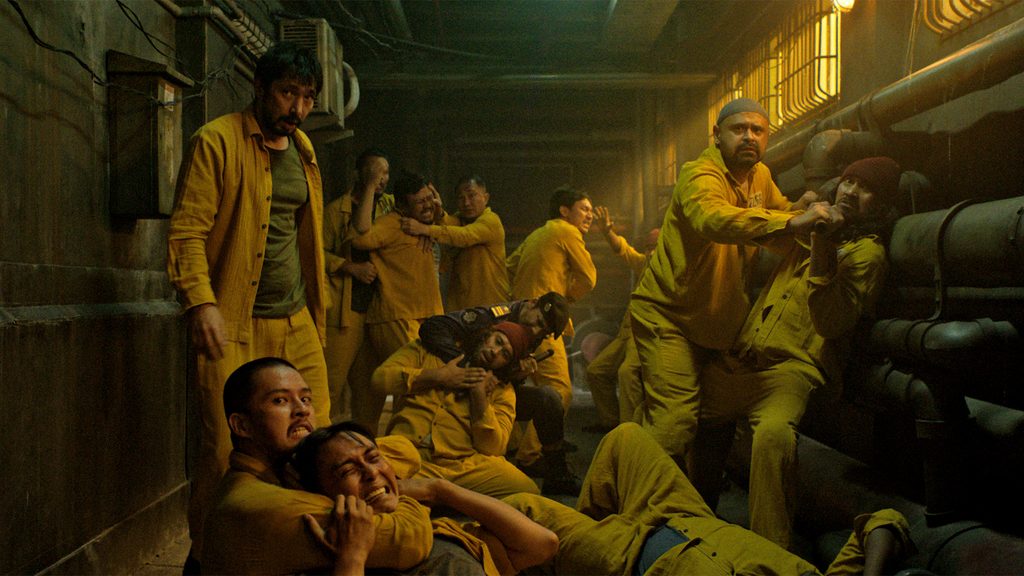
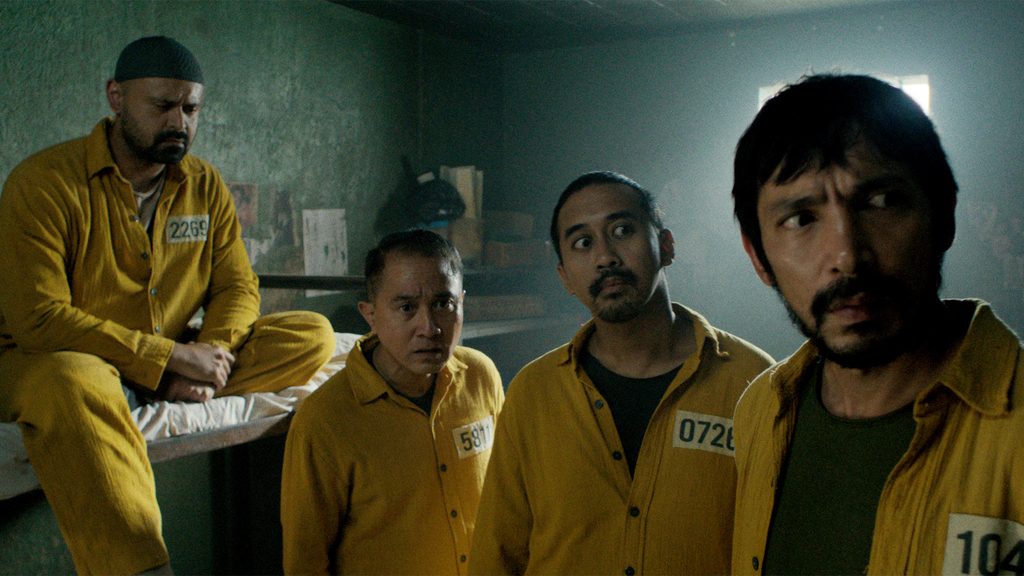
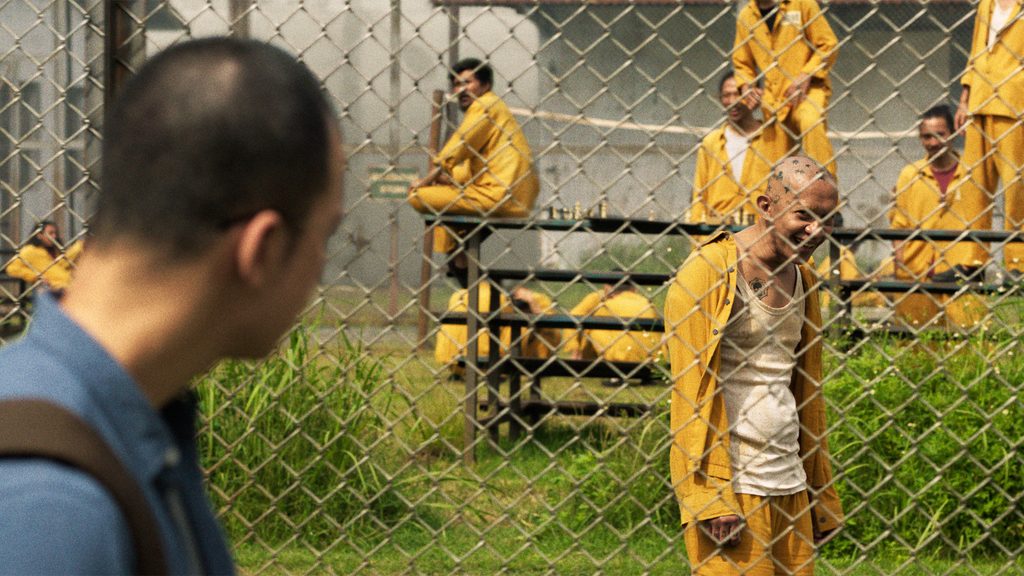
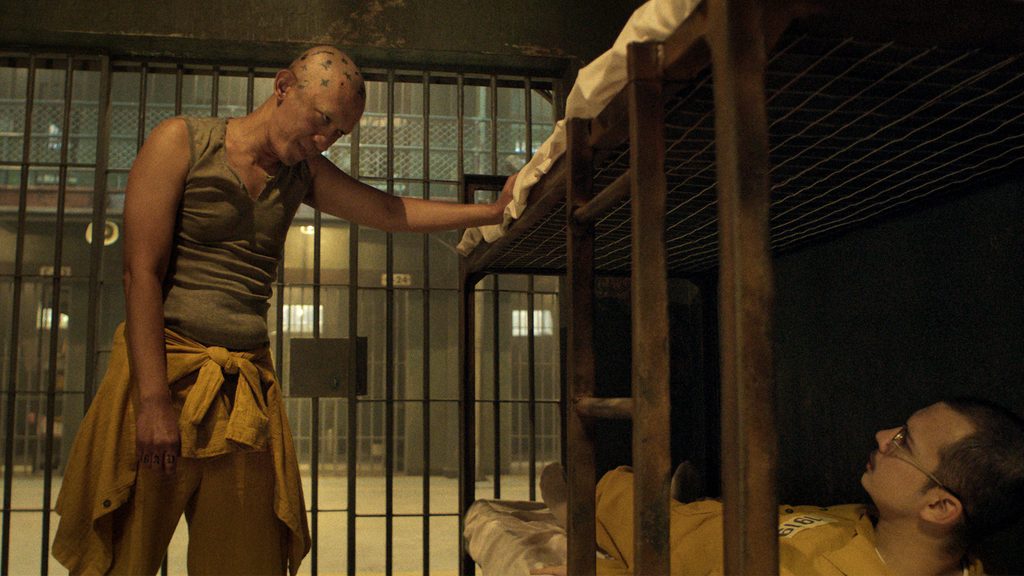
Ghost in the Cell follows Dimas (Endy Arifan), an investigate journalist falsely accused of gruesomely murdering his editor. Dimas is placed in a high-security prison, where feuding gangs and corrupt guards are constantly at odds. But when an invisible supernatural entity starts murdering people and arranging their mutilated bodies like pieces of morbid art, the prison’s feuding factions must come together to overcome a vicious ghost with murderous intent.
The HoloFiles recently had the opportunity to speak with Ghost in the Cell writer/director Joko Anwar about his new film, how his prior experience as a journalist informed his work, the delicate tonal balance between horror and humor, weaving prescient commentary into a crowd-pleasing horror flick, the state of Indonesian cinema, and more.

Before becoming one of Indonesia’s most internationally recognized filmmakers, Anwar worked as a reporter at The Jakarta Post, an experience that informed his work on Ghost in the Cell in more ways than one.
“Everything in the film depicting the news office really resembled my office when I was working as a journalist at The Jakarta Post daily at the time,” Anwar said. “My time as a reporter at The Jakarta Post really shaped my eyes and ear for storytelling.”
It was hardly an ordinary introduction to the craft of storytelling. One of Anwar’s first assignments was an investigation into a horrific murder case involving five people who were attacked by a mob after someone accused them of being thieves.
“They were at the bus station and somebody just yelled, ‘Thief!’ at them and the mob just beat them up and put them on fire. It was crazy,” he recalls.
Anwar was assigned to crime reporting, and the experience exposed him to a seemingly endless supply of real-life stories that were stranger and more disturbing than fiction.
“And every time, every day was like, it’s not right for me to say, but it’s like story material because everything was so crazy,” he says. “All the crimes that I was writing at the time really sparked ideas.”
Those experiences as a journalist never entirely left him. Anwar explained how incidents from his years as a journalist have found their way into his films, including Ghost in the Cell. The result is horror that often feels grounded in recognizable human behavior, even when the supernatural enters the picture.
This sense of grounding is central to the movie’s unusual relationship between horror and humor. As is often the case in Anwar’s films, Ghost in the Cell embraces frights and fun in equal measure, a difficult balance many filmmakers miscalculate. Much of the film’s humor follows a realization from an inmate that the ghost feeds on anger and targets those with red auras. Therefore, to survive, the hardened prisoners must actively suppress their rage by keeping calm, praying, or even breaking out into goofy dance numbers or slapstick routines.
“I think the key is not to be funny,” Anwar remarked while explaining how to make horror and comedy work together. “I know there are a lot of comedic elements and comedic points in Ghost in the Cell, but it’s not the [job of] characters or me as a writer to be funny or to make the characters funny.”
Instead, the humor emerges from desperation. These are ordinary people confronted with an extraordinary threat, and their attempts to reason their way out of it aren’t always particularly intelligent.
“They’re just people who are trying to survive in such a contained place when a ghost is killing them,” Anwar explained. “So they’re trying to stick with each other and they’re not smart. Some of them are, but most of them are not smart. So they’re trying just to come up with things that are ridiculous, but according to them, it’s logical.”
The comedy isn’t there simply to give the audience a breather from the scares. In fact, he believes the opposite should happen. “It’s funny because situational funny is not funny funny,” Anwar reflected. “I don’t believe that comedic elements should be the release of tension. In fact, comedic elements in film should enhance the tension, should enhance the horror by making the audience root more for the characters.”
That investment in the characters is what allows the humor to become part of the suspense rather than an interruption of it. If the audience cares about the people trapped inside the cell, every ridiculous decision can become another source of anxiety.
Underneath its genre-bending tone, Hellraiser-esque gore, and laugh-out-loud comedy, Ghost in the Cell features unexpectedly poignant thematic depth. Beneath the ghosts and genre mechanics, Anwar believes filmmakers have a responsibility to have something to say about the world around them. But that doesn’t mean turning a horror movie into a lecture.
“I believe, as a filmmaker, you have to have a voice, because voice makes your movies not just personal, but relevant,” Anwar says. “But I don’t want to preach to the audience because life is hard already. So by putting whatever I’m trying to say in genre film, comedy, horror, I’m trying to entertain people, making them forget about what’s going on, but at the same time, raising awareness about what’s going on in Indonesia, in my own country. And I believe that if your movie reflects specifically what’s going on in your country, people from other countries will be able to resonate with it, with their own problems. I believe that these problems, corruption, for instance, they don’t have nationality everywhere.”
Perhaps nowhere is that philosophy more apparent than in Anwar’s approach to Indonesian horror itself. The country’s supernatural traditions aren’t simply aesthetic ingredients for him. They are woven into everyday culture, creating a relationship with the supernatural that can feel fundamentally different from those found in other cinematic traditions.
“I believe Indonesian filmmakers have a very distinctive voice compared to other filmmakers,” Anwar reflected. “We are very superstitious, especially Indonesia. If we talk with our friends on a daily basis, they can say, ‘Oh, I can see ghosts behind the door.’ And nobody will say that they are crazy. They’ll think that this person is gifted.”
Anwar is careful to acknowledge that superstition isn’t necessarily something he considers positive, but its cultural presence gives Indonesian filmmakers a particular foundation from which to approach horror.
“That’s not good, but that’s one of the things that make us very different,” he said. “And as filmmakers, we have a distinctive voice because we truly believe in this superstition, especially when we talk about the horror landscape of the world. Indonesian horror cinema is very rich, because we really believe in these kinds of things.”
There is an even deeper cultural complexity beneath that superstition. Indonesia is not a monolithic culture, and Anwar sees the country’s enormous diversity as another reason its genre cinema can draw from such a deep well of ideas and increasingly resonates with global audiences.
“We have to understand that Indonesia consists of some 13,000 islands and more than 300 ethnic groups,” Anwar noted. “And all these ethnic groups come with their own culture, specific culture, including superstitions and martial art. And then somehow they meet, not clashing, but assimilate with each other, creating this very unique culture, rich for a genre of horror and martial arts.”
Gruesome, bizarre, crowd-pleasing, hilarious, relevant, and unexpectedly heartwarming are not typically terms that go together in describing a film, but they perfectly characterize what Joko Anwar has achieved with Ghost in the Cell. As yet another example of the craft underlying contemporary Indonesian cinema, Anwar’s latest is superb, while, as a horror film, genre fanatics will be hard-pressed to find a movie as simultaneously blood-soaked and uproarious as this.