
By George & Josh Bate
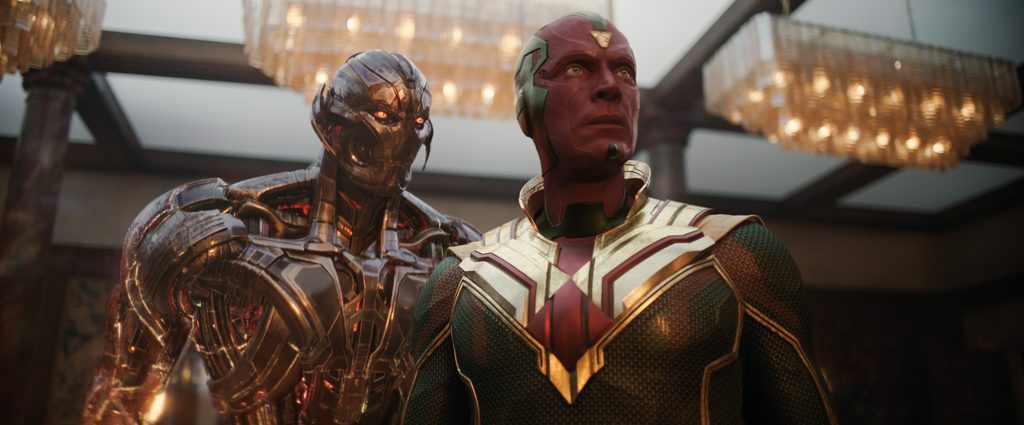
The following is a non-spoiler review of all eight episodes of VisionQuest
Despite all its acclaim and attention, WandaVision still doesn’t get the plaudits it deserves. Flashback to 2021. The Marvel Cinematic Universe last released films in the summer of 2019, with the whopping double hitter of Avengers: Endgame and Spider-Man: Far From Home generating billions in box office revenue. But then Disney+ came around and, in turn, a new mandate for Kevin Feige and company to craft long-form, high-quality television shows for a brand new streaming service. Throw in a global pandemic just months after the launch of said streaming service and Marvel Studios found itself an interesting inflection point.
Rather than play it safe with their first Disney+ series, however, the MCU went bold, surreal, and ambitious with WandaVision. No massive CGI battle sequences. No superheroes running around in cool costumes. No grounding in the real world even. Instead, the series adopted a decidedly unconventional narrative, chronicling a decade-by-decade evolution of American television sitcoms as a representation of Wanda Maximoff’s psychological defense against the pain of grief. The result was a stylized, subversive, and endlessly clever series that coupled its pitch-perfect recreations of TV history with deep emotional grounding, punctuated by arguably the greatest line in comic book film and television history: “What is grief, if not love persevering?”
The trilogy that began with WandaVision and continued with Agatha All Along now concludes with the release of VisionQuest, an inventive, ontologically inquisitive, visually striking, and emotionally powerful series that resoundingly dispels cynics’ claims that comic book and superhero stories are just spectacle and little else.
From creator Terry Matalas, VisionQuest follows the synthezoid Vision after he was resurrected at the end of WandaVision. Living a reclusive life in Edinburgh, Vision communicates with various AI personas embedded in his programming, including Ultron (James Spader), as he comes to terms with his identity given that he is a copy of the original Vision, in possession of the memories but not the emotions of the original’s life. Vision’s ontological ponderings are disrupted, however, when a bounty is placed on his head and a mysterious young man named Thomas (Ruaridh Mollica) is caught in the crosshairs.
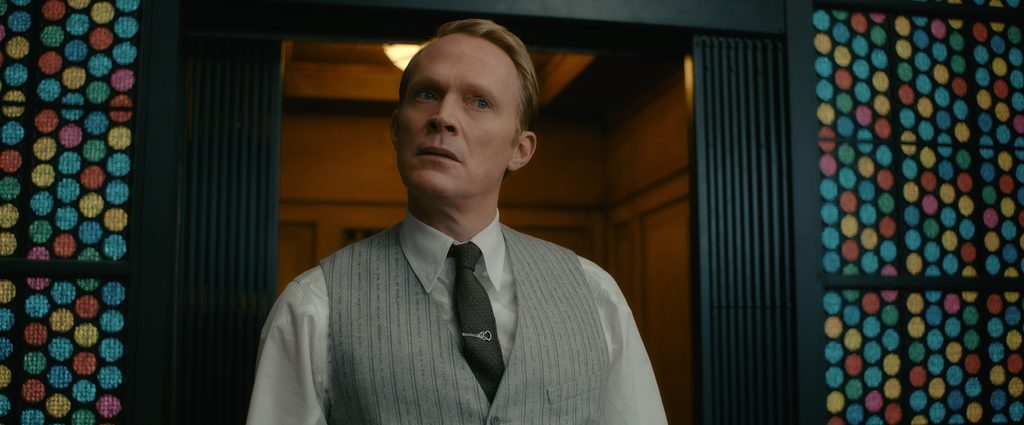
A brilliantly written expositional narration kicks off the first episode of VisionQuest and serves as an effective recap of the long, winding journey that led to this point. As VisionQuest operates as a sequel to WandaVision, Agatha All Along, Doctor Strange in the Multiverse of Madness, Avengers: Age of Ultron, and Avengers: Infinity War, the new series could easily become unwieldy and overwhelming, especially for those not up-to-date on all things MCU. Thankfully, this is (for the most part) not the case. VisionQuest succeeds in orienting audiences, both seasoned and newcomers alike, to the story and its lead character from the get-go and only occasionally requires a refresher for those who don’t remember all the big events of WandaVision and Agatha All Along. This refresher need not come in the form of a comprehensive rewatch, however, as a quick Google search about what happened to a certain character the last time we saw them is more than enough to jog the memory and orient to the current narrative.
Fitting given its status as a sequel to WandaVision, VisionQuest possesses the same abstract, surreal visuals and storytelling structure as its predecessor. While there are flurries of action here and there, the series is largely devoid of traditional action set-pieces. In their place are expansive, eloquent, and thought-provoking conversations about the nature of existence, the distance between memories and emotions, what it means to be human, and more. In this sense, VisionQuest has far more in common with Blade Runner and 2001: A Space Odyssey than it does the average MCU project given how willing it is to forego action and embrace an exploration of the ontological.
Also like WandaVision, the new series forges a unique visual identity. Much of VisionQuest takes place within the mind of Vision, which is visually represented as a high-concept mansion. Visually, the production design plays with mathematical compositions and high-contrast luminosity to create a lived-in, textured environment. Reimaginings of classic works of art adorn the walls and reflect Vision’s attempts to comprehend humanity. All of this makes for a backdrop that is hardly common for a comic book movie or series, in turn rendering VisionQuest as visually impressive as it is refreshing.
Vision’s internal psychological sanctuary further comes to life as it is inhabited by past Stark AI assistants who manifest as human avatars. Present are Friday (Orla Brady), Edith (Emily Hampshire), Jarvis (James D’Arcy), Dume (Henry Lewis), U (Jonathan Sayer), and, of course, Ultron (James Spader). Together, the AIs comprise an unusual family, whose interactions are marked by razor-sharp quips and comical attempts at understanding what it means to be human.
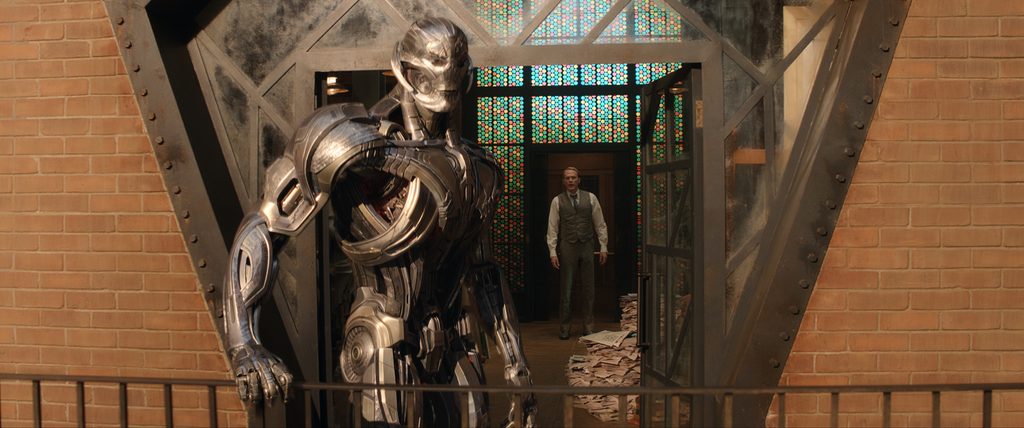
The idea of having a personified visual representation of Vision’s mind is a stroke of genius from the creative team. It harkens back to the likes of Tron, Ralph Breaks the Internet, and Johnny Mnemonic in making the underpinnings of technological workings so aesthetically fascinating. Rather than blandly depict internal processors, the series depicts characters sending out carrier pigeons as a representation of sending emails and working in the basement boiler room of the mansion as a representation of attempts to repair Vision’s failing system.
VisionQuest becomes even more layered upon the introduction of Thomas Shepherd, a young man plagued by memories of Vision and Wanda Maximoff. In Agatha All Along, Billy Maximoff placed his twin brother Tommy’s soul into the body of Thomas Shepherd, a teenager who drowned. Now, in VisionQuest, Thomas/Tommy is an orphan recently out of foster care who relies on pickpocketing with his partner-in-crime Lisa (Lauren Morais) to survive.
While Tommy’s entry point in the story is a tad convoluted, especially if one does not recall all the details of Agatha All Along, Ruaridh Mollica’s introduction gives the series an interesting new character to follow. While Vision struggles to connect to memories he has no emotional attachment to, Tommy faces an identity crisis of his own. Eventually, when the two meet, the series arrives upon its central dynamic, which gives way to a number of deeply moving sequences and lines about the nature of fatherhood and the importance of family.
Speaking of fatherhood, James Spader’s Ultron plays a pseudo-father role for Vision in the series. Admittedly, for the writers of this review, Spader’s Ultron was more annoying than intimidating in Avengers: Age of Ultron and the concept of him returning in VisionQuest did little to elicit excitement. But it quickly becomes clear that Spader’s inclusion in the series is yet another inspired decision from the creative team.

While at times Spader’s role in the series seems to be limited to delivering quippy and snarky remarks to Vision and the other AI, Ultron grows into the story as the episodes progress and ultimately emerges as one of the most compelling and nuanced antagonists (if he can be called that at this point) in MCU history. Spader and Bettany share electric chemistry as they exchange verbal blows and philosophically clash on their views of humanity and how to manage an increasingly stressful predicament.
Ultron’s role in the series is just one of many ways in which VisionQuest brilliantly connects to other MCU movies and shows. As this review does not delve into spoiler territory, it will not elaborate as to which specific movies and shows are referenced and connected to, but it nonetheless makes for such rewarding viewing to see seemingly minor characters, events, locations, and more from across the Marvel universe be referenced or integrated in one way or another in the show.
Anchoring the entire series from start to finish is Paul Bettany, who has never been better as Vision. While Bettany has often existed at the periphery of the Marvel stories he has been a part of, he is front-and-center of VisionQuest and, in turn, makes extraordinary use of his far more prominent role this time around. Bettany has always nailed the robotic mannerisms and voice of Vision, but VisionQuest requires him to add nuance to his character as he contemplates dense questions about fatherhood, humanity, and his own identity. The latter proves particularly fascinating as the Vision that Bettany plays in the series is not the Vision who fought Ultron in Sokovia or died at the hands of Thanos in Wakanda; this Vision is a copy of the original Vision, in possession of all of his memories but having no emotional attachment to them (almost as if he had his memory wiped and then subsequently was able to read about and view videos of all his wiped memories after the fact). This strange predicament gives Vision a captivating arc to traverse and Bettany ample opportunities to further develop his character.
VERDICT: 8/10
Inventive, ontologically inquisitive, visually striking, and emotionally powerful, VisionQuest resoundingly dispels cynics’ claims that comic book and superhero stories are just spectacle and little else. Fitting given its status as a sequel to WandaVision, the series possesses the same abstract, surreal visuals and storytelling structure as its predecessor, embracing expansive, eloquent, and thought-provoking conversations about the nature of existence, the distance between memories and emotions, and what it means to be human. With a unique visual identity, a stroke-of-genius representation of Vision’s mind, and deeply moving sequences about the nature of fatherhood and the importance of family, VisionQuest makes for a series that is as visually impressive as it is refreshing. Paul Bettany has never been better as Vision, making extraordinary use of his far more prominent role, while James Spader’s Ultron emerges as one of the most compelling and nuanced antagonists in MCU history. The series brilliantly connects to other MCU movies and shows, making for such rewarding viewing as seemingly minor characters, events, and locations from across the Marvel universe are referenced or integrated in one way or another. VisionQuest is also the perfect set-up to Avengers: Doomsday, showcasing the breadth of stories that can be told in the MCU and how to deftly balance cosmic, abstract concepts with deeply resonant emotions. Up there with Loki Season 1 and Wonder Man as the best of what Marvel Television has to offer, VisionQuest is a perfect sequel to WandaVision, a stunning series in its own right, and a thunderous success for the MCU.
VisionQuest premieres October 13 on Disney+.