
By George & Josh Bate
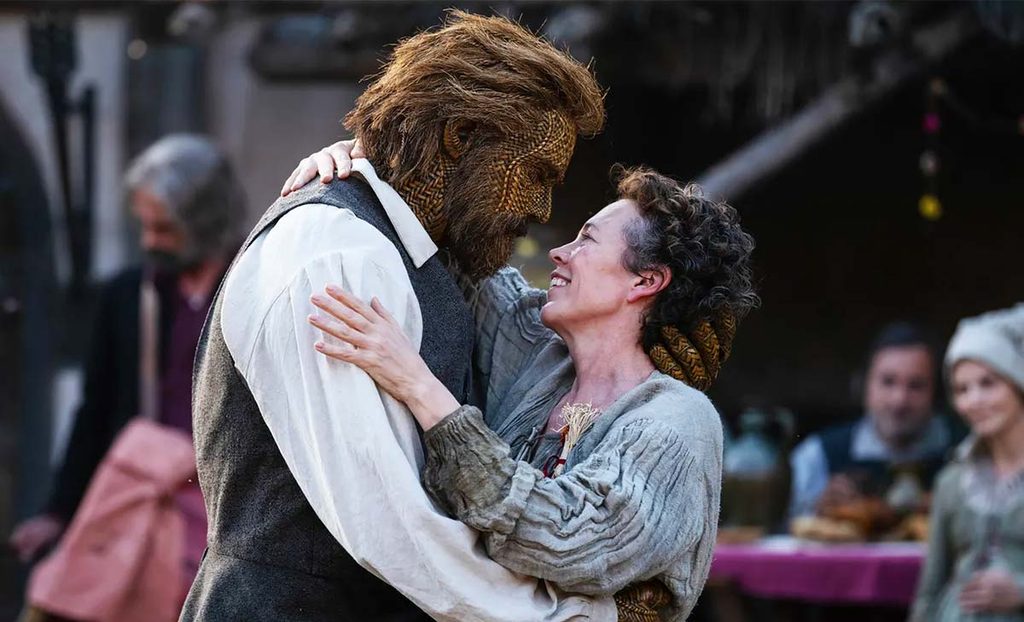
Upon the release of its initial trailer, Wicker took on a level of vitality most movies can only dream of. The concept of a woman conjuring a man out of wicker (a man who happens to look like the strapping Alexander Skarsgård) to be her husband fostered such a feral thirst among horny moviegoers that Black Bear Pictures have even commissioned a 4DX release for their film.
But while much of the attention on Wicker prior to its wide release on October 23 have circulated around a woman exploring the positions of the Kama Sutra with a man made out of wood, filmmaking duo Alex Huston Fischer and Eleanor Wilson’s film is far more than just an unconventional sexual fantasy brought to life. With the rhythm, whimsy, and necessary lessons of a fairy tale, Wicker puts the likes of Wuthering Heights to shame as the most beautifully romantic movie of the year.
Wicker unfolds in a small medieval farming town defined by rigid gender roles. Men are referred to be their profession (e.g., the Tailor, the Butcher), while women are named based on the profession of their husband (e.g. Tailor’s Wife, Butcher’s Wife). The reclusive Fisherwoman (Olivia Colman) lives somewhat on the outskirts of society as she has neither husband nor children, a status that makes her the subject of ridicule from the townspeople. But everything changes for the Fisherwoman when suddenly, fed up with the japes at her spinster status, commissions the Basket Weaver (Peter Dinklage) to make her a husband. After a month lapses, the Wicker Husband (Alexander Skarsgård) comes to down and forges a romance so strong with the Fisherwoman that it causes jealousy, resentment, and desire among the closed-minded townspeople.
On the surface, Wicker is a light-hearted, comedic folk tale, but, like the best fairy tales, it shows human nature at its best and worst when examined more deeply. Fischer and Wilson’s film exists in a heightened world whose inhabitants don’t recognize nor acknowledge is heightened. The lack of traditional names and the strict patriarchal culture is an implicit way of life for the townspeople, while the arrival of a man made out of wood shocks, not because there is a man made of wood suddenly speaking and walking around, but because of the social implications of the local spinster having access to a man so loving, sexual, and useful.
Social media and promotional materials will have expecting audiences thinking Wicker is a far more raunchy movie than it actually is, although there is more than a handful of scenes in which Skarsgård’s Wicker Husband pleasures Colman’s Fisherwoman in ways she never thought possible. Rather than playing these scenes for arousal, Fischer and Wilson largely use the sex between their two lead characters as a source of unusual behavior. It’s not everyday you watch a movie and are treated to a man made of wood and a human woman regularly having passionate sexual intercourse.
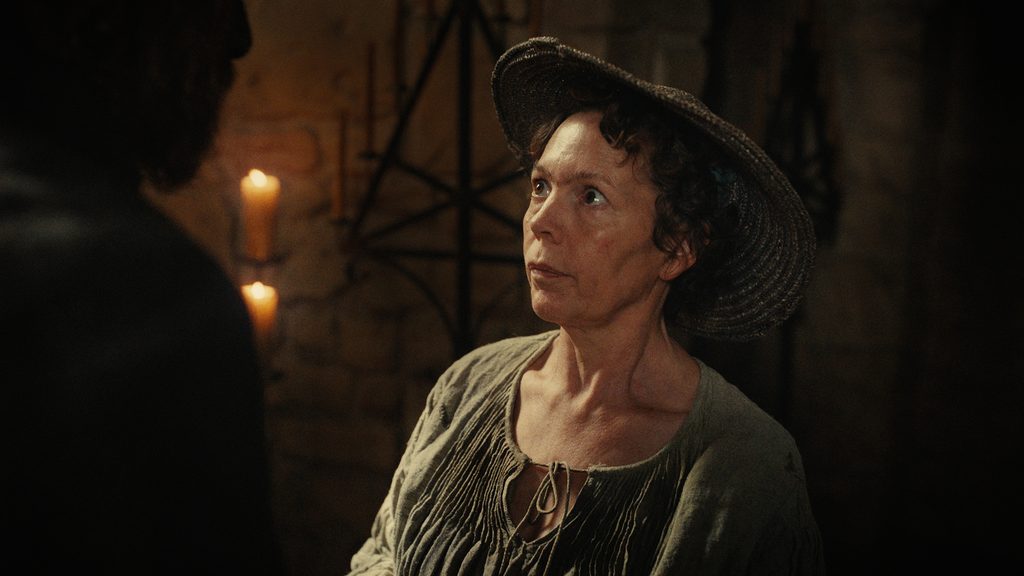
In the absence of Fifty Shades of Grey-esque sexual thriller, Wicker extracts great humor and commentary from its premise. Although the townspeople are initially stunned at the lonely Fisherwoman having a man of her own, shock turns into resentment and envy for the townsfolk. The town’s women, who live unremarkable lives defined by the professions of their husbands and little in the way of sexual pleasure, suddenly see how a man should treat a woman. Much to their surprise, not all men are useless, aromantic beasts. The Wicker Husband proves men can be quite the opposite. The town’s men, meanwhile, resent the ways in which the Wicker Husband’s behavior highlights their deficiencies as husbands. These contrasting reactions among the town’s men and people lead to a myriad of cleverly constructed laughs and messaging that satirizes the woefully low standards men need (yet often fail) to reach in order to be serviceable partners.
Leading the charge against the Wicker Husband and Fisherwoman’s relationship is the Tailor’s Wife (Elizabeth Debicki), a jealous woman who masks her envy with niceties. Everything seems too good to be true for the new couple, which irks the Tailor’s Wife and leads her to meddle in an otherwise beautiful relationship. Because the film does such an exceptional job earning investment in this romance, any threat to it is felt palpably and creates anticipatory anxiety that the very worst of human nature will emerge victorious above the very best of human nature.
The romance between the Fisherwomqn and the Wicker Husband makes for exceedingly sweet and wholesome viewing. Seeing a reclusive, ostracized woman come to life in response to being treated like an actual person warns the heart, while the Wicker Husband’s unwavering and almost instinctive dedication to his wife is enough to make even the most cynical of viewers exclaim an “aww” in response to just how romantic it all is. Skarsgård plays the Wicker Husband with a stillness and stoicism that couples beautifully with his character’s reflective love for the Fisherwoman. Colman, meanwhile, crafts a tragic, misunderstood and deeply empathic figure out of the Fisherwomqn. The on-screen chemistry between the two is unconventional, to say the least, yet undeniably palpable.
Representing one of the few missteps of the film, Wicker concludes on a near-perfect note, before perplexingly continuing for another 10-15 minutes with an ill-fitting epilogue. The epilogue certainly makes the film feel even more like a fairy tale and hammers home the story’s central messaging (i.e., leave people the hell alone, let them live their lives, don’t judge, and being loving isn’t too difficult a task), but it takes the film’s focus away from the lead characters and, in turn, loses momentum in the last stretch.
Thankfully, Wicker circles back to its loving duo before the credits roll, at which point it evolves from a wholesome to a tear-worthy viewing experience. There is something so beautifully and undeniably warm about their romance with tugs so strongly at the heartstrings and will spur viewers to show a bit more love to their romantic partners.
VERDICT: 7.5/10
Wicker is a beautiful, wholesome, sharp, and humorous movie that, with the rhythm, whimsy, and necessary lessons of a fairy tale, puts the likes of Wuthering Heights to shame in cementing its status as the most romantic film of the year. Although the compelling premise promises an unconventional sexual fantasy brought to life, filmmaking duo Alex Huston Fischer and Eleanor Wilson deliver far more than raunchy humor, extracting great comedy and commentary from a story that satirizes the woefully low standards men need to reach to be ‘serviceable’ partners. Olivia Colman crafts a tragic, misunderstood, and deeply empathic figure out of the Fisherwoman, while Alexander Skarsgård’s stillness and stoicism beautifully complement the Wicker Husband’s unwavering dedication to his wife. Their unconventional yet undeniably palpable on-screen chemistry makes for exceedingly sweet and wholesome viewing, as seeing an ostracized woman come to life in response to being treated like an actual person warms the heart. The film does an exceptional job earning investment in this romance, creating anticipatory anxiety that the very worst of human nature will emerge victorious above the very best. Although Wicker concludes on a near-perfect note before perplexingly continuing with an ill-fitting epilogue that loses momentum in the last stretch, it ultimately circles back to its loving duo and evolves from a wholesome to a tear-worthy viewing experience, delivering a beautifully warm romance that tugs strongly at the heartstrings and urges viewers to bring a bit more love, utility, understanding, and sex to their romantic relationships.
Wicker is in theaters October 23.