
By George & Josh Bate

The following is a NON-SPOILER review of Dexter: Resurrection Season 2 Episodes 1-2
Television’s favorite serial killer returns for a second season of his second sequel series, reminding viewers that, even when a tad silly and overstuffed, life wouldn’t be as good (or gory) without a little Dexter Morgan in the mix.
Dexter: Resurrection Season 2 picks up several years after the conclusion of Season 1. Dexter Morgan (Michael C. Hall) lives a routine life by his standards. For work, he is a rideshare driver, transporting ungrateful New Yorkers from one location to another. But for play, and to appease the ever-present Dark Passenger inside him, he spends his time killing bad guys, with a particular focus on other serial killers who were once part of Leon Prater’s twisted support group. As Dexter’s son Harrison (Jack Alcott) graduates from the police academy and begins his own pursuit of justice, Dexter once again crosses paths with Charley (Uma Thurman) and finds himself caught between two other serial killers: the Five Boroughs Killer (Dan Stevens) and the New York Ripper (Brian Cox).
After two widely criticized series finales, Dexter: Resurrection saw the iconic serial killer find stability and a return to form. While the revival season didn’t pack the emotional punch or narrative weight of New Blood or the original series at its peak, it served as a worthy extension of Dexter’s story. The first two episodes of the new season continue to compel in a similar fashion, thanks in large part to the undeniable charisma of Michael C. Hall.
Hall has played Dexter Morgan for 20 years now and, as such, steps effortlessly into the mind and body of a cold, predatory serial killer wearing a calm, polite social mask once again. Dexter has always been a difficult character to pull off (how in the world does one empathize with a person who kills so many people and has such an unquenchable urge to murder others?). But Hall continues to take this challenge in stride, masterminding an endlessly likable, exceedingly charming, and strangely relatable protagonist. Far more nuanced than a psychopath who feigns human emotions to fit in, Dexter has a moral code and a desire to care for others, albeit within the confines of a person who doesn’t experience emotions the way others do and who just so happens to be addicted to killing. Hall’s deadpan, analytical internal monologue continues to create an intimate bond with the audience and offer insights into the inner workings of one of television’s most enduringly captivating characters.
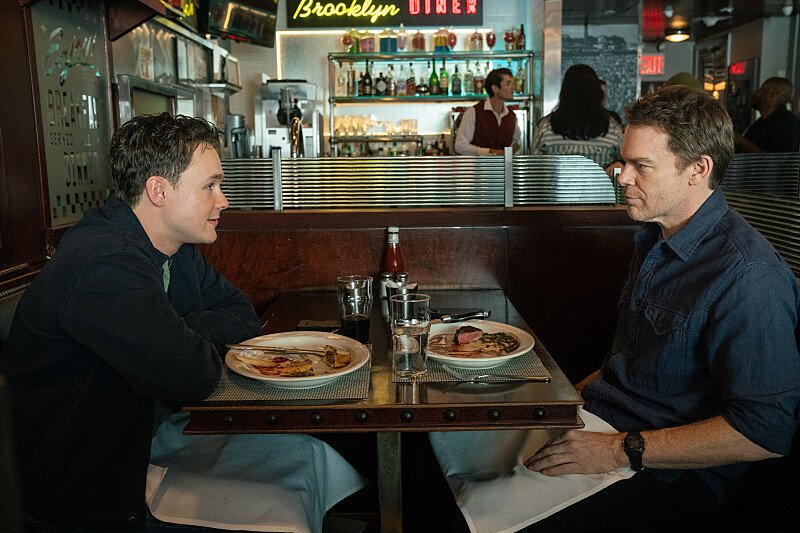
Much like last season, Hall portrays an older, more fragmented Dexter, this season confronting an issue common to people his age: a midlife crisis. In his young adulthood, killing bad guys in secret and keeping up appearances in public were enough to make him happy. But as the original series progressed, Dexter’s desire to connect with someone who understands and accepts him for who he authentically is became a primary motivation. In the new season, however, killing and connection aren’t enough. He wants to be recognized. He wants the kind of attention he dreamed of in the final moments of the Season 1 finale. The kind of attention the New York Ripper and other serial killers seem to receive, but he does not.
Based on the first two episodes, it appears this desire for recognition will drive Dexter forward throughout the season. Although wrapped in a rather straightforward midlife-crisis storyline, it makes for an interesting evolution of his character, one that is willing to develop and deepen him rather than remain content with established conventions of the character. This rawer, messier version of Dexter, desperate for connection and credit, simultaneously makes him a more complex character and will likely expose him to all manner of threats, as is often the case when Dexter gives himself permission to be human.
While Dexter grapples with a midlife crisis, his son Harrison undergoes a compelling evolution of his own. A recent graduate of the New York City Police Department academy, Harrison is following in the footsteps of his aunt Deb and grandfather Harry by joining law enforcement. The idea of a police officer whose father is a prolific serial killer lays the groundwork for some fascinating story developments teased in these early episodes, while Alcott continues to work effortlessly alongside Hall and authentically sell the complicated father-son bond the duo share.
But Dexter: Resurrection Season 2 is proving far more expansive than simply another tale of Dexter and Harrison Morgan. The first two episodes introduce a range of other characters and plot threads, including Uma Thurman’s Charley, now that she is “off the leash” and “living for herself”; Dan Stevens’ Five Boroughs Killer and his spree of violent murders; Brian Cox’s New York Ripper as he navigates public exposure and police scrutiny; Desmond Harrington’s Joey Quinn as he arrives in NYC after leaving Miami Metro; and Kadia Saraf’s Detective Claudette Wallace as she hunts down a new serial killer while remaining determined to finally convict the ruthless New York Ripper.
If that sounds like a lot, that’s because it is. Rather than steadily develop subplots and character threads from an initial instigating incident or two, as Resurrection Season 1 and New Blood did, Season 2 begins on more frenetic footing, pushing through a choppy opening to set up a multitude of characters and plots rather than dedicating significant time to developing any one of them. As a result, the new episodes take a more scattered approach to their narrative than previous seasons of Dexter, with none of the threads standing out as particularly engrossing, given how underdeveloped they all are.
This is not to say, however, that Dexter: Resurrection Season 2 isn’t intriguing. Quite the contrary, actually. Fan-favorite Joey Quinn’s ominous return to the fold spells trouble for our titular character. The inevitable clashing of Harrison’s duties to the law and loyalty to his father set the stage for a fascinating conflict down the line. Actors of the caliber of Brian Cox and Dan Stevens add a certain prestige to the proceedings, and suggest that Dexter will have his work cut out for him with the latter in particular. Most, if not all, of these threads indicate a promising season ahead, but the more scattershot narrative approach means that it likely take some time before they fulfill their potential.
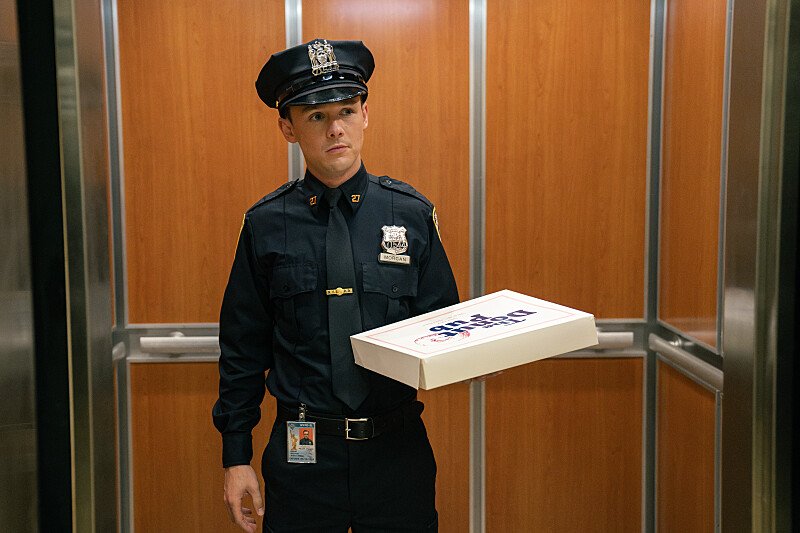
There is also something undeniably silly about Dexter: Resurrection, much as there has always been something a little silly about Dexter itself. At times, the show feels like a CBS procedural your dad watches religiously, or like a grandpa earnestly trying to understand the latest youth technology and accidentally revealing just how out of touch he is. There is a certain old-fashioned earnestness to the way the series approaches its characters, its criminal underworld, and the increasingly outlandish circumstances in which Dexter finds himself. Occasionally, this makes the show feel a little behind the times, particularly when juxtaposed with its gruesome subject matter and morally complicated protagonist. But there is something endearing about it too. The silliness gives the show a welcome sense of levity, keeping it from becoming too self-serious and reminding viewers that, beneath all the bloodshed and brooding, Dexter has always been a little bit ridiculous. And honestly, television’s favorite serial killer wouldn’t be quite as lovable if he weren’t.
Much like last season, the new episodes are also far too reliant on licensed music, often using needle drops where a more restrained original score would better serve the scene. There is absolutely a place for a well-chosen song, and a great needle drop can add texture, establish a mood, or give a moment an extra jolt of personality. But in the first two episodes of Season 2, the pre-existing music is so frequent that it often becomes distracting, drawing attention to itself rather than allowing the atmosphere to develop naturally. The constant stream of recognizable tracks can undercut tension, disrupt the rhythm of a scene, and make moments that should feel eerie or emotionally resonant seem more curated than organic. For a series built around the dark, intimate workings of Dexter’s mind, a little more trust in the score, the silence, and the unsettling ambience would go a long way.
VERDICT: 7/10
Dexter: Resurrection Season 2 finds television’s favorite serial killer back in familiar, yet undeniably captivating territory. Michael C. Hall remains endlessly likable, exceedingly charming, and strangely relatable as a more fragmented Dexter, with an arc centered around a desire for recognition, while Harrison’s transition to becoming a police officer offers fascinating possibilities for the story ahead. The new episodes are a tad silly, overstuffed with underdeveloped characters and plots, and far too reliant on distracting licensed music, but there is still something endearing about the show’s old-fashioned earnestness and its willingness to deepen a character who has spent 20 years trying to understand himself. The first two episodes may take a scattered approach to their narrative, yet Hall’s undeniable charisma and Dexter’s endlessly captivating inner workings keep the revival compelling, even when it struggles to find its footing with a tad too many scattered plot threads introduced, but not substantively developed as of now. For all its scattered plotting and growing pains, it’s simply great to have Dexter back as a consistent fixture on television, and with Michael C. Hall at the wheel, it feels like only a matter of time before the season finds its footing and Dexter gets back to doing what he does best: killing it.
The second season of Dexter: Resurrection premieres on Paramount+ with the Premium Plan on Friday, October 30, 2026.