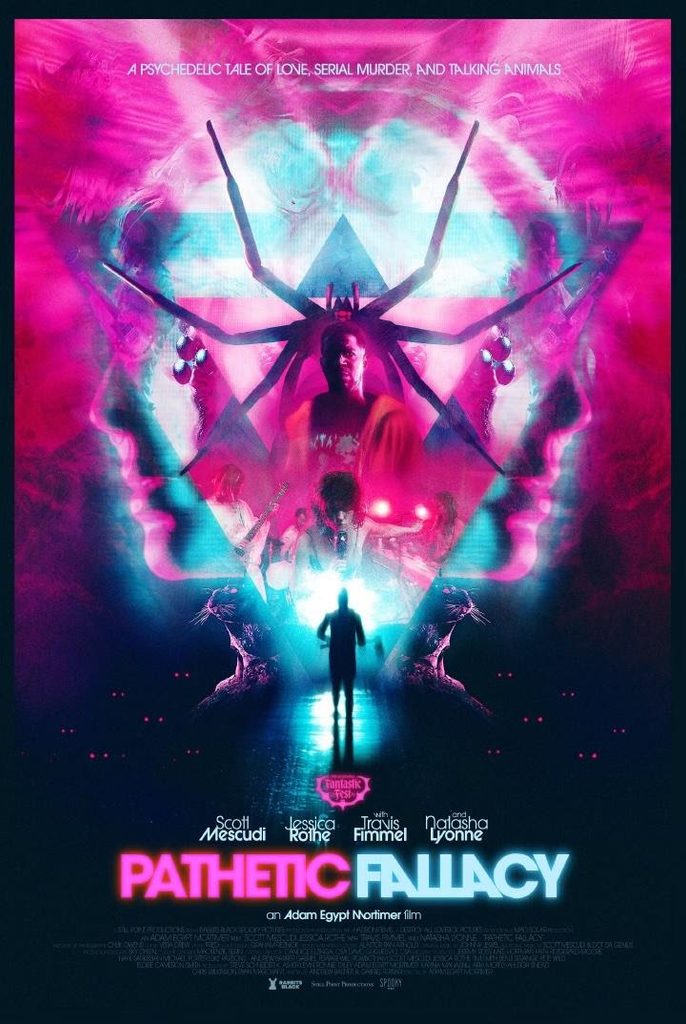
By George & Josh Bate
Pathetic Fallacy is a difficult movie to categorize. On the one hand, it’s a gut-wrenching tale of grief destined to resonate with anyone who has lost a loved one. At other times, it’s a horror movie with a crazed serial killer and unsettling cosmic imagery. And then there’s talking animals, music numbers, and a romance as beautiful as it is devastating.
This amalgamation of tones and genres render Pathetic Fallacy unlike anything you will have seen before. That statement gets thrown around a lot, but it is no hyperbole to say director Adam Egypt Mortimer’s film departs from conventions of traditional filmmaking every step of the way, while simultaneously tapping into resonate emotions with a sensitivity and intimacy few films come close to approaching. It’s as if the imaginations of Kid Cudi, David Lynch, Jane Schoenbrun, and The Daniels were all put together and then injected with something so singular it only could only premiere at Fantastic Fest.
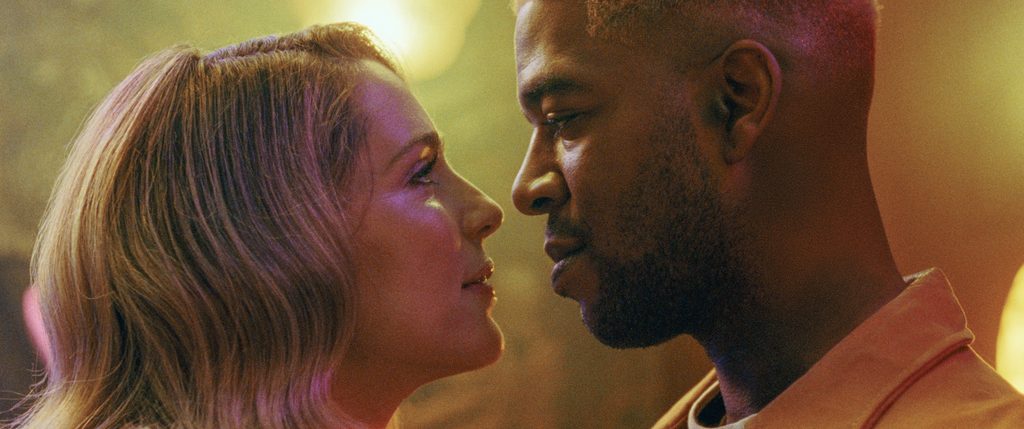
Pathetic Fallacy stars Scott Mescudi as Asher and Jessica Rothe as Iris, a couple madly in love after meeting at a karaoke bar and bonding over a shared performance of Darondo’s “Didn’t I.” Their love story is cut heartbreakingly short, however, when Iris passes away from cancer, leaving Asher distraught and desperate for answers. This desperation leads Asher to a strange mountain town filled with ever stranger people (and creatures), one of whom offers Asher the chance to be reunited with Iris given he upholds his end of a dark bargain.
The HoloFiles recently had the opportunity to speak with Pathetic Fallacy director Adam Egypt Mortimer about his new film, the prominent role of music plays, how Scott Mescudi delivered his greatest acting performance to date, finding grounded emotion in an otherwise heightened story, and more.
Having directed the stylish psychological horror movie Daniel Isn’t Real and the energetic indie superhero mystery Archenemy, Adam Egypt Mortimer has quickly established a reputation for visually striking, genre-bending films, and he continues this streak with Pathetic Fallacy.
Mortimer joined the project after being approached by writers Andrew Barrer and Gabriel Ferrari. The screenwriting duo are known for writing Ant-Man and the Wasp and Transformers One, but turned to something decidedly more bizarre with Pathetic Fallacy.
“[Barrer and Ferrari] sort of had a creative nervous breakdown and wrote this totally insane script,” Mortimer explained. “I think they couldn’t figure out what to do with it, but they knew that I made crazy movies. So they said, maybe that guy will be crazy enough to make this. And I often get scripts. Well, maybe not even often, but I get scripts sent to me and they’re never exciting. And when I read this, I was like, ‘This is the most insane thing I’ve ever read.’”
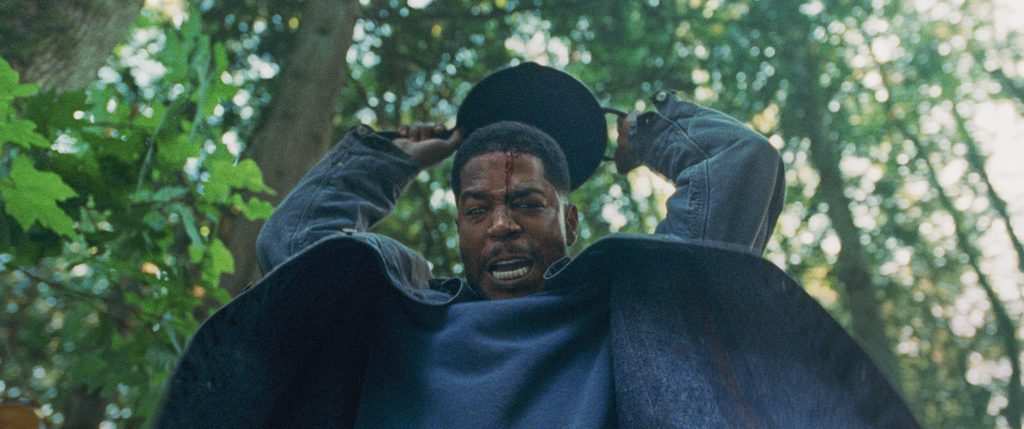
Indeed, Pathetic Fallacy is pretty insane. A maniacal serial killer played by an against-type Travis Fimmel, talking animals, and sudden musical numbers only scratch the surface of what Mortimer’s film has to offer. While increasingly dabbling in psychedelic territory, Pathetic Fallacy depicts the deconstruction of physical reality as we know it to depict the deconstruction of emotional reality for its protagonist. And it’s through this careful balance of high-concept and groundedness that the film triumphs.
In discussing projects he drew influence from, Mortimer identified the 1982 live-action/animated musical surrealist drama Pink Floyd – The Wall as a major source of inspiration. “A huge one for me was Pink Floyd – The Wall,” Mortimer described. “Because I think about that movie all the time. I think I saw it young and it ruined my life. But also the more I’ve gone to it over the years, I just think it’s such a brilliant biography of somebody’s nervous breakdown told in different time increments and all through music and all with such astonishing vision.”
More recent movies, such as I Saw the TV Glow, also inspired Mortimer’s vision for the film. “I think Jane [Schoenbrun] is doing something really incredible in telling stories where reality is totally melted,” Mortimer said. “And I think we’re living in a melted reality world. And I think that that’s what I connect to.”
Mortimer added, “I think if you like Jesus Christ Superstar and like Martyrs, you’ll like [Pathetic Fallacy].”
Interestingly, Mortimer denied that there was an “upper limit” for how strange his movie could become, although his creative concerns laid more in nailing his story’s dramatic beats. “It was places where I was more concerned were these more dramatic elements that started to feel like we didn’t need them,” Mortimer remarked. “I feel like I wanted to make sure that the movie had a density and a maximalist feeling. So it was actually pulling back on things that would be more downtime and more sort of meandering.”
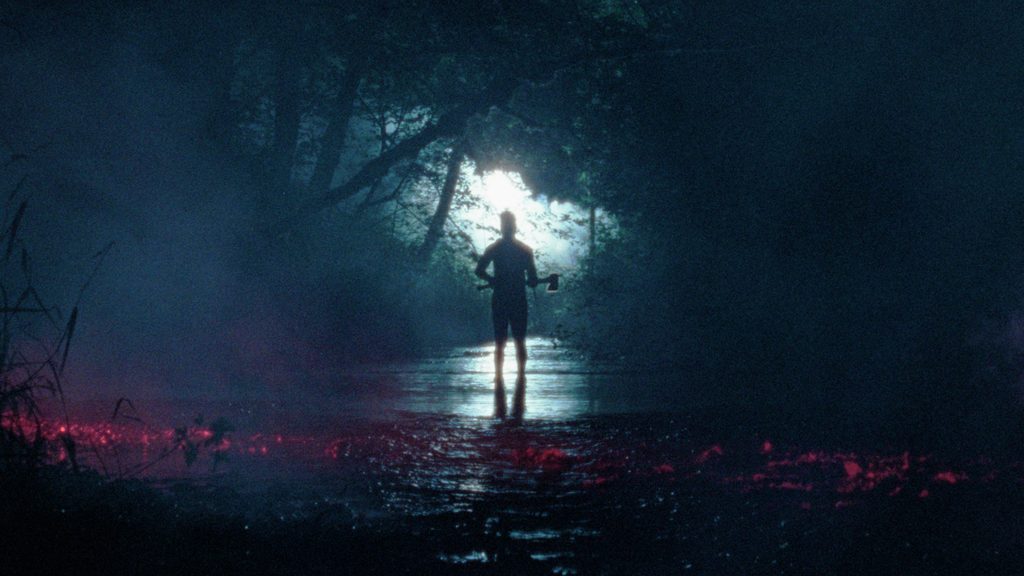
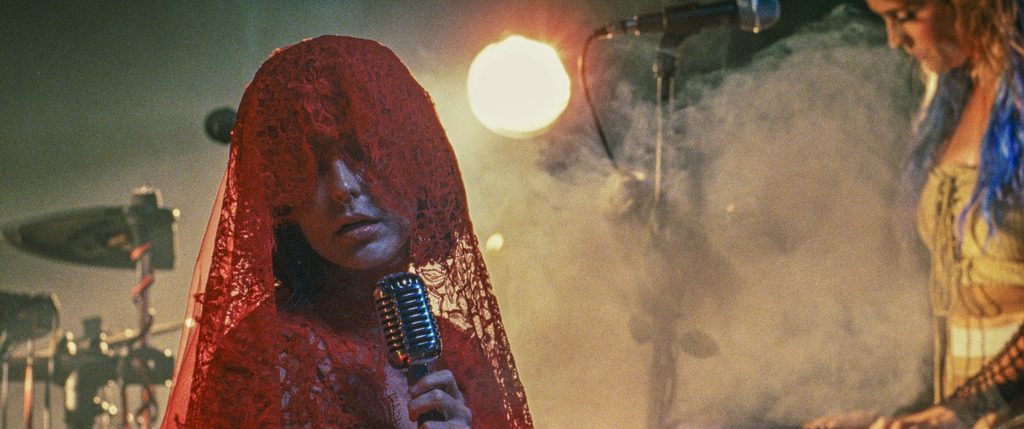
Proving integral to how successful is at making a film so exceedingly moving and devastating is its clever integration of music. A hypnotic synth score by Johnny Jewel and additional music by Mescudi and Dot Da Genius render Pathetic Fallacy undeniably, unreservedly, and unabashedly cool. Mortimer’s film isn’t a musical in a traditional sense, although it does involve characters occasionally breaking out into some amazing songs. Despite the density of its protagonist’s emotional anguish, the film presents a world that you somehow want to exist in. It’s all so dreamy, sleek, and cool, like a magical Kid Cudi music video come to life in long-form.
But music was not originally a part of the initial screenplay. “That was a big thing that I brought to it,” Mortimer stated. “In the first script that they sent me, somehow it made me think of the story of Orpheus. Big myth of Orpheus. Super powered, good at music. And so he goes to hell and sings a song to the king of hell to bring his wife back. And there was a movie called Black Orpheus. So I thought, this movie needs music. Let’s make that the analog version of Orpheus. The Orpheus thing was inspiring this whole idea of how music could work in the movie.”
If you’re aiming to make a psychedelic romance horror movie that tugs strongly on the heartstrings and positions music at its core, what better person to bring into the fold than Kid Cudi. Known for his blending of genres, sonic innovation, and normalization of mental health struggles within the realm of modern music, Mescudi delivers the finest performance of his entire acting career in Pathetic Fallacy.
“The character on the page is a lot of events, and you understand he’s sad and now he’s angry, but it didn’t have a heart until Scott came in and took it over,” reflected Mortimer. “And the thing that was so important about this character, the most important part about this character was that you would find him lovable somehow, even though most of what he’s doing in the movie is either despicable or sort of infuriating. But you’re still somehow rooting for him or at least feeling connected to him. And I just think Scott is unique. Very few people in the world can do this thing where they go up on a stage in front of 100,000 people and every single person there loves them. And so Scott just has this charismatic ability to open up his heart and just share it with you. And it’s so beautiful. And it’s what makes him a really primal emotional actor, too…. A lot of times, I think musicians want to stay so true to themselves that they won’t become another character. But the super amazing ones like David Bowie or Scott ‘Kid Cudi’ Mescudi are able to take the core integrity of their emotions that they channel as a rock star and bring that over into the skin of another person.”
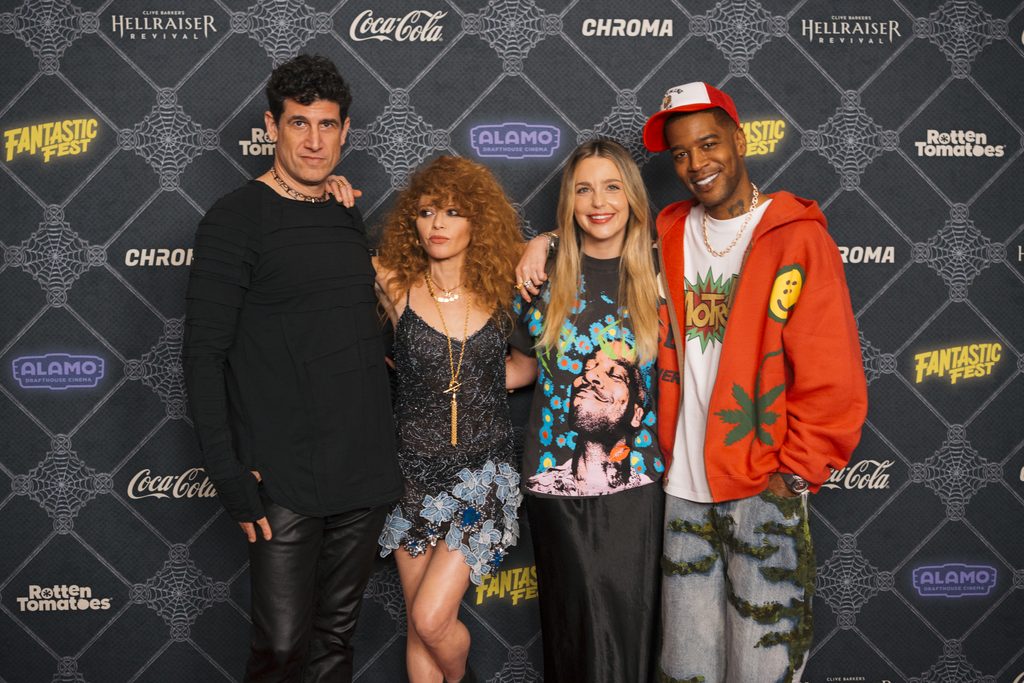
Opposite Mescudi is an equally excellent Jessica Rothe, who brings a whopping three films to this year’s Fantastic Fest. Rothe produces an agonizing turn in the early part of the film, making the audience vicariously experience the love Asher does for her given how warm, kind, and real she feels. But that’s not the end of Rothe in the film. Borrowing a similar idea from Bram Stoker’s Dracula and The Face of Love, Mortimer’s film shows Asher’s bewildering and misguided hope upon meeting a woman who looks just like his lost love. And, once again, in these scenes, Rothe excels as she transforms into an entirely different and edgier character than Iris.
“Jessica is the most skilled, amazing actress I’ve ever worked with,” Mortimer said. “And she’s somebody who loves direction. She loves multiple takes. She loves super getting into the character. Early on, months before we shot, we would do things together where she came over to my house and I would make a little drum beat and turn on my smoke machine, because of course I have a smoke machine at my house. And she would just do versions of that song that she does at the end of the movie and just finding the dramatic beats of it and what her movements would be.”
When Mescudi and Rothe share the screen in Pathetic Fallacy, the film comes alive. The film has a simultaneously soulful and soul-crushing introduction that can best be described as if the beginning of Pixar’s Up was in live-action and starring Kid Cudi and Jessica Rothe. Mescudi and Rothe very quickly earn viewers’ emotional investment in an exceedingly sweet and deeply real romance between two people who have a beautiful future ahead of them. It’s a testament to the work Mescudi and Rothe do in the early part of the film that, when the latter’s character succumbs to cancer, the acute grief Mescudi’s Asher experiences bleeds across the screen and onto the audience. His pain quickly becomes the audiences’ pain and, immediately, the film secures an iron clad grip around the heartstrings.
“That’s where the movie was 100% in the casting,” Mortimer said in explaining how the movie proves as emotionally effective as it is. “When I put Kid Cudi together with Jessica Rothe, the first time we ever all got together was I had them go out and do karaoke in K-Town. And this is asking Jessica to do karaoke with a rock star, who is a total stranger to her. But within two songs, they were clicking so well that I was taking a video of it, and you look at this video, they look like a couple who have been in love for years. There was just this initial spark between them. “
Making its world premiere at this year’s Fantastic Fest, Pathetic Fallacy is a psychedelic romance horror film that blends the soulful and soul-crushing with the trippy, offbeat, and downright bizarre. Director Adam Egypt Mortimer never loses sight of the raw emotional truth at the core of the story, largely thanks to Mescudi’s remarkably intimate and immersive performance and Rothe’s agonizing turn. With a hypnotic synth score, talkative animals, eccentric characters, and a magical Kid Cudi music video-like world, Pathetic Fallacy is undeniably cool, emotionally devastating, and deeply strange, ultimately narrowing in on a moving finale that uses the deconstruction of physical reality to depict the deconstruction of emotional reality. Playing like the brainchild of Kid Cudi, David Lynch, Jane Schoenbrun, and The Daniels, Mortimer’s film features some of the most emotionally devastating and downright unusual movie moments you’ll see all year, making it a must-see for anyone wishing to see something different and willing to join Mescudi on one wild musical odyssey.
Check out our full interview with Pathetic Fallacy director Adam Egypt Mortimer below….