
By George & Josh Bate

A great film edit is often one of the most underappreciated elements of filmmaking. Audiences may leave the theater talking about a memorable performance, a clever line of dialogue, or a beautifully composed shot, but the invisible craft connecting those moments can be just as important. Editing can make or break a film, determining when a joke lands, how long an emotion lingers, and when a story should reveal its darkest secrets. That delicate balance is especially important in a film like Wild Horse Nine, which shifts between irreverent comedy, political thriller, and deeply affecting drama.
From writer-director Martin McDonagh (In Bruges, Three Billboards Outside Ebbing, Missouri), Wild Horse Nine takes place in the early 1970s and follows CIA agents Chris (John Malkovich) and Lee (Sam Rockwell), who travel to Easter Island for a vacation ahead of the coup in Chile that will overthrow Salvador Allende. Their getaway becomes increasingly complicated as Lee contends with Chris’ erratic behavior, his argumentative wife (Parker Posey), and the intervention of their CIA boss (Steve Buscemi). Against the picturesque backdrop of Easter Island, McDonagh delivers his signature combination of biting, often outrageous humor and melancholy, crafting a story about morally compromised men confronting their pasts. Anchored by extraordinary performances from Malkovich and Rockwell, the film gradually reveals a moving portrait of loss, regret, and friendship.
The HoloFiles recently had the opportunity to interview Wild Horse Nine editor Mikkel E.G. Nielsen about finding the film’s distinctive editorial rhythm, preserving the musicality of Martin McDonagh’s dialogue, and collaborating with the filmmaker to shape his carefully constructed vision. Having previously worked with McDonagh on The Banshees of Inisherin, Nielsen discusses the trial-and-error process of balancing comedy, drama, melancholy, and thriller elements, the importance of audience reactions during test screenings, and why even the most beautiful shot needs to earn their place in the final cut.
Finding the Rhythm Between Comedy, Drama, and Thriller
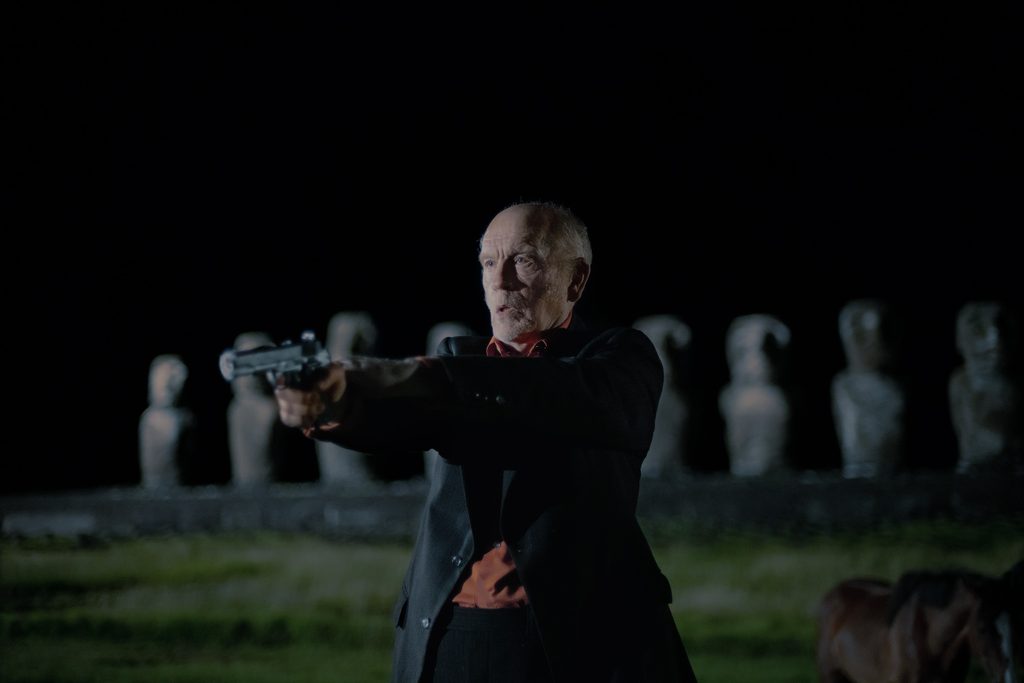
One of the most distinctive qualities of Wild Horse Nine is the way it moves between wildly different tones without losing sight of the emotional story at its center. Its offbeat humor and eccentric characters gradually give way to darker revelations, with the film’s third act bringing its seemingly disparate elements together in affecting fashion. For Nielsen, finding that balance was a process of experimentation, informed in part by his previous collaboration with McDonagh on The Banshees of Inisherin.
“Trial and error,” Nielsen explained. “There was a lot of learning from our previous project, Banshees of Inisherin, where it was a comedy and drama. But then with this one, adding the thriller. The other one also had the melancholy, but definitely adding the thriller in it.”
Nielsen described the experience of working on Wild Horse Nine as a particularly enjoyable opportunity to experiment with tone. He and McDonagh continually tested how much they could juggle between genres while ensuring that the finished film felt cohesive and emotionally earned. Audience screenings proved especially valuable in that regard, allowing Nielsen to observe firsthand when a laugh lasted too long, when a scene lost someone’s interest, or when a new piece of information needed more room to land.
“That’s the best as an editor, at least the sort of films that I really like to edit,” Nielsen said. “It’s like add in some balls and let’s juggle a little bit more with those and let’s be playful. And then hopefully in the end, it feels like a whole and it feels earned and honest towards the end.”
That playfulness extends to the way Wild Horse Nine gradually reveals the darkness lurking beneath its characters’ seemingly idyllic vacation. Nielsen explored how the edit initially invests in the relationship between Chris and Lee before increasingly withholding information and allowing the thriller elements to emerge. Chris’ memoirs and montages depicting the darkness of his past provide a window into his character, while the natural beauty and colorful imagery of Easter Island offer a striking contrast to the atrocities associated with his career.
The result is a film in which the humor and warmth of the earlier scenes deepen the emotional impact of the revelations that follow. As Nielsen explained, the hope was that all of these elements would eventually find their place in the third act, leaving audiences satisfied while also feeling the sadness of Chris and Lee’s journey.
Editing Martin McDonagh’s Dialogue Like Music
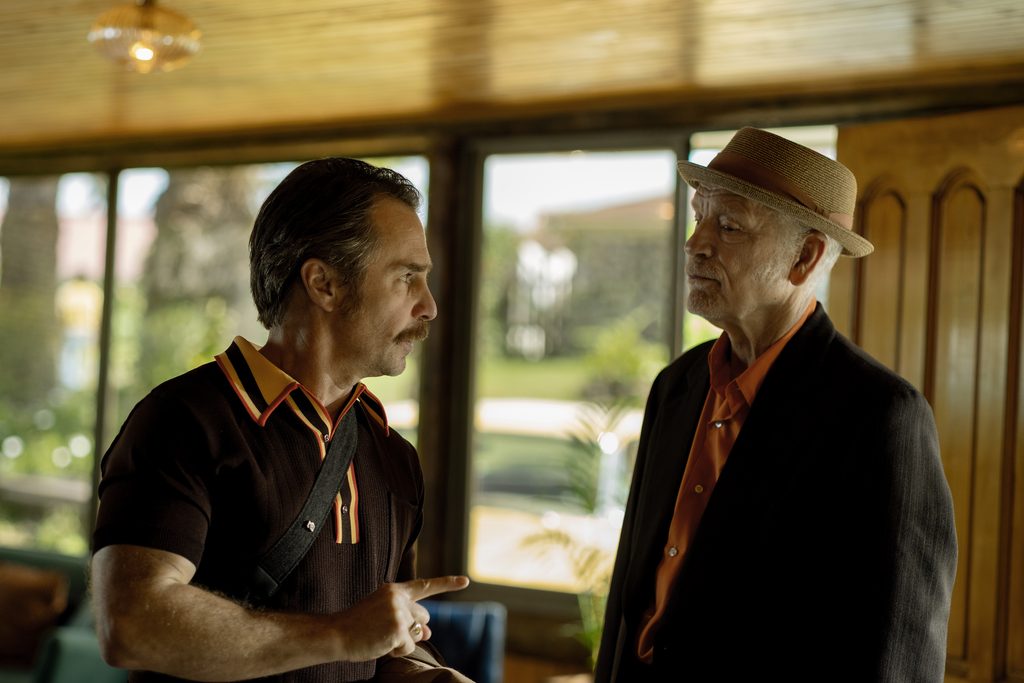
Martin McDonagh has cultivated a truly singular and recognizable voice in contemporary filmmaking. His dialogue is filled with peculiar repetitions, extended pauses, and exchanges that can be simultaneously hilarious and heartbreaking. Preserving that distinctive musicality is no small task in the editing room, particularly when the performances themselves introduce additional rhythms and nuances.
For Nielsen, this process begins with recognizing the musical qualities already present in McDonagh’s writing and allowing the actors to build upon them.
“There’s a lot of rhythm already in the script and then you have the actors adding to that,” Nielsen reflected. “The pauses, how they deliver the lines with the way Martin and [cinematographer] Ben [Davis] do the scene from which angles and stuff. I see it more like music pieces and then you start finding each character, the best version of each character.”
Once he identifies the strongest version of each character, Nielsen begins determining how individual scenes should unfold, considering when to focus on one performer, when to shift attention to another, and how the emotional status of a scene changes over time. The process does not end with finding the best version of each individual scene, however. Some of the most exciting possibilities emerge when emotions can be carried across scenes or when an unexpected transition changes the audience’s experience of a moment.
Nielsen cited the possibility of moving from Lee crying directly into a flashback as an example of how an edit can amplify the emotion of a scene. He also described the film’s use of sound to jolt audiences out of the tranquility of Easter Island. Beautiful aerial shots initially establish the island’s picturesque surroundings, only for the sound of an airplane to abruptly disrupt that serenity and bring viewers back into the film’s more unsettling world.
“That’s really the balance of a film, trying to find that,” he said.
This balance is particularly critical in a story where the audience must first become invested in the characters before confronting the full extent of their past actions. Nielsen explained that the film deliberately spends time with Chris and Lee’s goofy, playful dynamic, allowing viewers to grow fond of them before revealing the darkness associated with Chris’ history.
When those revelations arrive, the contrast makes them all the more affecting. The humor does not simply provide comic relief; it becomes an essential part of the emotional foundation that makes the film’s more devastating moments resonate.
Knowing What to Leave on the Cutting Room Floor
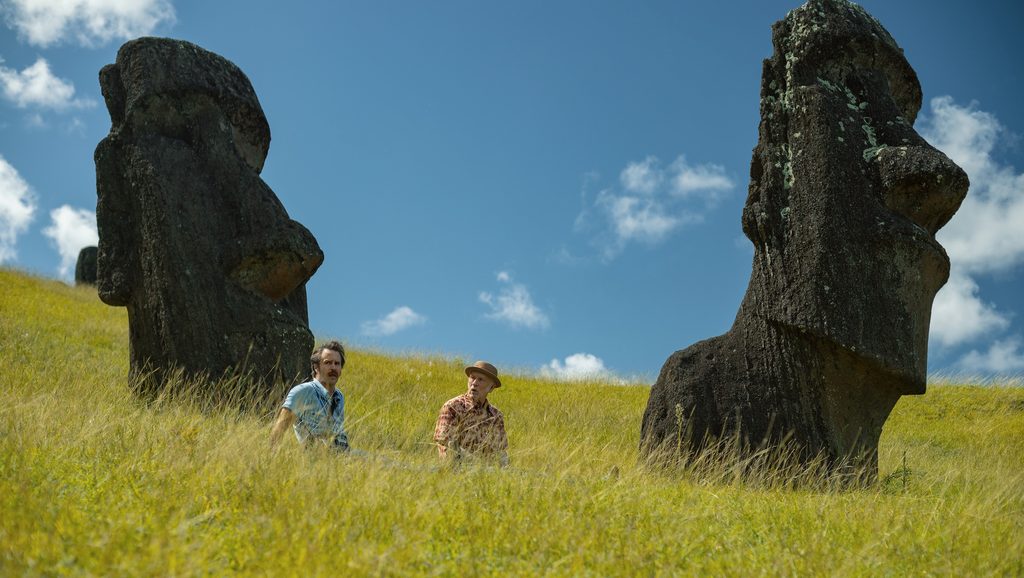
One of the most difficult aspects of editing is recognizing that a beautiful shot or a personally meaningful moment does not necessarily belong in the finished film. Even when a particular image is visually striking, it still needs to serve the larger story. Nielsen offered a charming example of this dilemma involving a shot of a horse that McDonagh particularly loved.
The image featured a horse looking toward the camera from a distance, with mountains in the background. Despite their affection for the shot, Nielsen and McDonagh repeatedly attempted to find a place for it throughout the film, only to discover that it never quite fit.
“We never found the place for that one specific shot,” Nielsen recalled. “Could it be here? It’s just one shot. Could it be here? No, it doesn’t feel right. Could it be here? No, it doesn’t feel right. We never found the place for that one specific shot. What did the composition entail? …. It’s just a horse looking at you from a little bit from a distance. And there’s some mountains in the back. It’s just a very nice image that Martin really loved. We were just really trying to see, is there a way to put it in? But that also tells you because the whole idea of trying these things is that you also get aware there has to be a purpose of everything. And you can’t just put something in because then suddenly it feels we’ve lost something.”
The experience reinforced an important editorial principle: every moment needs a purpose. As much as a filmmaker or editor might love a particular image, inserting it simply because it is beautiful can disrupt the flow of a scene or make the finished film feel as though it has lost something.
Collaborating With Martin McDonagh and Embracing the “Stupid Ideas”
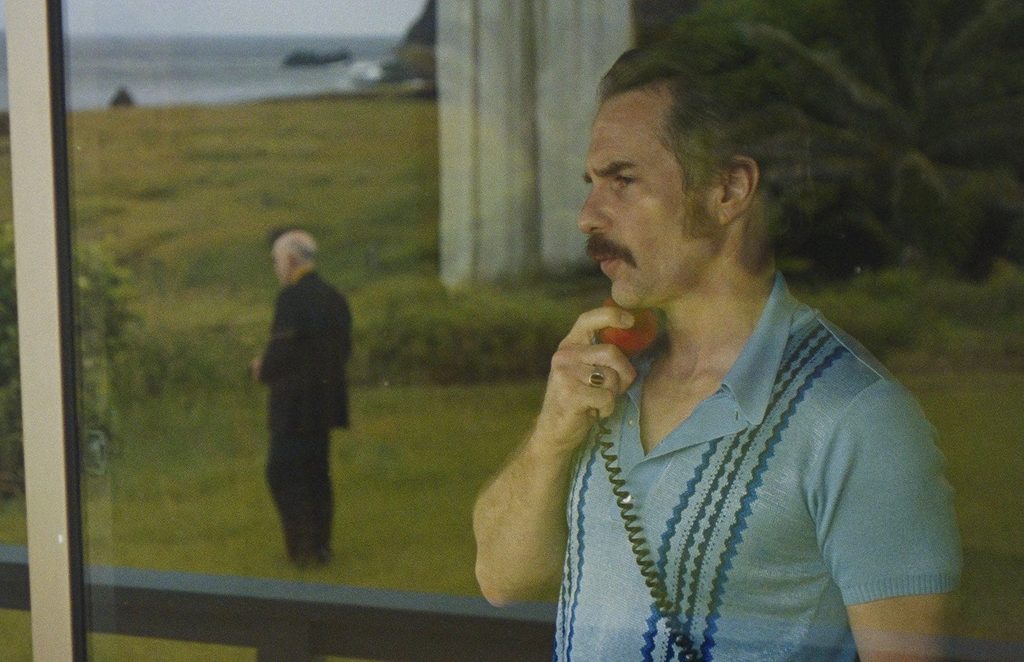
Having worked with McDonagh on two films, Nielsen expressed tremendous admiration for the filmmaker’s distinctive creative voice. He particularly enjoys collaborating with writer-directors, believing that someone who has both written and directed a film possesses an intimate understanding of its material and tone.
“I think I’ve been very blessed with the directors I’ve been working with,” Nielsen said. “I really like working with writer-directors. Because there’s a difference in understanding your material if you also have written the script. I mean, obviously, there can be other writers too. But there’s a difference. Because you can see a short amount of film and you would say, ‘This is a Martin McDonagh film.’ He has a very, very specific tone. What is it that does that? We can all put on a camera. We can all write something. But there are very few directors that have this very specific thing, which is just a huge value. It’s really about also protecting it and me learning how he does it. There’s a huge learning curve working with a director like Martin. And it’s an absolute pleasure and joy of somehow helping him on the technical side, how to put things together.”
For Nielsen, McDonagh’s filmmaking possesses an unmistakable identity, one that requires a certain degree of protection throughout the editing process. His role is partly to learn how McDonagh approaches his material while helping him realize that vision through the technical possibilities of editing.
That does not mean the editor simply accepts everything that has been written or filmed. Nielsen emphasized the importance of becoming the film’s first audience and asking questions that might seem obvious or even uncomfortable.
“It’s also important to become that first audience and ask the stupid questions like, why is it like this?” Nielsen said. “Challenge some of the things. Do we really need this line? What happens if we lose the line and it’s more of a look? These things. [Martin] is very open for me to come with suggestions and try things. He often asks, is there anything you would like to try on certain things? He gives you the space and I can work on something and then I can show him. And that’s sort of a perfect collaborator because it just allows you to bring something to the table.”
He praised McDonagh for creating an environment in which those questions and suggestions are welcomed. The filmmaker regularly gives Nielsen the opportunity to experiment with different approaches before bringing his ideas back to the editing room for discussion.
“[Martin] is very open for me to come with suggestions and try things,” Nielsen explained. “He often asks, is there anything you would like to try on certain things? He gives you the space and I can work on something and then I can show him. And that’s sort of a perfect collaborator because it just allows you to bring something to the table.”
Of course, not every experiment works. In fact, Nielsen joked that the overwhelming majority of his suggestions are probably not particularly good ideas. But that is precisely why he believes the editing room needs to be a safe space where collaborators can freely propose even the most outlandish possibilities.
“That doesn’t mean that what I bring always is right, because like 90% of the time it’s stupid ideas,” Nielsen remarked. “But then sometimes those open something up and you’re like, ‘Wait a second, that was actually really interesting. Even though it was a mistake, it’s actually really good.’ And that’s because you never really know. If I can stay as open and not have an opinion or a right or wrong or yes or no to my material for as long as possible throughout the whole process, that doesn’t mean that I don’t have an opinion, but it just means that I’m trying to allow myself to be open to try things and to see it from different aspects.”
“It’s laughable,” Nielsen continued. “But the most important thing is that you could laugh at yourself. At least you’ve tried it,” he said. “And the edit room has to be a safe space where any stupid idea can be brought to the table.”
Nielsen’s humility and willingness to experiment feel particularly appropriate for Wild Horse Nine, a film that derives so much of its appeal from the unexpected interplay between humor, darkness, and genuine emotion. McDonagh’s unmistakable dialogue, Malkovich and Rockwell’s remarkable performances, and the film’s picturesque setting juxtaposed with its melancholic tone all contribute to the film’s distinctive identity.
But, as Nielsen’s insights reveal, the rhythm connecting these seemingly disparate elements is no accident. Rather, it is the product of an Academy Award-winning editor and a master of the art of a film’s rhythm.
Wild Horse Nine is now in theaters, courtesy of Searchlight Pictures.
Watch out full interview with Wild Horse Nine editor Mikkel E.G. Nielsen below.
